Telehealth providers increasingly rely on appointment scheduling software to manage virtual consultations, patient intake, automated reminders, provider availability, and after-hours appointment requests across digital healthcare workflows.
As patient demand for virtual care grows, healthcare organizations need telehealth scheduling software that can reduce missed appointments, improve response speed, automate patient communication, and streamline online appointment scheduling for healthcare teams.
This guide compares the best telehealth appointment scheduling software based on AI scheduling capabilities, patient communication tools, automated reminders, integrations, healthcare workflow automation, scalability, and operational efficiency.
Why Do You Need Telehealth Appointment Scheduling Software
Telehealth operations involve significantly more scheduling complexity than traditional in-person healthcare appointments. Providers must manage virtual consultations, patient onboarding, provider calendars, appointment reminders, intake workflows, insurance coordination, and after-hours communication while maintaining a smooth patient experience across digital platforms.
Without dedicated telehealth scheduling software, healthcare teams often struggle with:
- Missed appointments
- Delayed patient responses
- Manual scheduling coordination
- Calendar conflicts
- Provider availability issues
- High administrative workload
- Fragmented patient communication
- Scheduling bottlenecks during peak hours
Why Telehealth scheduling software matters?
- Faster patient scheduling: Patients can book virtual appointments instantly without waiting for manual callbacks from healthcare staff.
- Reduced administrative workload: Smart appointment scheduling automates confirmations, reminders, intake collection, and appointment coordination.
- Improved patient attendance: Automated reminders through SMS, email, or AI-powered patient communication reduce no-show rates.
- Better provider calendar management: Multi-provider scheduling systems help healthcare organizations manage physician availability and appointment balancing more efficiently.
- Stronger patient communication: Healthcare AI automation enables providers to automate appointment updates, follow-ups, intake instructions, and after-hours scheduling.
- Scalable virtual care operations: Telehealth scheduling systems help practices manage increasing patient volume without a proportional increase in front-desk staffing.
Best Telehealth Appointment Scheduling Software Compared
The platforms below provide the strongest combination of telehealth scheduling, healthcare workflow automation, AI-powered patient communication, and provider coordination.
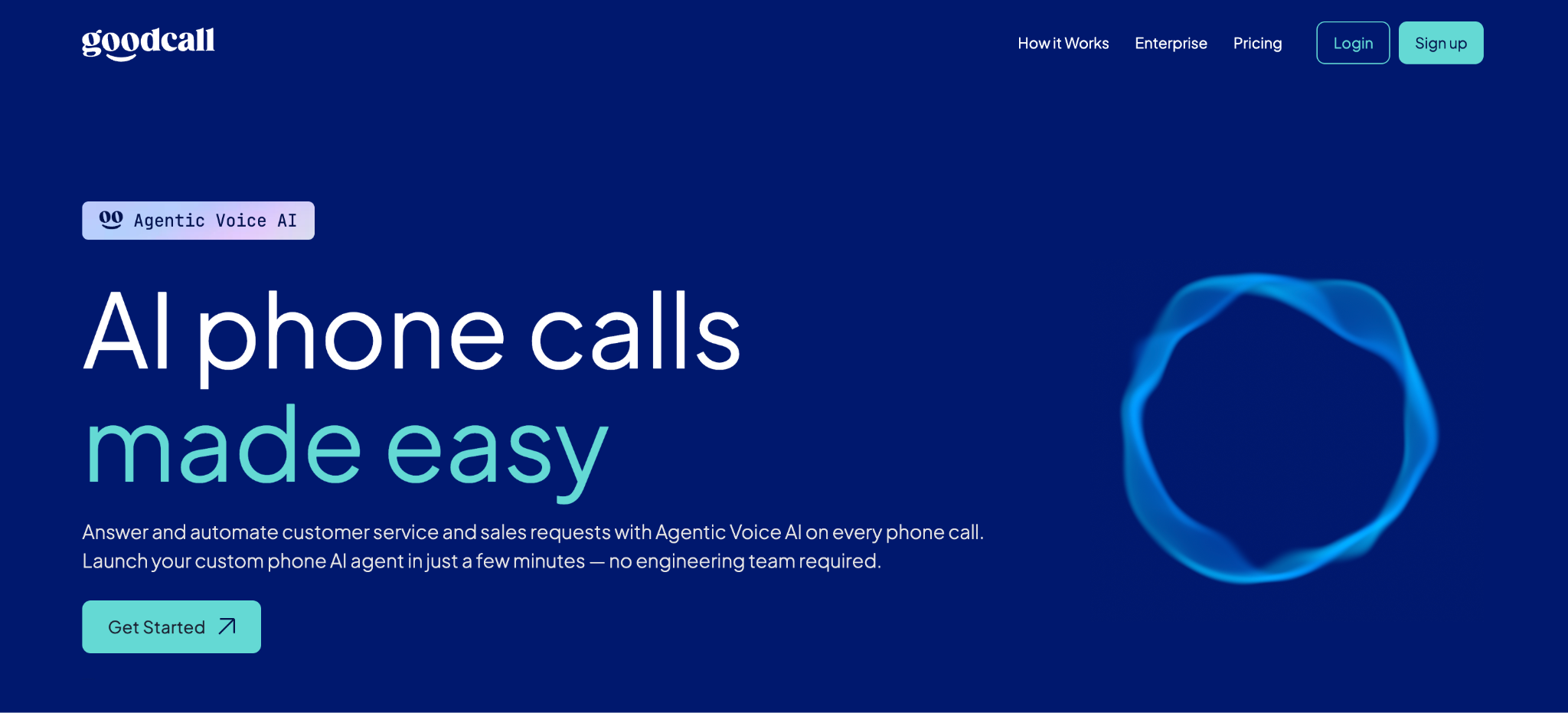
1. Goodcall: Best for AI-powered patient communication and automated telehealth workflows
Best For
Healthcare providers managing inbound patient calls, appointment requests, after-hours scheduling, and AI-driven patient communication workflows.
AI Features
- AI appointment scheduling
- Conversational patient intake
- AI phone answering
- Automated appointment routing
- Multilingual patient communication
- AI reminders and confirmations
- Smart scheduling coordination
Automated Reminders
Goodcall automates SMS and voice reminders, appointment confirmations, rescheduling notifications, and patient follow-ups without requiring manual front-desk coordination.
Pricing
Plans generally start at around $79 per month, depending on patient communication volume and workflow complexity. Check Goodcall’s pricing plans here.
Integrations
Supports integrations with CRM systems, healthcare scheduling workflows, communication platforms, and automation tools.
Why Healthcare Providers Choose It?
Goodcall helps healthcare providers automate telehealth scheduling, patient communication, intake workflows, and after-hours appointment management using conversational AI. Unlike traditional scheduling platforms that rely only on booking forms, Goodcall actively manages patient conversations and appointment coordination through AI-powered workflows.
Healthcare practices often use Goodcall to reduce front-desk workload, improve patient response speed, and maintain appointment availability outside normal office hours.
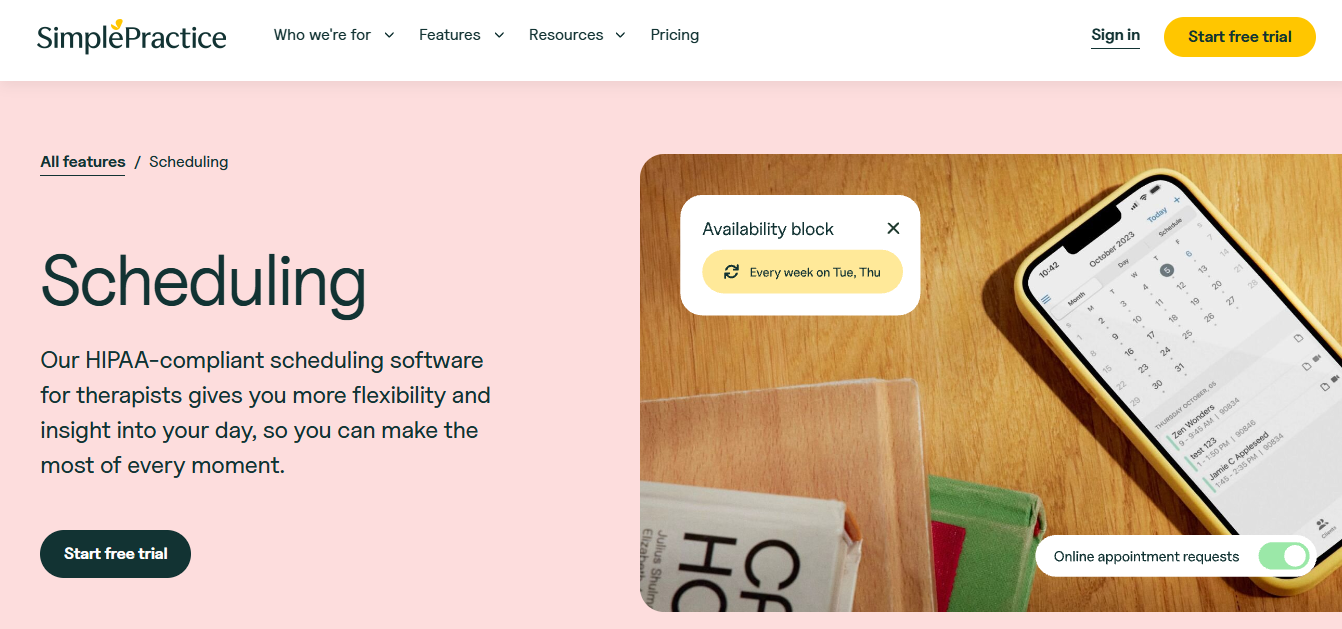
2. SimplePractice: Best for therapy practices and behavioral healthcare scheduling
Best For
Therapists, psychologists, counselors, and behavioral healthcare providers are managing virtual sessions and recurring patient appointments.
AI Features
- Automated intake forms
- Online appointment scheduling
- Smart calendar management
- Automated reminders
- Secure patient communication
Automated Reminders
SimplePractice automatically sends appointment confirmations, reminders, telehealth links, and follow-up notifications to patients.
Pricing
Plans generally start around $29 monthly, depending on provider requirements and telehealth features.
Integrations
Supports calendar integrations, billing workflows, insurance management, telehealth video sessions, and healthcare documentation systems.
Why Healthcare Providers Choose It?
Behavioral healthcare providers often choose SimplePractice because it combines telehealth scheduling, patient intake, documentation, billing, and virtual care management into one centralized healthcare workflow platform.
Its recurring appointment support and therapy-focused workflows make it especially valuable for long-term patient scheduling management.
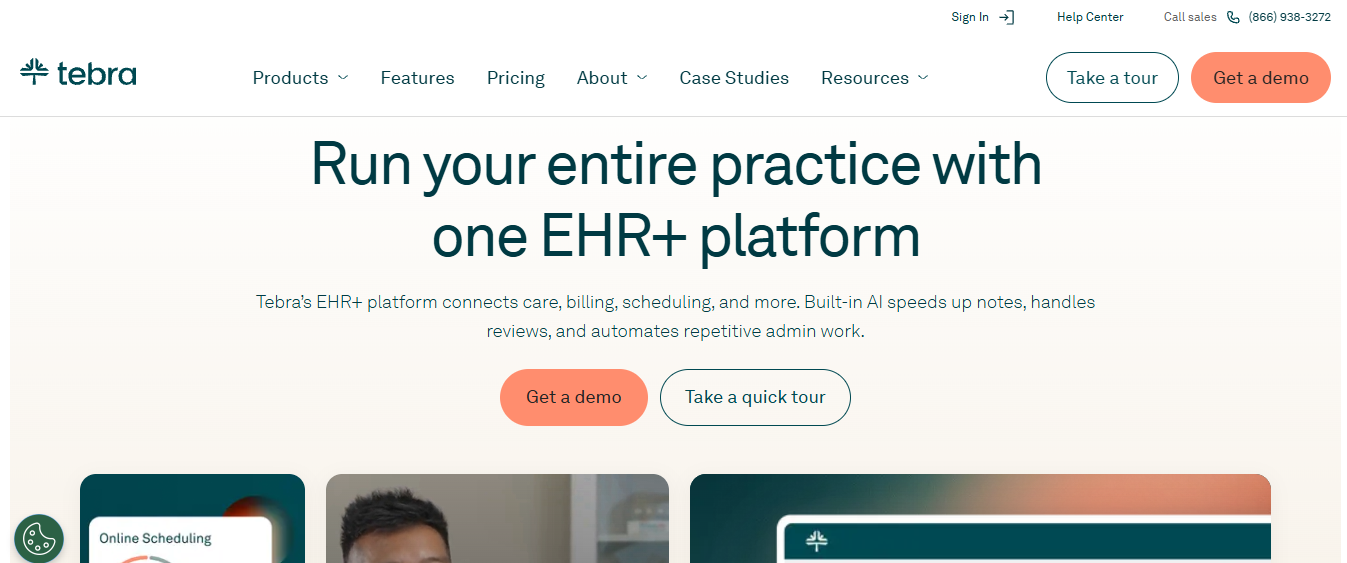
3. Tebra: Best for independent medical practices and virtual patient management
Best For
Independent healthcare providers, small medical practices, and clinics managing patient scheduling alongside billing and EHR workflows.
AI Features
- Online patient scheduling
- Automated reminders
- Digital intake workflows
- Calendar coordination
- Appointment management automation
Automated Reminders
Tebra(Earlier Kareo) sends automated appointment reminders, intake instructions, and patient notifications across SMS and email workflows.
Pricing
Custom pricing based on provider count and healthcare workflow requirements.
Integrations
Supports EHR systems, billing software, patient communication workflows, insurance coordination, and telehealth infrastructure.
Why Healthcare Providers Choose It?
Tebra is widely used by smaller healthcare practices because it combines scheduling, EHR management, billing, and telehealth coordination into one platform without requiring enterprise-level operational infrastructure.
Its scheduling workflows are designed specifically for independent healthcare providers, balancing patient care with administrative operations.
4. Athenahealth: Best for enterprise healthcare scheduling and multi-provider coordination
Best For
Hospitals, healthcare groups, and large practices are managing high patient volume and multi-provider telehealth scheduling operations.
AI Features
- Automated patient engagement
- Smart provider scheduling
- AI-powered communication workflows
- Appointment coordination automation
- Digital intake management
Automated Reminders
Athenahealth automates appointment reminders, patient follow-ups, scheduling notifications, and telehealth communication workflows.
Pricing
Custom enterprise pricing based on healthcare organization size and workflow complexity.
Integrations
Supports EHR systems, billing infrastructure, healthcare analytics, telehealth platforms, and provider coordination systems.
Why Healthcare Providers Choose It?
Athenahealth is designed for healthcare organizations managing large operational complexity, provider coordination, patient communication, and enterprise scheduling infrastructure across multiple departments and locations.
Its automation tools help large healthcare teams reduce scheduling bottlenecks while improving patient communication efficiency.
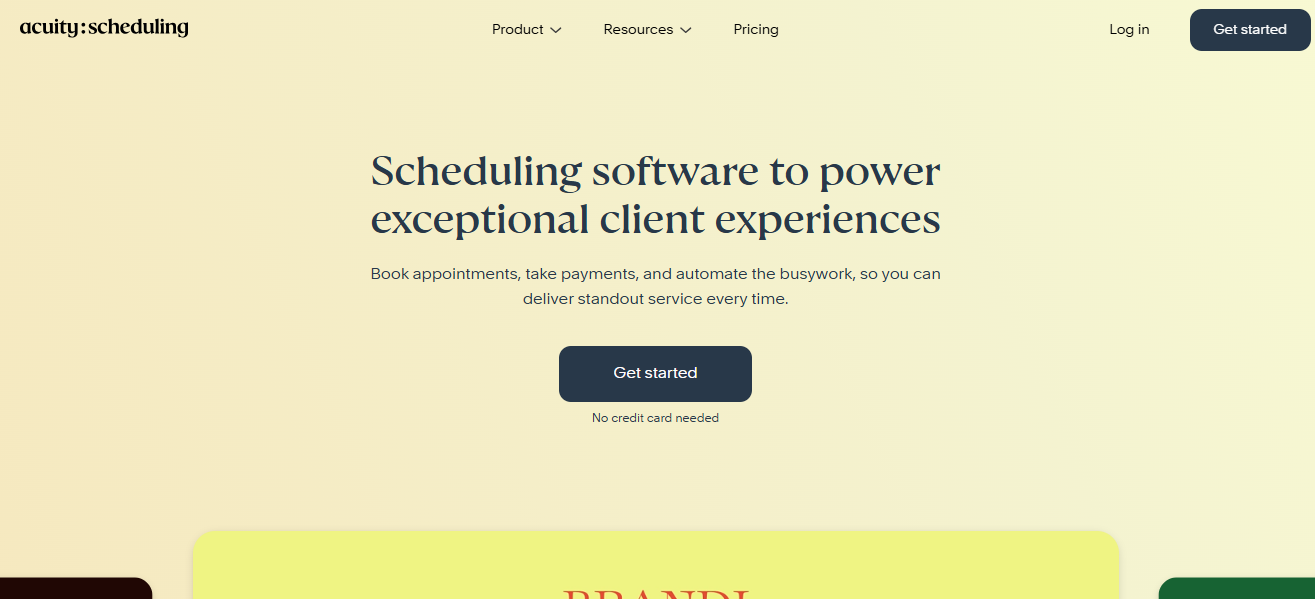
5. Acuity Scheduling: Best for simple telehealth booking and patient self-scheduling
Best For
Smaller healthcare practices, wellness providers, coaches, nutritionists, and independent telehealth professionals.
AI Features
- Online self-scheduling
- Automated reminders
- Intake forms
- Calendar synchronization
- Client management workflows
Automated Reminders
Acuity automatically sends reminders, intake forms, confirmations, and telehealth session notifications to patients.
Pricing
Plans generally start around $20 monthly, depending on scheduling features and provider volume.
Integrations
Supports Zoom, Google Calendar, Outlook, Stripe, PayPal, and telehealth video conferencing tools.
Why Healthcare Providers Choose It?
Healthcare professionals often choose Acuity because it simplifies patient self-booking while reducing manual scheduling coordination for smaller practices.
The platform works especially well for providers managing recurring virtual appointments without requiring enterprise healthcare infrastructure.
Benefits of Using AI Telehealth Appointment Scheduling Software
Healthcare organizations increasingly use healthcare AI automation to improve scheduling efficiency, reduce patient no-shows, and streamline telehealth communication workflows.
Major benefits include:
- Faster patient scheduling: AI scheduling systems allow patients to book virtual appointments instantly instead of waiting for staff callbacks.
- Reduced no-show rates: Automated reminders, confirmations, and follow-up notifications improve patient attendance consistency.
- Lower administrative workload: AI-powered scheduling automates repetitive front-desk tasks like confirmations, intake collection, rescheduling, and appointment coordination.
- Improved provider utilization: Smart scheduling systems help balance provider availability while reducing scheduling gaps.
- Better patient communication: AI-powered patient communication tools improve response speed and keep patients informed throughout scheduling workflows.
- After-hours scheduling support: Patients can request or book appointments outside normal office hours without relying on live staff availability.
- Stronger scalability: Healthcare organizations can manage growing telehealth demand without significantly expanding scheduling teams.
Why AI Scheduling Is the Future of Telehealth?
Telehealth scheduling is becoming increasingly dependent on AI-driven automation because patient expectations now prioritize convenience, faster response times, and self-service healthcare access.
Traditional scheduling systems rely heavily on manual coordination through front-desk teams. AI-powered scheduling platforms instead automate appointment intake, reminders, provider matching, after-hours communication, and patient coordination dynamically.
Reasons behind the rapid growth of AI Scheduling:
- Patients increasingly expect digital-first healthcare access
- Healthcare providers face staffing shortages
- Administrative scheduling costs continue to increase
- Virtual healthcare volume continues expanding
- Providers need 24/7 appointment accessibility
- AI communication systems improve operational scalability
AI-powered patient communication also helps healthcare providers reduce patient abandonment during scheduling workflows because patients receive immediate responses and automated coordination instead of delayed callbacks.
Healthcare organizations increasingly combine telehealth platforms with conversational AI scheduling systems to automate patient engagement while improving operational efficiency.
How to Choose the Best Telehealth Scheduling Software
Choosing the right telehealth scheduling software depends on provider size, patient volume, operational complexity, and communication requirements.
Important selection factors:
- AI automation capabilities: Healthcare organizations should prioritize systems supporting AI scheduling, conversational patient communication, and automated workflow management.
- HIPAA compliance: Telehealth scheduling systems must support secure patient communication and healthcare compliance requirements.
- Provider scheduling flexibility: Multi-provider coordination, recurring appointment support, and real-time availability management are essential for larger healthcare teams.
- Patient communication workflows: The software should support reminders, confirmations, intake instructions, follow-ups, and after-hours appointment coordination.
- EHR and billing integrations: Strong integration support between scheduling systems, EHR platforms, and healthcare billing workflows reduces administrative fragmentation.
- Scalability: Healthcare providers should choose scheduling software capable of handling increasing patient demand and telehealth expansion.
- Self-service scheduling: Patients increasingly prefer online scheduling workflows that allow instant appointment booking without manual coordination.
Conclusion
Telehealth scheduling has evolved far beyond basic online calendars and appointment booking forms. Modern healthcare providers now require scheduling systems capable of managing AI-powered patient communication, automated reminders, provider coordination, after-hours scheduling, and scalable virtual care workflows.
The best telehealth appointment scheduling software helps healthcare organizations reduce administrative workload, improve patient response speed, lower no-show rates, and automate appointment coordination across growing digital healthcare environments. Platforms like Goodcall go beyond traditional scheduling tools by combining conversational AI, AI-powered patient communication, telehealth workflow automation, and after-hours scheduling support into one scalable healthcare communication system.
For healthcare providers managing increasing virtual care demand, AI scheduling systems are becoming essential infrastructure for improving patient experience and operational efficiency.