

Best AI Virtual Receptionist Voice Technology to Automate Customer Calls
.jpg)
Businesses receive constant phone calls from customers seeking support, booking appointments, or requesting information. Managing these calls manually can lead to missed opportunities, long wait times, and higher operational costs. This is why many companies are adopting AI-powered virtual receptionists to automate and streamline call handling.
Modern AI-powered receptionists use natural language processing and conversational AI to answer calls, assist customers, and intelligently route calls. This article explores how best AI virtual receptionist voice technology works, why businesses are adopting it, and the key features to evaluate.
What Is AI Virtual Receptionist Voice Technology?
AI virtual receptionist voice technology refers to AI-powered voice systems that automatically answer and manage business phone calls. These systems use speech recognition, natural language processing (NLP), and machine learning to conduct human-like conversations.
Unlike traditional IVR systems that rely on rigid menus, modern AI voice agents understand natural speech. Customers can simply say what they need, and the AI responds accordingly.
AI voice receptionists function as conversational AI phone agents capable of:
- Answering incoming calls automatically
- Understanding spoken customer requests
- Scheduling appointments or bookings
- Routing calls to the correct department
- Providing information such as business hours or order status
These systems can integrate with CRM platforms, calendars, and ticketing tools to deliver seamless service. Businesses also rely on AI receptionists for 24/7 AI phone answering, ensuring customers always receive assistance, even outside business hours.
Why Businesses Are Switching to AI Voice Receptionists
Companies across industries are adopting business voice automation to improve customer experience while reducing operational costs. Here are the key reasons why businesses are using AI voice receptionists:
- 24/7 AI Phone Answering: AI receptionists answer calls around the clock, ensuring businesses never miss customer inquiries, leads, or appointment requests outside business hours.
- Reduced Operational Costs: An AI call answering service minimizes the need for full-time reception staff, helping businesses lower labor costs while maintaining efficient call handling.
- Faster Response Times: AI systems respond instantly to incoming calls, reducing wait times and improving the overall customer experience.
- Intelligent Call Routing: A modern automated phone answering system understands caller intent and directs calls to the correct department or team member.
- Consistent Customer Experience: AI voice systems deliver the same quality interaction for every caller, ensuring consistent service regardless of call volume.
- Improved Lead Capture: A conversational AI phone agent collects caller details, service requests, and contact information, helping businesses capture more qualified leads.
- Scalable Business Communication: With business voice automation, companies can handle multiple calls simultaneously without increasing staffing or infrastructure.
Quick Comparison Table
Below is a quick overview of the best AI receptionist software available for businesses today.
| Platform | Key Strengths | Limitations |
|---|---|---|
| Goodcall | Easy setup, strong SMB automation, and AI call answering | Limited enterprise features |
| PolyAI | Advanced conversational AI for enterprise call centers | Expensive, complex setup |
| Retell AI | Highly customizable voice agents and APIs | Requires technical configuration |
| Dialpad AI | AI call insights and unified business communications | Limited advanced voice automation |
| Smith.ai | Hybrid AI + human receptionist service | Higher monthly pricing |
| CloudTalk | Strong CRM integrations and call center analytics | AI features are limited in lower plans |
| RingCentral AI Receptionist | 24/7 AI call handling and routing automation | Works best within the RingCentral ecosystem |
Key Features to Look for in the Best AI Virtual Receptionist Voice Technology
Choosing the Best AI Virtual Receptionist Voice Technology requires evaluating features that enhance the customer experience, improve automation, and enhance operational efficiency. The right solution should combine intelligent voice capabilities with strong business integrations.
- Natural Conversational AI
A high-quality conversational AI phone agent should understand natural speech rather than rely on rigid scripts. This allows callers to speak normally while the AI interprets their intent and responds appropriately. Advanced natural language processing improves accuracy and creates smoother conversations.
- 24/7 AI Phone Answering
Reliable 24/7 AI phone answering ensures that businesses never miss important customer calls. AI receptionists can handle inquiries at night, on weekends, and on holidays without human assistance. This helps capture leads and maintain continuous customer support.
- Smart Call Routing
An intelligent automated phone answering system should identify caller intent and route calls to the appropriate department or team member. Instead of navigating complicated menus, callers simply describe their request. This reduces call transfers and improves resolution speed.
- Appointment Scheduling
Many businesses require automated scheduling to manage bookings efficiently. AI receptionists can connect with calendars to book, reschedule, or cancel appointments in real time. This feature is especially valuable for service providers and for AI receptionists in medical office workflows.
- CRM and Software Integrations
The best AI receptionist software integrates with CRM platforms, helpdesk systems, and business applications. These integrations enable the AI to log conversations, capture leads, and automatically update customer records. Businesses benefit from more organized customer data and streamlined workflows.
- Lead Qualification and Data Capture
An AI call answering service should capture important caller details such as name, contact information, and service requests. The system can also qualify leads by asking relevant questions during the call. This ensures sales teams receive structured and actionable information.
- Analytics and Call Insights
Modern virtual receptionist software provides detailed analytics about call performance. Businesses can track call volumes, response times, and customer intent patterns. These insights help improve call handling strategies and optimize customer communication.
- Multi-location and Scalability Support
Businesses with multiple locations require flexible call management systems. AI voice receptionists can route calls based on location, department, or service request. With scalable business voice automation, companies can handle growing call volumes without expanding staff.
Best AI Virtual Receptionist Voice Technology
Businesses today rely on AI voice automation to manage calls, capture leads, and provide consistent customer support without increasing staffing costs. Here are the best AI virtual receptionist voice technology platforms:
1. Goodcall
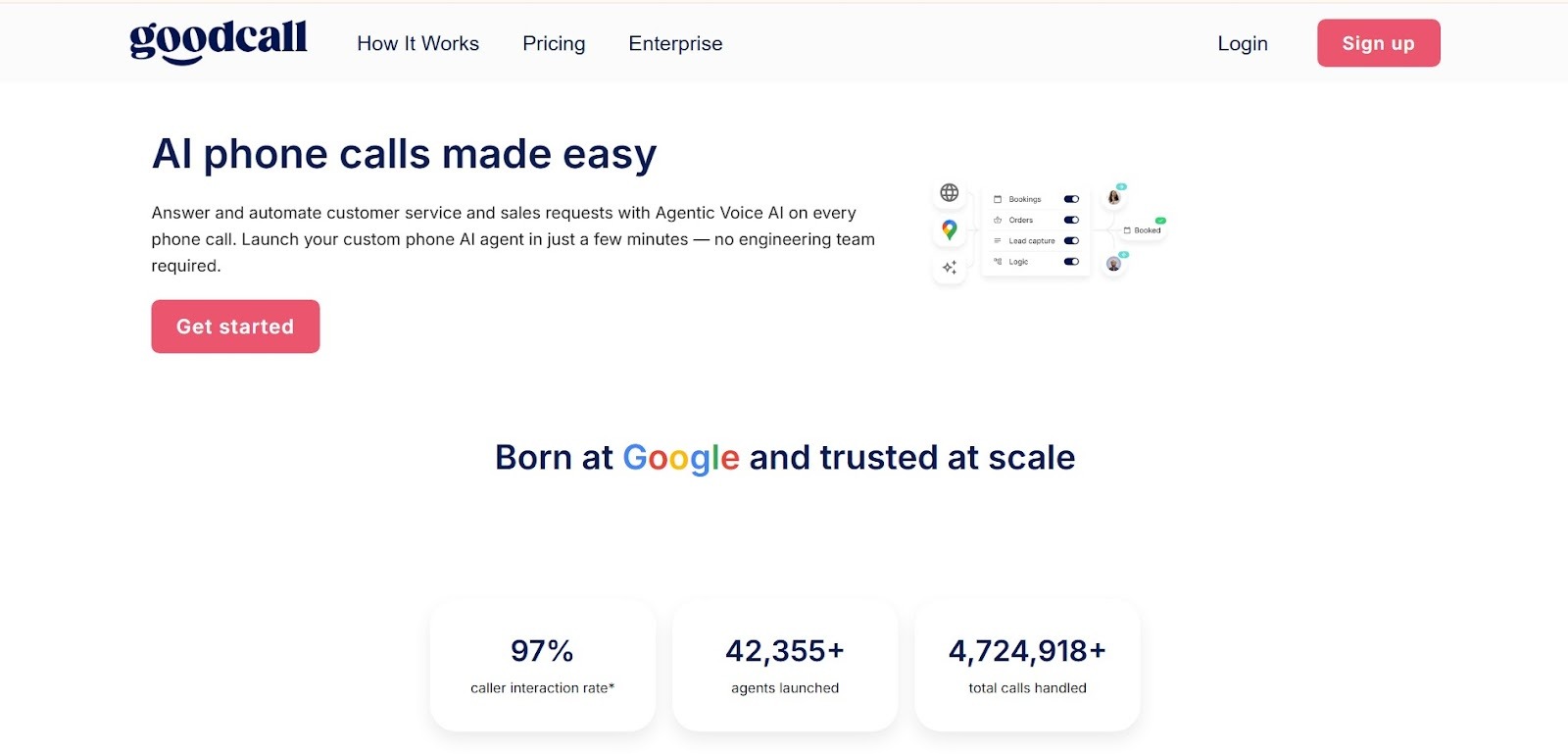
Goodcall is a modern AI receptionist software designed for small and medium-sized businesses. It uses conversational AI to answer calls, capture leads, schedule appointments, and automate customer interactions, with reliable 24/7 AI phone answering.
Key Features
- AI-powered conversational AI phone agent for natural call handling
- Automated appointment booking and scheduling
- Lead capture and call summaries
- Intelligent call routing to the right department
- CRM and business tool integrations
- 24/7 automated phone answering system
Pricing: Goodcall offers custom pricing depending on call volume, integrations, and business requirements.
2. PolyAI
PolyAI provides enterprise-grade business voice automation for large organizations and contact centers. Its conversational AI voice assistants handle complex customer conversations, automate service workflows, and improve call efficiency without relying on traditional IVR systems.
Key Features
- Advanced conversational AI voice assistants
- Natural language call understanding
- Enterprise contact center integrations
- Multilingual voice support
- Intelligent call routing and automation
- Detailed analytics and call insights
Pricing: PolyAI uses enterprise-level custom pricing based on deployment size, call volume, and integration needs.
3. Retell AI
Retell AI provides a flexible platform for building advanced conversational AI phone agents that automate customer conversations. Businesses can deploy AI voice assistants to handle inbound and outbound calls, improving efficiency through scalable business voice automation.
Key Features
- Customizable conversational AI voice agents
- Real-time speech recognition and natural conversations
- Developer-friendly APIs and integrations
- Automated call handling and workflow automation
- CRM and backend system integrations
- Scalable infrastructure for high call volumes
Pricing: Retell AI typically offers usage-based pricing, with costs depending on call duration, AI model usage, and integrations.
4. Dialpad AI
Dialpad AI is a cloud-based communication platform that combines voice intelligence with automated phone answering system capabilities. It helps businesses manage calls, analyze conversations, and improve customer interactions using advanced AI-powered insights.
Key Features
- AI-powered call transcription and summaries
- Intelligent call routing and voice automation
- Real-time conversation analytics
- Integration with CRM and productivity tools
- AI-driven call insights and reporting
- Cloud-based virtual receptionist software
Pricing: Dialpad plans generally start at around $15 per user per month, with higher-tier plans offering additional AI and business communication features.
5. Smith.ai
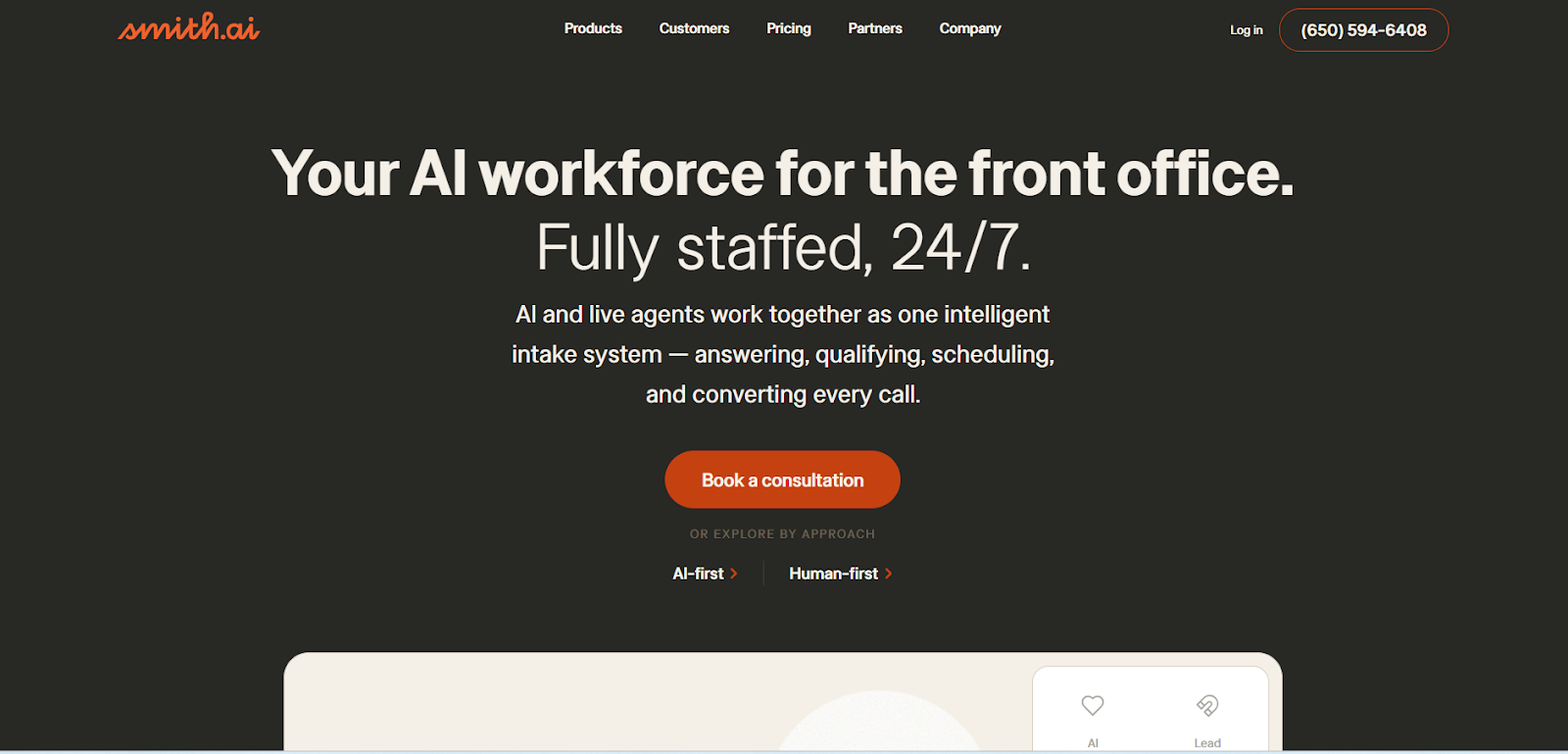
Smith.ai offers a hybrid AI call answering service that combines AI technology with live receptionists to manage customer calls. It helps businesses handle lead intake, appointment scheduling, and call routing through reliable virtual receptionist software.
Key Features
- AI-powered call screening and routing
- Hybrid AI and live receptionist support
- Lead qualification and intake services
- Appointment scheduling and booking
- CRM and business software integrations
- 24/7 call answering capabilities
Pricing: Smith.ai plans typically start at around $285 per month, depending on call volume and service requirements.
6. CloudTalk
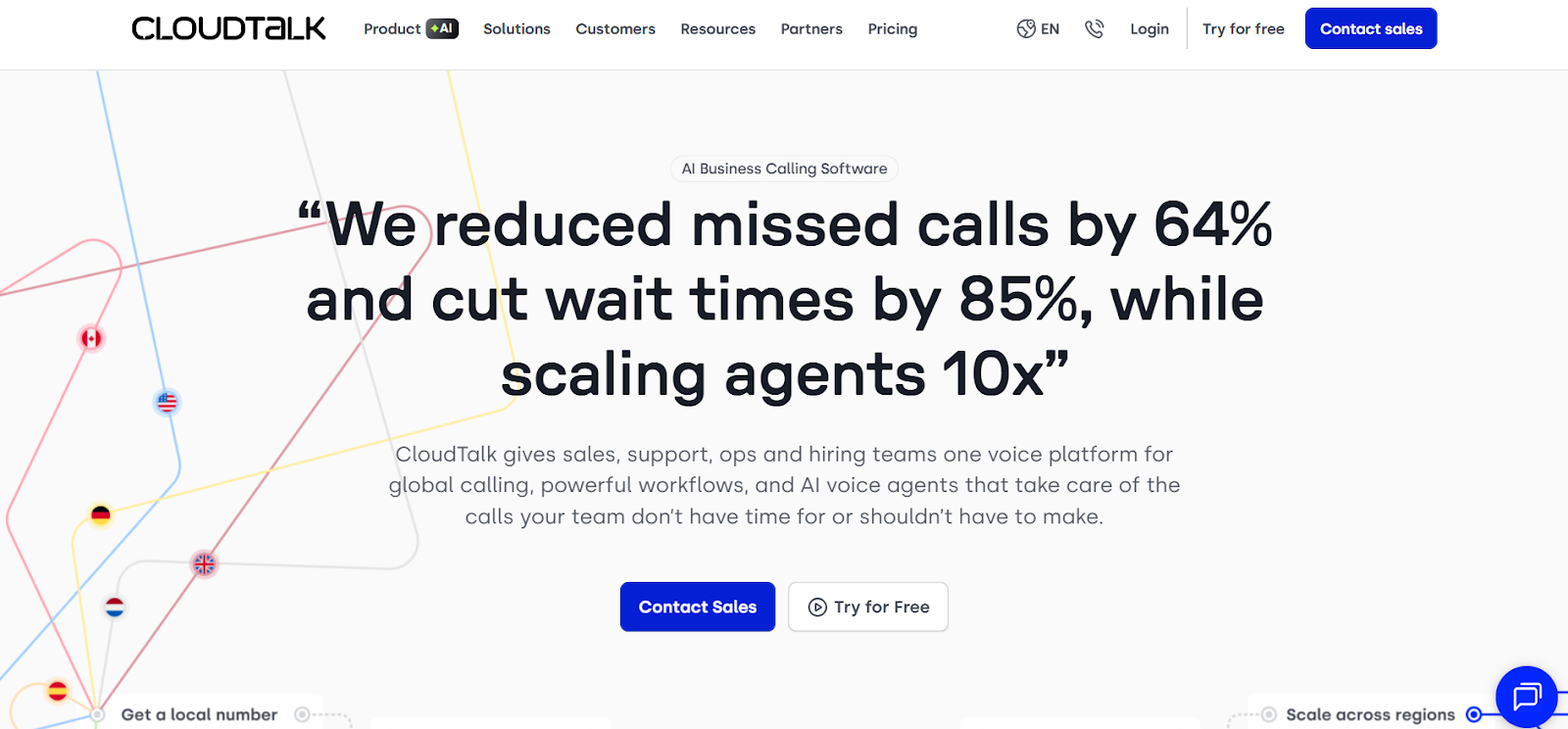
CloudTalk is a cloud-based business phone system that integrates AI-powered features with advanced call management. It helps businesses automate workflows, improve call-handling efficiency, and scale customer communication with business voice automation tools.
Key Features
- AI-powered call transcription and analytics
- Smart call routing and automation workflows
- CRM integrations with major platforms
- International calling and global coverage
- Call monitoring and performance insights
- Cloud-based automated phone answering system
Pricing: CloudTalk pricing typically starts at around $25 per user per month, with additional AI features available in higher-tier plans.
7. RingCentral AI Receptionist
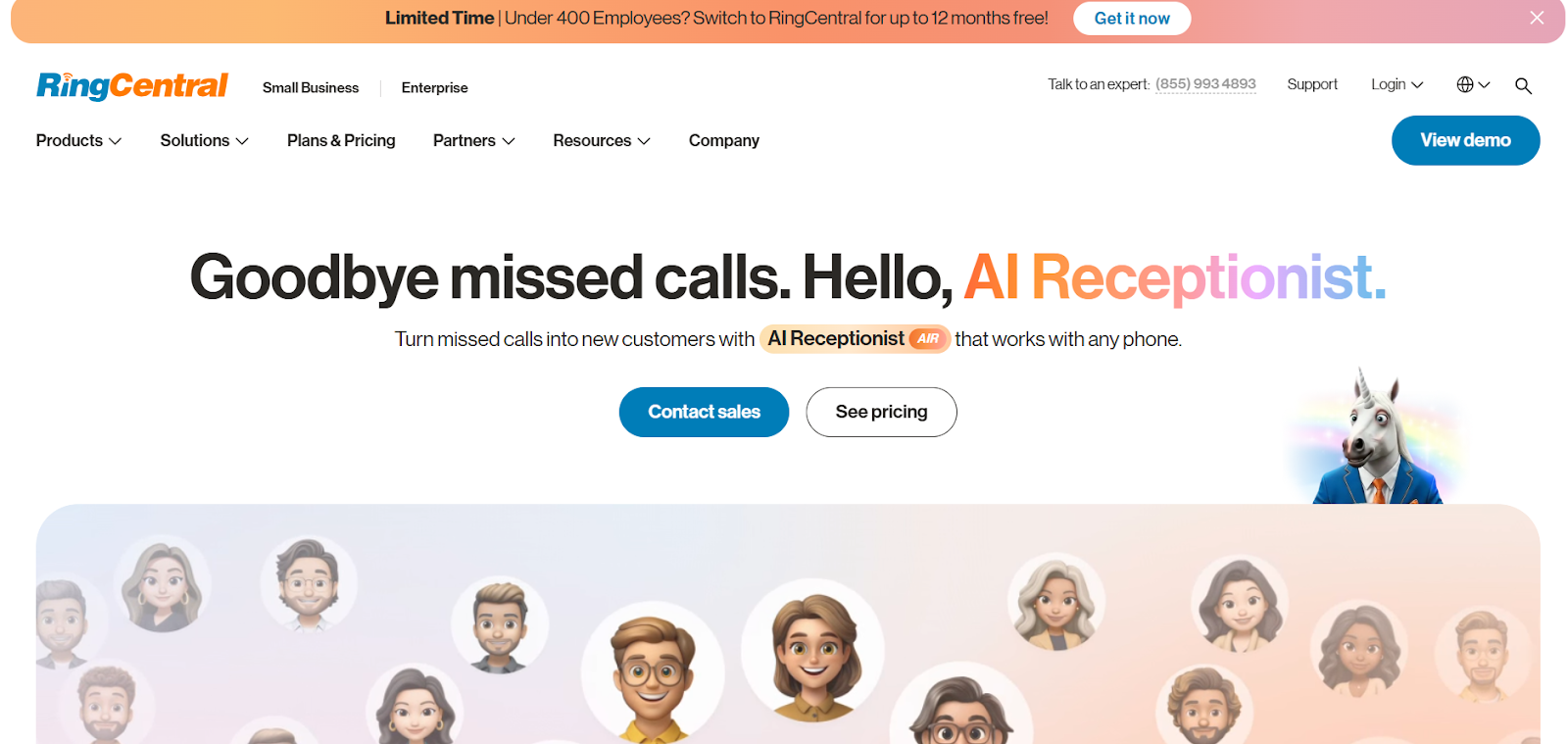
RingCentral AI Receptionist is an intelligent conversational AI phone agent built into the RingCentral communication platform. It answers calls, routes customers, captures leads, and schedules appointments through natural voice conversations and 24/7 AI phone answering.
Key Features
- AI-powered call answering with natural language understanding
- Intelligent call routing based on caller intent
- Automated appointment scheduling and follow-up texts
- Lead capture with customizable intake questions
- CRM integrations, such as Salesforce, for automatic updates
- Analytics dashboards and call performance insights
Pricing: RingCentral AI receptionist pricing generally starts around $39 per month, typically including a set number of minutes, with additional minutes available as usage bundles.
How to Choose the Right AI Voice Receptionist for Your Business
Choosing the right AI receptionist platform depends on business size, customer communication needs, and integration requirements. To select the most suitable AI call answering service, businesses should evaluate the following factors:
- Identify Business Call Needs
Analyze call volume, peak hours, and common customer inquiries. This helps determine whether the business needs basic automated phone answering system features or advanced conversational AI capabilities.
- Evaluate Conversational AI Quality
Choose a platform with a reliable conversational AI phone agent that understands natural speech. High-quality voice recognition improves call accuracy and customer experience.
- Check CRM and Software Integrations
The best AI receptionist software should integrate with CRM systems, scheduling tools, and helpdesk platforms. This ensures customer data is automatically recorded and workflows remain efficient.
- Look for 24/7 Availability
Businesses that receive after-hours inquiries should prioritize platforms offering 24/7 AI phone answering. Continuous availability helps capture leads and support customers at any time.
- Review Industry-Specific Features
Certain industries require specialized workflows. For example, an AI receptionist in a medical office must support appointment scheduling and patient communication.
- Assess Scalability and Pricing
Choose a solution that scales with business growth. Flexible business voice automation platforms can manage increasing call volumes without requiring additional staff.
Future of AI Virtual Receptionist Voice Technology
AI voice technology is rapidly evolving, transforming how businesses manage customer communication and automate phone interactions. Here are the key innovations that will shape the future of the best AI virtual receptionist voice technology:
- More Human-Like Conversations
Advances in conversational AI and voice synthesis will enable AI receptionists to hold longer, context-aware conversations. Future conversational AI phone agents will understand tone, intent, and emotions, creating more natural and engaging customer interactions.
- Deeper Business Integrations
Future virtual receptionist software will integrate deeply with CRM platforms, scheduling tools, and internal workflows. This integration will allow AI receptionists to automatically log calls, update records, and trigger follow-ups without manual intervention.
- Industry-Specific AI Receptionists
AI voice systems will become specialized for industries such as healthcare, real estate, and legal services. For example, an AI receptionist for medical office workflows may efficiently handle patient scheduling, reminders, and insurance-related inquiries.
- Predictive Customer Interaction
Future business voice automation tools will analyze customer history, behavior patterns, and past interactions. This will allow AI systems to anticipate callers' needs, personalize responses, and provide faster solutions during phone conversations.
- Advanced Multilingual Support
Next-generation AI call answering service platforms will support fluent multilingual conversations. Businesses will be able to assist customers in multiple languages, improving accessibility and expanding their reach to diverse audiences worldwide.
Final Thoughts
AI-powered virtual receptionist technology is transforming how businesses handle customer communication. From 24/7 AI phone answering to intelligent call routing and appointment booking, AI receptionists help companies deliver faster, more efficient, and consistent service.
As business voice automation advances, AI-powered receptionists will become a core part of modern customer engagement. Businesses that adopt the best AI receptionist software early will gain a competitive advantage through improved responsiveness, a better customer experience, and scalable communication systems.
Still relying on voicemail or IVR? Switch to Goodcall today and give your business an intelligent AI receptionist that answers calls, routes customers, and books appointments automatically.
FAQs
What is the best AI virtual receptionist for businesses?
The best AI virtual receptionist voice technology depends on business size and needs. Platforms like Goodcall, PolyAI, and Smith.ai offer strong AI call-answering features, including appointment booking, call routing, and CRM integrations.
How much does an AI receptionist cost per month?
Pricing for virtual receptionist software typically ranges from $50 to several hundred dollars per month. Enterprise solutions may use custom pricing based on call volume, integrations, and advanced business voice automation capabilities.
Can AI answer calls 24/7?
Yes. One major advantage of 24/7 AI phone answering is continuous availability. AI voice receptionists handle calls day and night, ensuring businesses never miss customer inquiries, leads, or appointment requests.
Is an AI voice receptionist better than IVR?
Modern conversational AI phone agents are generally more effective than traditional IVR systems. Instead of navigating menus, callers speak naturally, and the AI understands their request and intelligently routes the call.
Does an AI receptionist integrate with CRMs?
Most AI receptionist software platforms integrate with CRM tools, calendars, and helpdesk systems. These integrations allow the AI to log calls, capture leads, update customer records, and automate follow-ups.
Is an AI virtual receptionist secure for medical offices?
Yes, many platforms provide an AI receptionist for medical office environments with HIPAA-compliant security features. The Department of Health & Human Services regulates healthcare data protection under HIPAA.
Can AI book appointments automatically?
Yes. Many AI call answering service platforms include scheduling capabilities. The AI connects with calendars and booking tools to automatically schedule, confirm, and reschedule appointments during phone calls.