#Voice AI
June 26, 2026
12 Best ChatGPT Alternatives Transforming Business Productivity
Share this post


Explore AI Summary


.jpg)
The rapid adoption of generative AI has transformed how businesses and professionals research, write, code, and automate workflows. While ChatGPT remains a leading tool, many organizations are now exploring ChatGPT alternatives tailored to specific workflows, compliance needs, and integrations.
This article explores the best ChatGPT alternatives across categories from writing and coding to marketing and AI assistant development. It compares features, pricing, strengths, and limitations to help professionals choose the right alternative for their needs.
These ChatGPT alternatives cover diverse use cases, from coding and automation to marketing, research, and multimodal content creation, helping businesses adopt specialized AI similar to ChatGPT to achieve targeted productivity gains.
Selecting the right platform requires evaluating more than conversational ability. The most effective AI similar to ChatGPT excel across productivity, accuracy, and integration.
Not all AI chatbot alternatives serve the same purpose. Some tools excel in writing, while others focus on coding, research, automation, or marketing workflows. Use-case specialization determines output quality and efficiency. For example:
Organizations evaluating generative AI websites like ChatGPT should prioritize purpose-built platforms for their industry or function rather than generalist chatbots.
Model intelligence determines how effectively AI processes logic, multi-step prompts, and complex analysis. High-reasoning systems can:
Advanced reasoning is critical for finance, healthcare, compliance, and strategy teams looking for better alternatives to ChatGPT for analytical work.
Factual reliability remains one of the most important evaluation criteria.Ensuring the authenticity of AI-generated content is crucial, prompting the use of tools like an ai checker to verify originality and prevent plagiarism. Hallucinated or outdated information can create operational and reputational risks.
High-accuracy ChatGPT competitors typically offer:
Research-focused AI chatbot alternatives are especially valuable for analysts, journalists, and compliance teams requiring trustworthy outputs.
AI tools deliver maximum value when embedded into existing workflows. Integration depth often determines enterprise adoption. Key ecosystem integrations include:
For organizations seeking other AI like ChatGPT, native integrations reduce manual work and improve automation efficiency.
Modern ChatGPT alternatives extend beyond text. Multimodal AI systems can process and generate:
As AI-generated visuals become increasingly common, businesses may also use an AI image detector to help identify whether images were created by generative AI models. This can support content verification, media review, and digital asset management processes.
This capability enables broader enterprise applications, including visual design, document analysis, training simulations, and voice assistants.
Customization is critical for businesses deploying AI at scale. Leading platforms allow teams to build proprietary AI assistants trained on internal data.
Customization features may include:
These capabilities transform generic AI chatbot alternatives into domain-specific digital employees capable of handling support, onboarding, or sales workflows.
Security is a top concern for enterprises evaluating websites like ChatGPT. AI platforms must align with regulatory and corporate governance standards.
Key compliance benchmarks include:
Vendors offering enterprise AI similar to ChatGPT often provide private cloud deployments and audit controls to protect sensitive data.
Pricing scalability determines long-term ROI. Organizations must assess whether costs grow sustainably with usage.
Common pricing models include:
The best ChatGPT alternatives offer flexible pricing that supports startups through large enterprises without steep cost escalations.
Static knowledge models limit research accuracy. Real-time web access enables AI to retrieve current information, making outputs more relevant. This is essential for:
Tools with live search capabilities provide more accurate, time-sensitive insights than closed-knowledge systems.
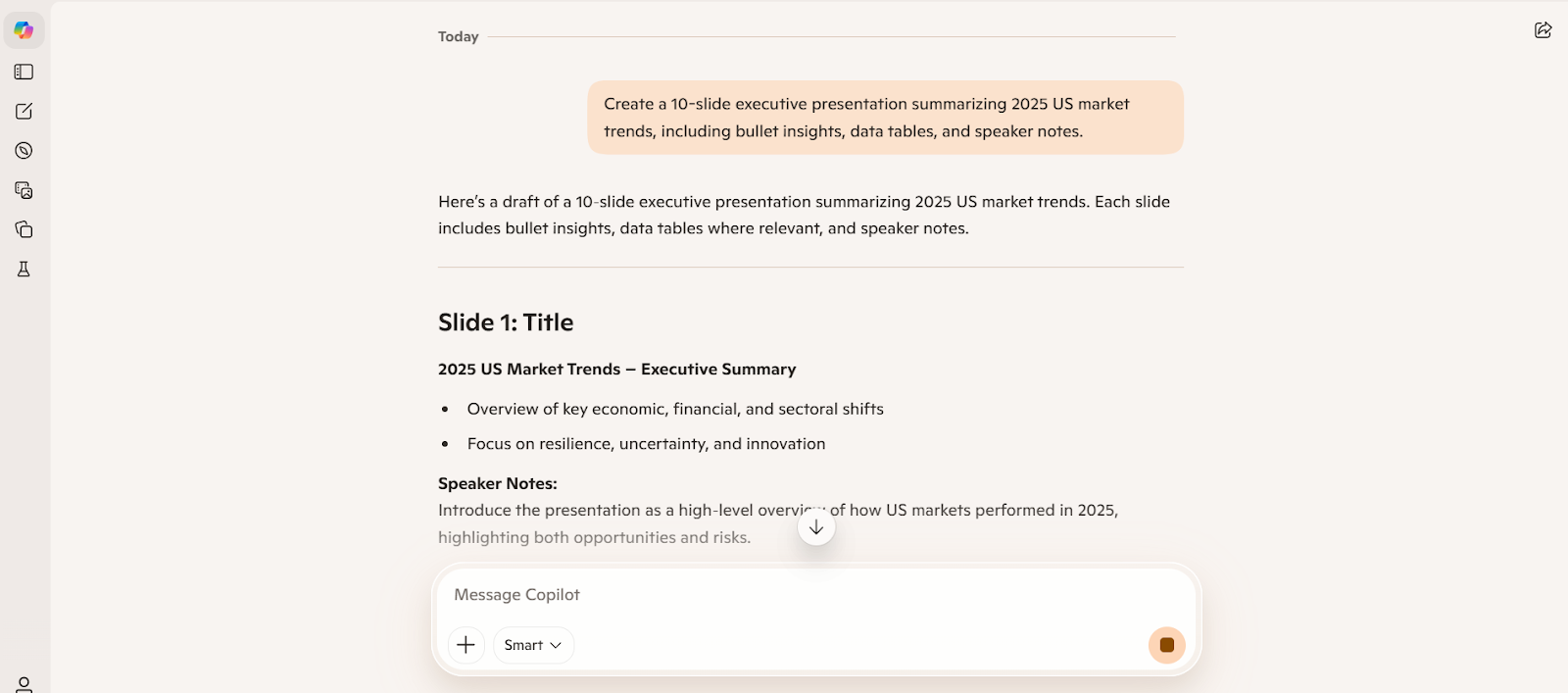
Microsoft Copilot stands out among ChatGPT alternatives designed for professionals working across productivity, analytics, and collaboration workflows. Embedded within Microsoft 365, it assists with document drafting, spreadsheet analysis, meeting summaries, and enterprise knowledge retrieval. For organizations already using Microsoft tools, it serves as a deeply integrated AI similar to ChatGPT that enhances day-to-day operational efficiency.
Prompt: Create a 10-slide executive presentation summarizing 2025 US market trends, including bullet insights, data tables, and speaker notes.
Pros:
Cons
Pricing
For corporate environments looking for better AI than ChatGPT for productivity, Copilot often leads due to workflow embedding rather than standalone chat.
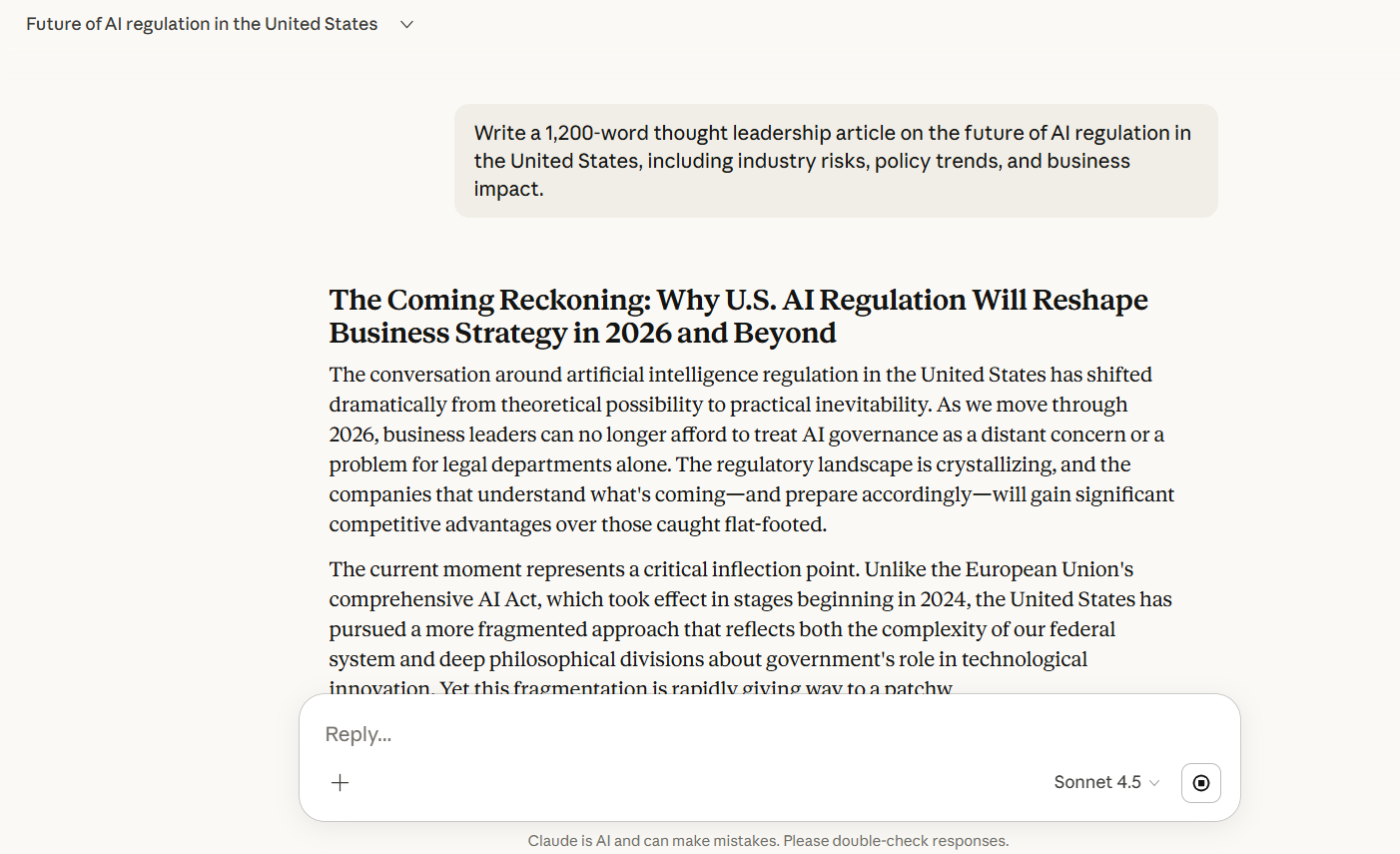
Claude is widely recognized as one of the best ChatGPT alternatives for long-form writing, editing, and document analysis. Developed by Anthropic, it specializes in producing natural, context-aware content with strong coherence. Professionals use this AI like ChatGPT for blogs, reports, whitepapers, and research summaries requiring depth and accuracy.
Prompt: Write a 1,200-word thought leadership article on the future of AI regulation in the United States, including industry risks, policy trends, and business impact.
Pros:
Cons:
Pricing: Claude offers a free access tier with usage limits, making it comparable to other free AI chatbot alternatives. Paid plans such as Claude Pro provide higher usage caps, faster responses, and priority access. API pricing is available for businesses scaling content workflows.
Google Gemini is one of the most powerful ChatGPT alternatives for users deeply embedded in the Google ecosystem. Developed by Google, it integrates seamlessly with Gmail, Docs, Sheets, Slides, and Drive. This makes it a highly efficient AI similar to ChatGPT for professionals managing communication, documentation, and data within Google Workspace.
Prompt: Analyze quarterly sales performance trends across regions, identify the top three growth drivers, highlight underperforming segments, and recommend data-backed strategies to improve revenue in the next quarter.
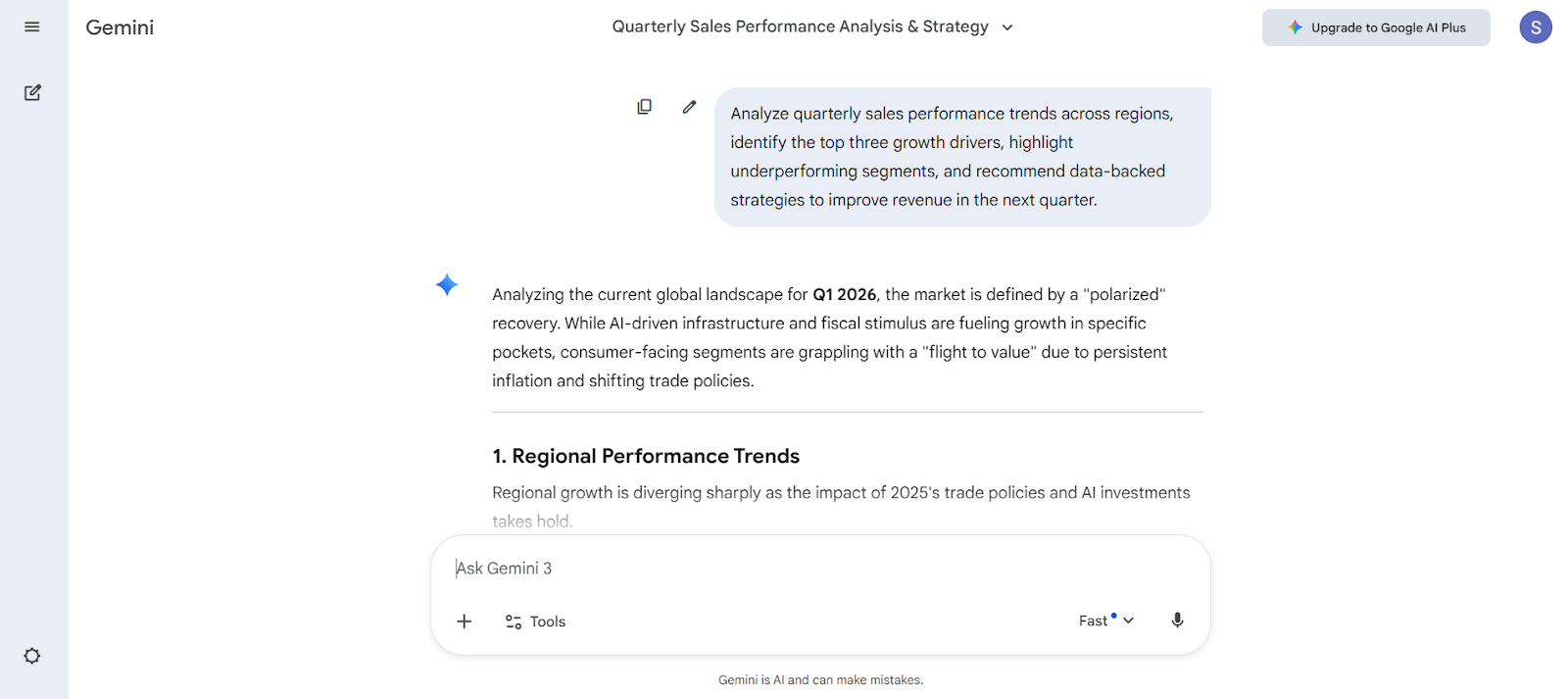
Alt Text: Google Gemini: ChatGPT Alternative for Integration With Google Services
Pros:
Cons:
Pricing: Google Gemini offers a free version for general users, making it accessible among websites like ChatGPT. Gemini Advanced is available via a monthly subscription, providing enhanced model capabilities, higher usage limits, and deeper Workspace integrations for business users.
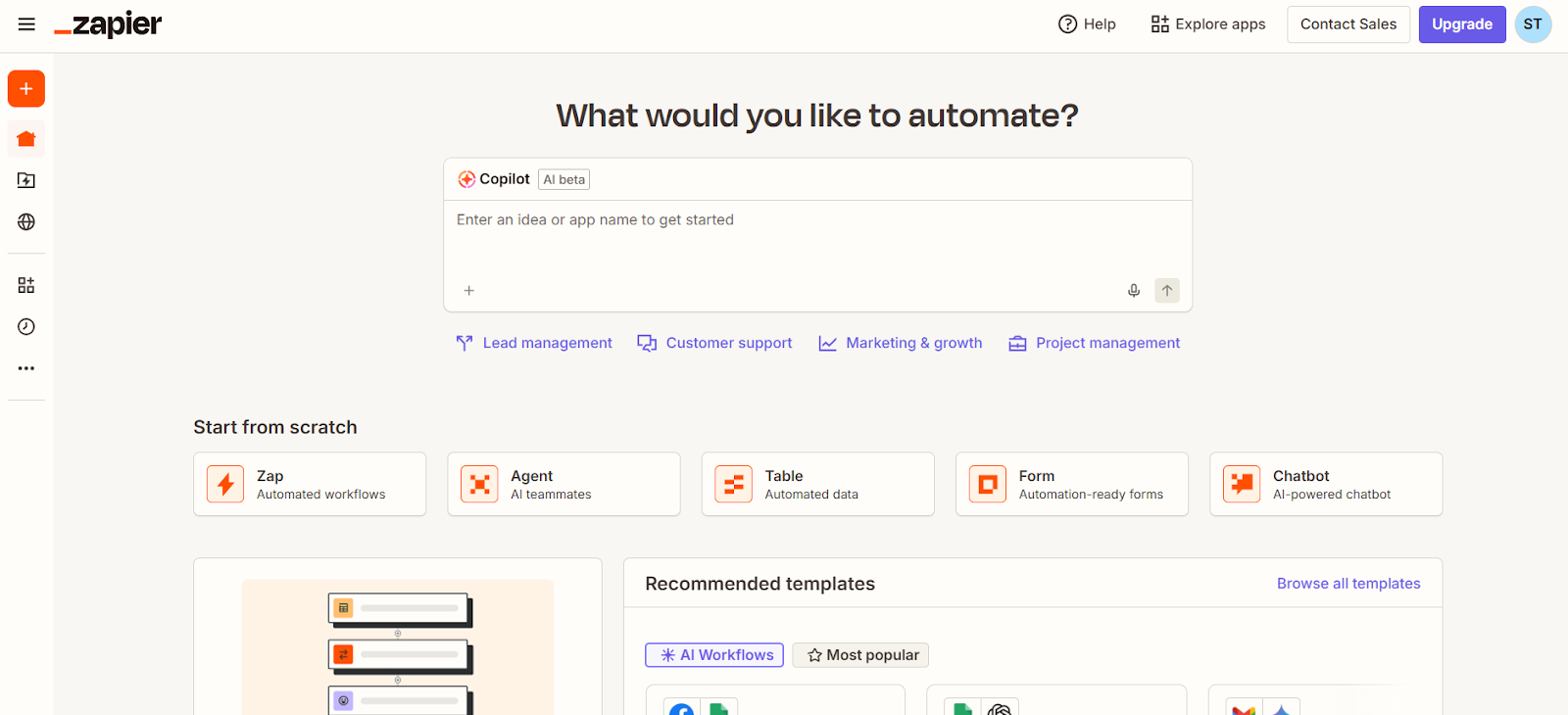
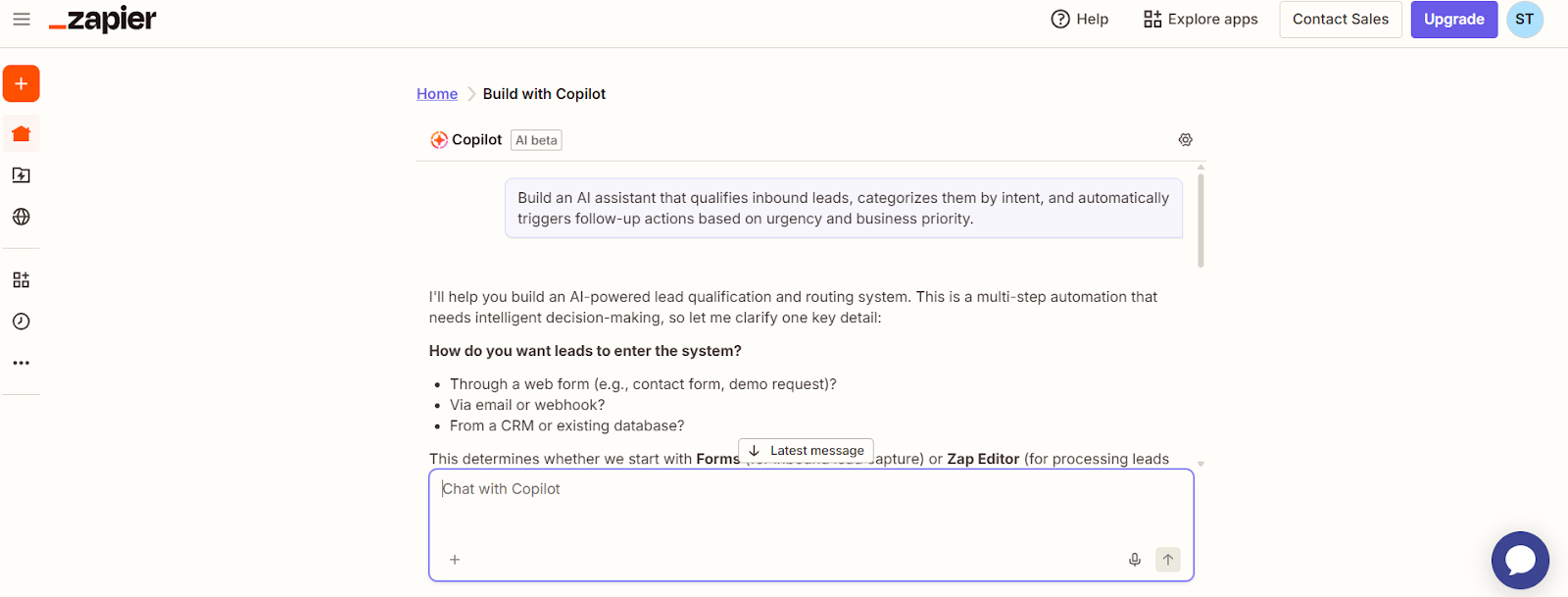
Zapier AI is one of the most automation-focused ChatGPT alternatives for building functional AI assistants connected to real business workflows. Developed by Zapier, it enables users to create AI agents that trigger actions across thousands of apps. This makes it a powerful AI similar to ChatGPT for teams looking to automate support, operations, lead routing, and internal processes.
Prompt: Build an AI assistant that qualifies inbound leads, categorizes them by intent, and automatically triggers follow-up actions based on urgency and business priority.
Pros:
Cons:
Pricing: Zapier AI is included within Zapier’s automation platform pricing. It offers a free tier with limited tasks, while paid plans scale based on automation volume, premium integrations, and enterprise workflow needs.
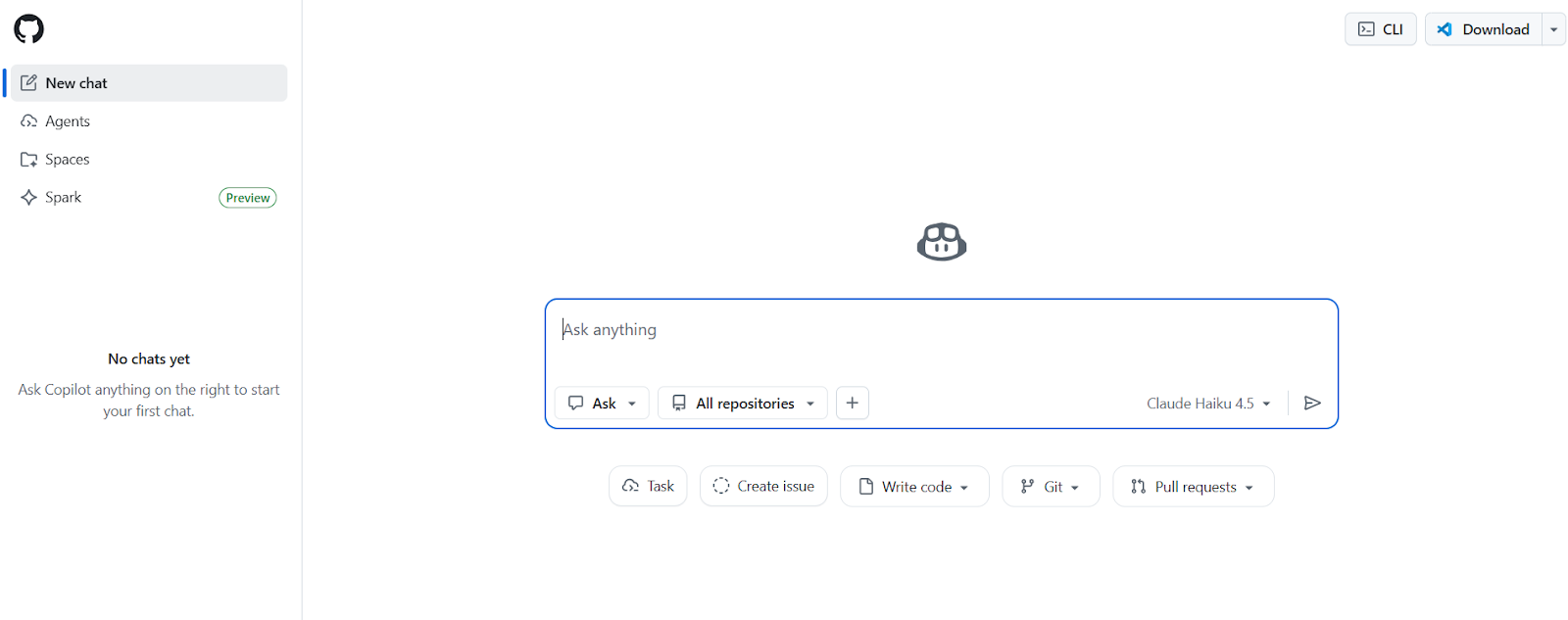
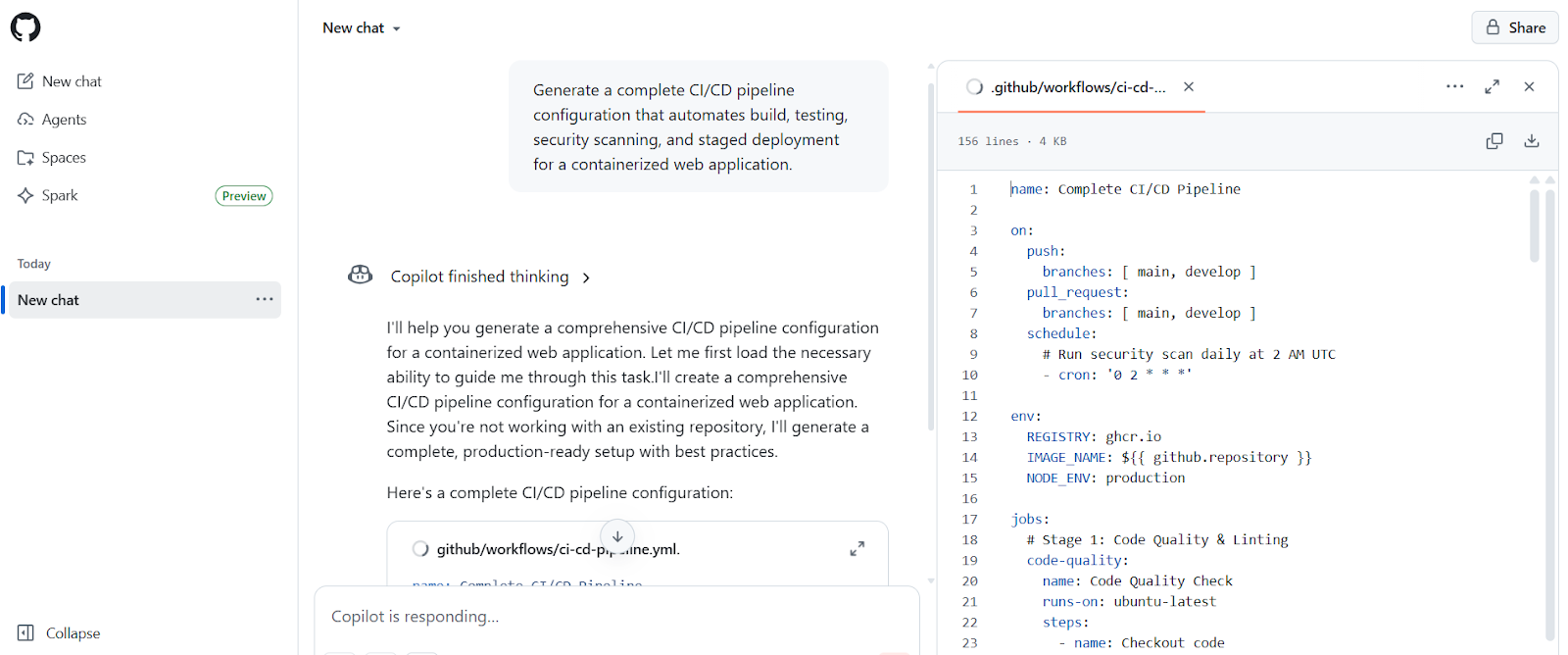
GitHub Copilot is one of the most developer-centric ChatGPT alternatives for CI/CD environments. Built by GitHub in collaboration with Microsoft, it embeds AI directly into development pipelines and IDEs. This makes it a highly practical AI similar to ChatGPT for automating code generation, testing scripts, and deployment workflows within continuous integration and delivery processes.
Prompt: Generate a complete CI/CD pipeline configuration that automates build, testing, security scanning, and staged deployment for a containerized web application.
Pros:
Cons:
Pricing: GitHub Copilot offers subscription-based pricing for individuals, businesses, and enterprises. Plans scale based on user access, security controls, and administrative features, making it suitable for both small dev teams and large CI/CD infrastructures.
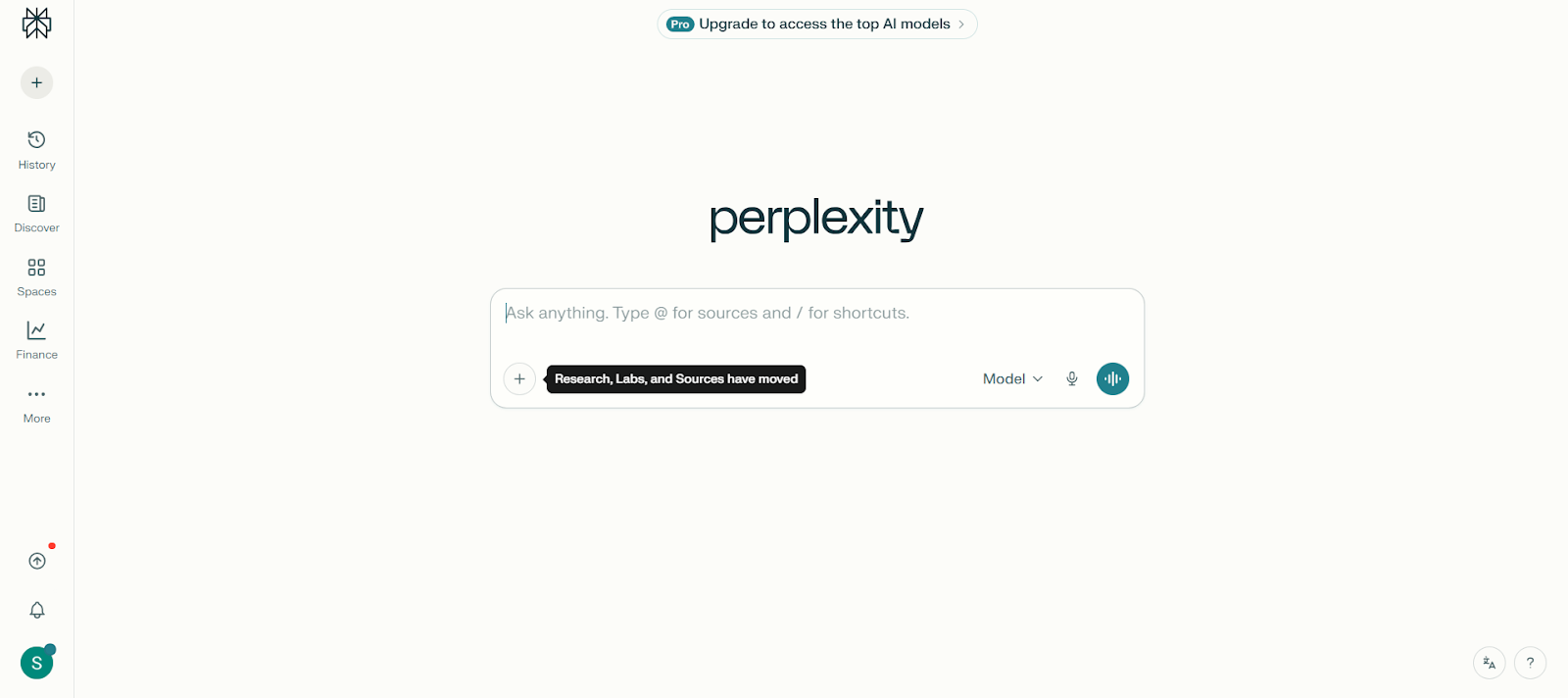
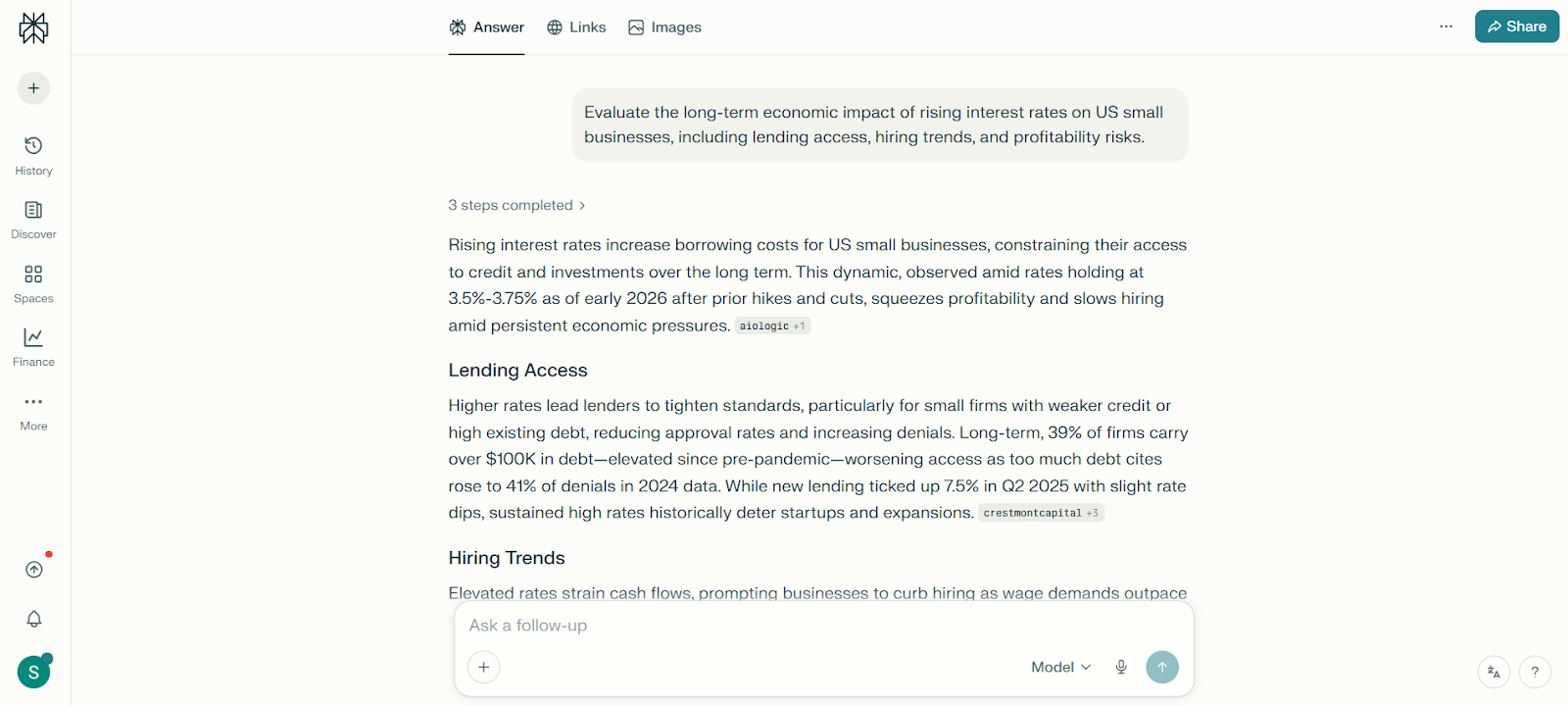
Perplexity AI is a research-driven AI platform designed for structured thinking and evidence-backed responses. It combines large language models with live search retrieval to deliver logically reasoned answers, making it a strong choice for analytical tasks, academic research, and decision support workflows.
Prompt: Evaluate the long-term economic impact of rising interest rates on US small businesses, including lending access, hiring trends, and profitability risks.
Pros:
Cons:
Pricing: Perplexity AI offers a free version with robust reasoning features, making it a competitive option among free AI chatbot alternatives. The Pro plan unlocks advanced models, deeper research capabilities, faster responses, and expanded usage limits for professional users.
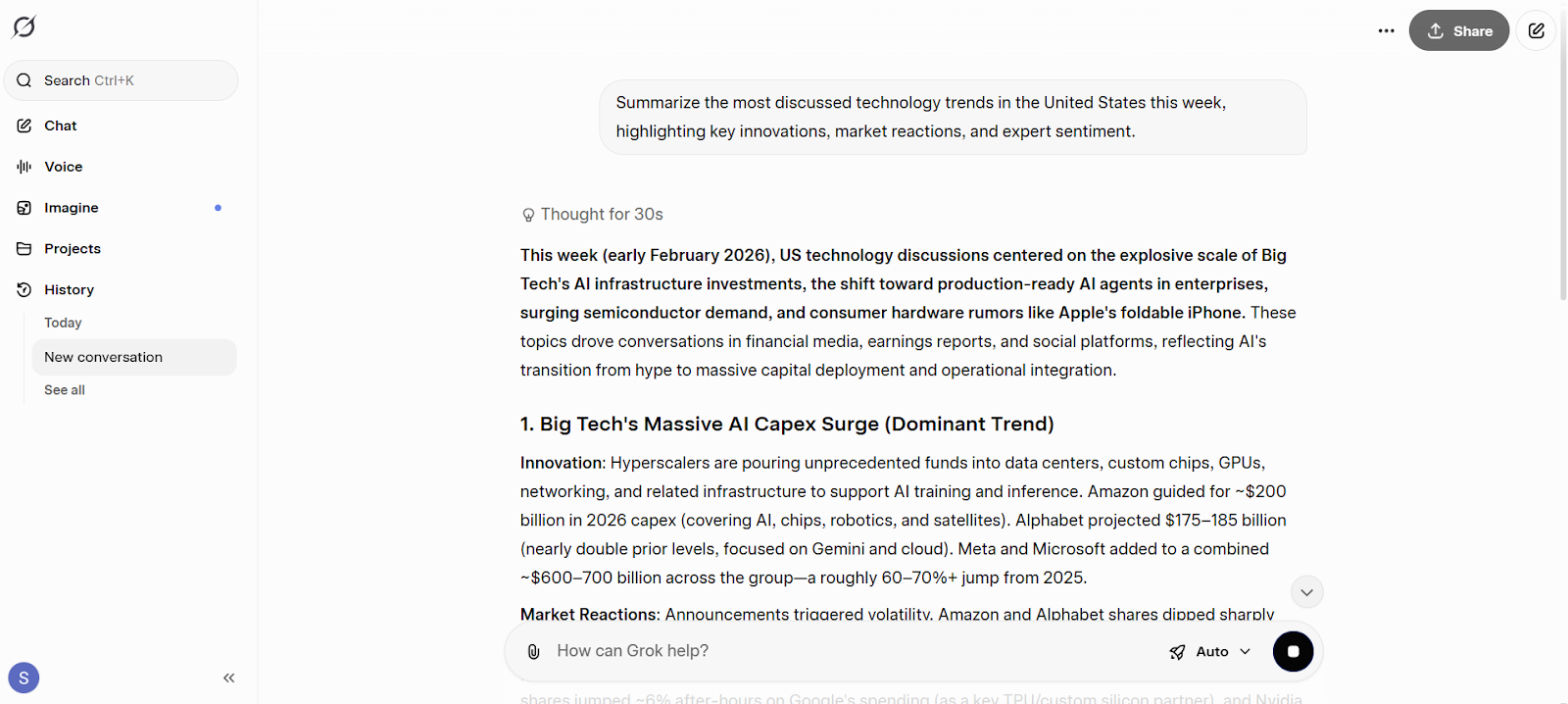
Grok, developed by xAI, is designed for real-time discovery and conversational search across live web data. Integrated with the X platform, it delivers timely insights, trending discussions, and current event analysis, making it a strong ChatGPT alternative for dynamic information retrieval.
Prompt: Summarize the most discussed technology trends in the United States this week, highlighting key innovations, market reactions, and expert sentiment.
Pros:
Cons:
Pricing: Grok is available through premium subscription tiers on X. Pricing typically bundles access with advanced platform features, including enhanced AI responses, higher usage limits, and priority access to new model capabilities.
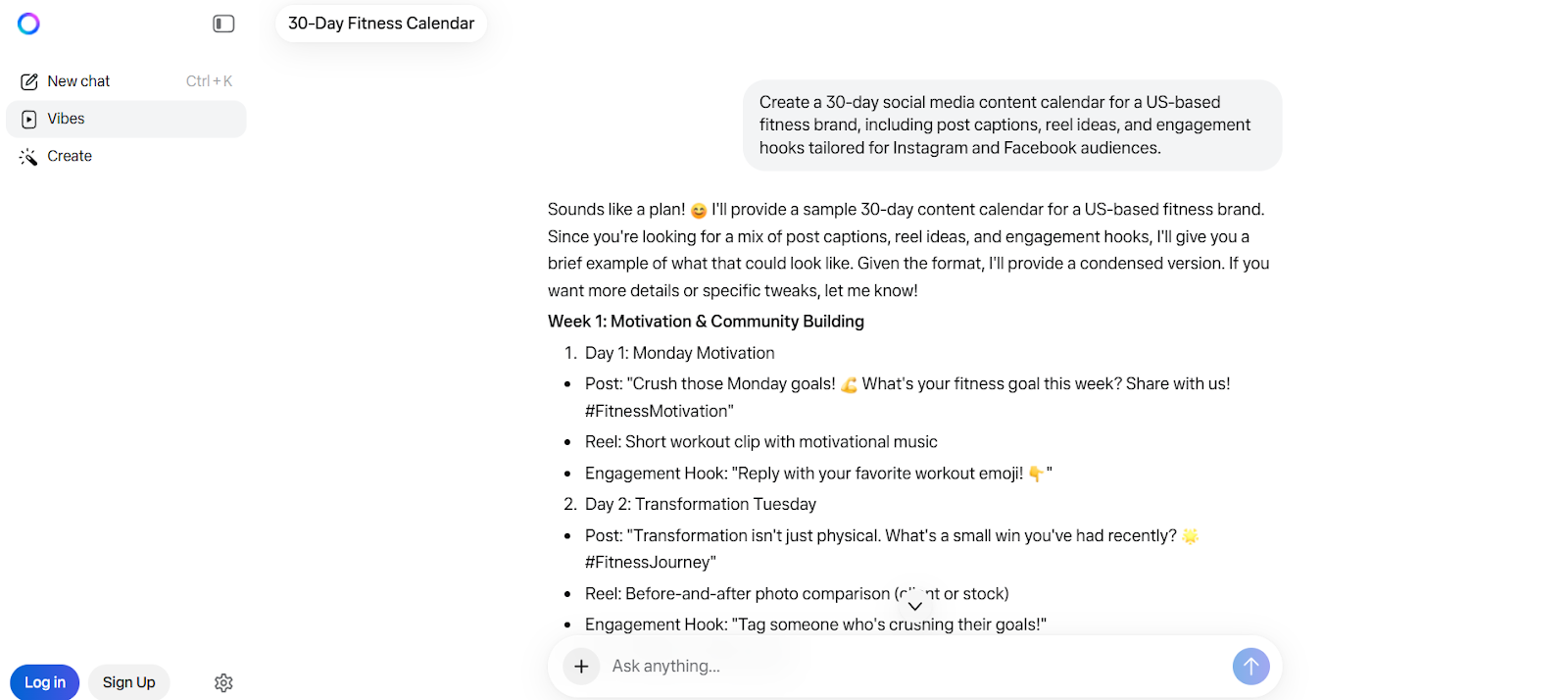
Meta AI, developed by Meta Platforms, is designed to operate natively across Meta’s social ecosystem, including Facebook, Instagram, and WhatsApp. It enables conversational assistance, content generation, and engagement support directly within social platforms, making it a practical AI similar to ChatGPT for social communication workflows.
Prompt: Create a 30-day social media content calendar for a US-based fitness brand, including post captions, reel ideas, and engagement hooks tailored for Instagram and Facebook audiences.
Pros:
Cons:
Pricing: Meta AI is currently available free within Meta’s social applications, making it one of the most accessible AI chatbot alternatives. Businesses can leverage its features without additional subscription costs, though advanced enterprise capabilities remain limited compared to other ChatGPT competitors.

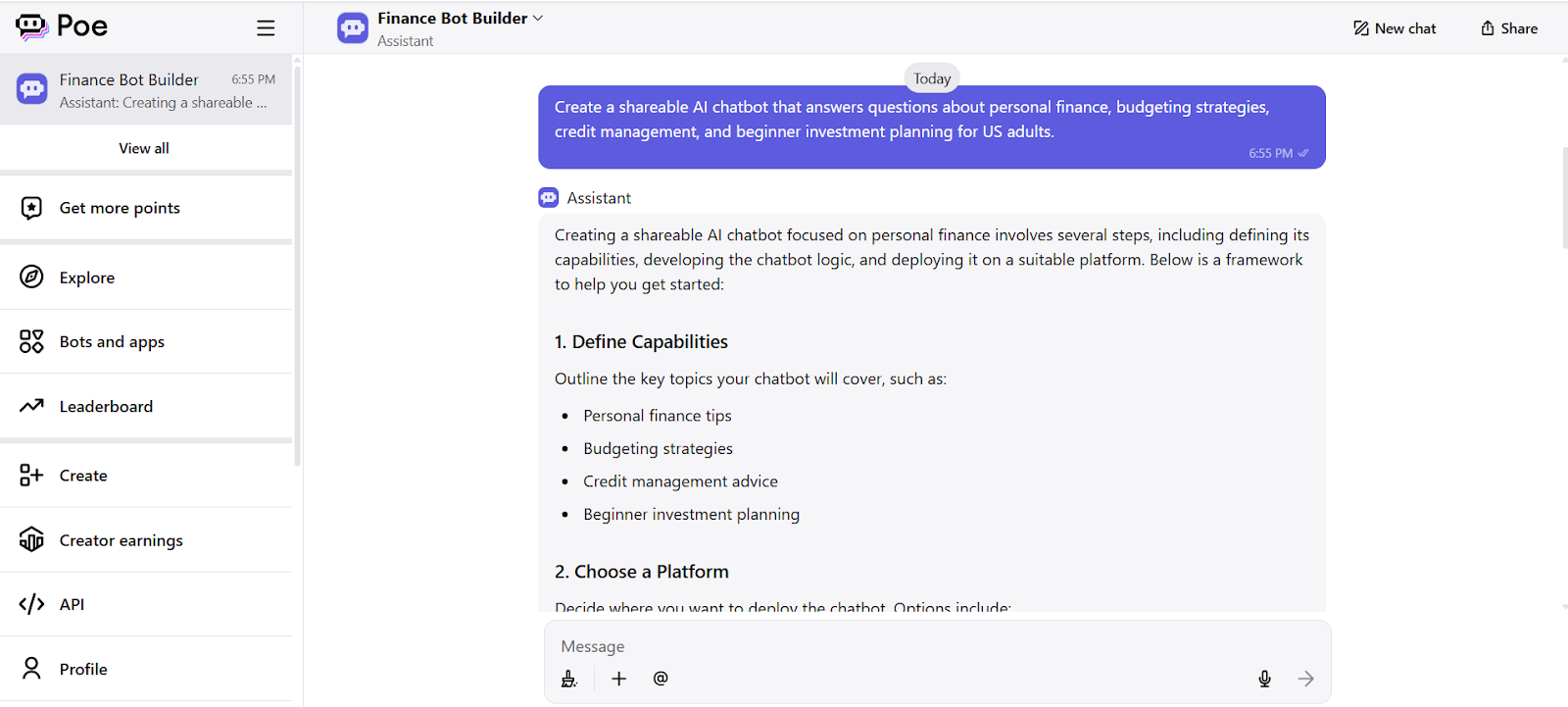
Poe by Quora is designed for users who want to create, customize, and distribute AI chatbots without complex development. It allows individuals and businesses to build shareable bots powered by multiple models, making it a flexible ChatGPT alternative for education, support, and community engagement.
Prompt: Create a shareable AI chatbot that answers questions about personal finance, budgeting strategies, credit management, and beginner investment planning for US adults.
Pros:
Cons:
Pricing: Poe offers a free tier that supports basic bot creation and access to select models, positioning it among accessible AI chatbot alternatives. Paid subscription plans unlock premium models, higher usage limits, and enhanced performance for advanced chatbot deployments.

Cursor is an AI-first code editor designed to embed intelligent assistance directly into the development environment. Built on advanced language models, it enables developers to write, edit, refactor, and debug code conversationally inside the IDE, making it one of the fastest-growing ChatGPT alternatives for modern engineering teams.
Prompt: Optimize a backend API service to improve performance, reduce latency, and implement structured error handling with logging best practices.
Pros:
Cons:
Pricing: Cursor offers a free tier with limited AI usage, suitable for individual developers exploring AI similar to ChatGPT for coding. Paid plans unlock higher query limits, faster processing, and enhanced project-wide intelligence for professional development teams.
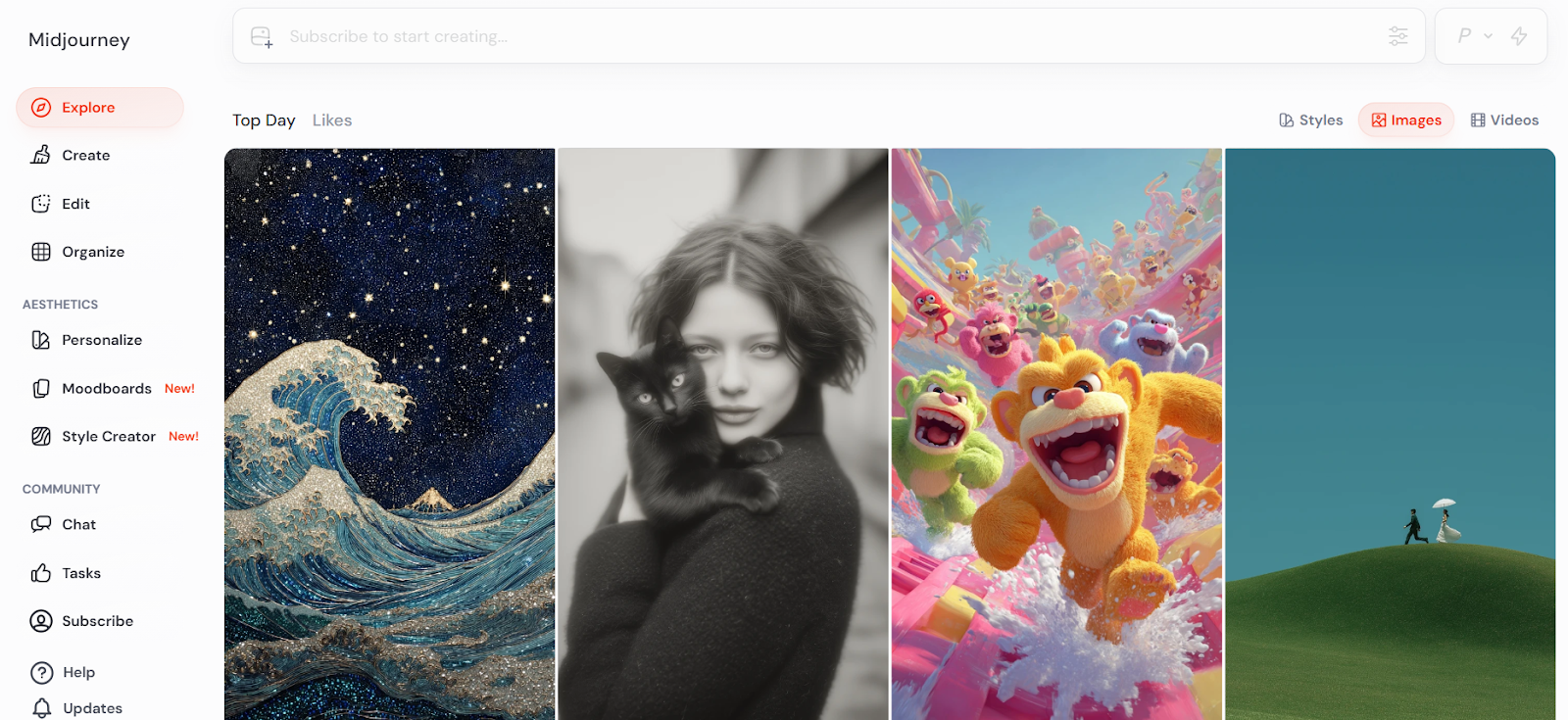
Midjourney is one of the most advanced ChatGPT alternatives for AI image generation. Developed by Midjourney, Inc., it specializes in creating high-fidelity, artistic, and cinematic visuals from text prompts. Designers, marketers, and creative teams use this AI similar to ChatGPT to produce concept art, ad creatives, and branded visuals at scale.
Prompt: Generate a hyper-realistic image of a futuristic New York City skyline at sunset, featuring neon reflections, flying vehicles, and cinematic lighting.
Pros:
Cons:
Pricing: Midjourney operates on a subscription-based model with multiple tiers based on generation speed and usage limits. Higher plans unlock faster rendering, private generation options, and expanded commercial usage rights for professional creators.
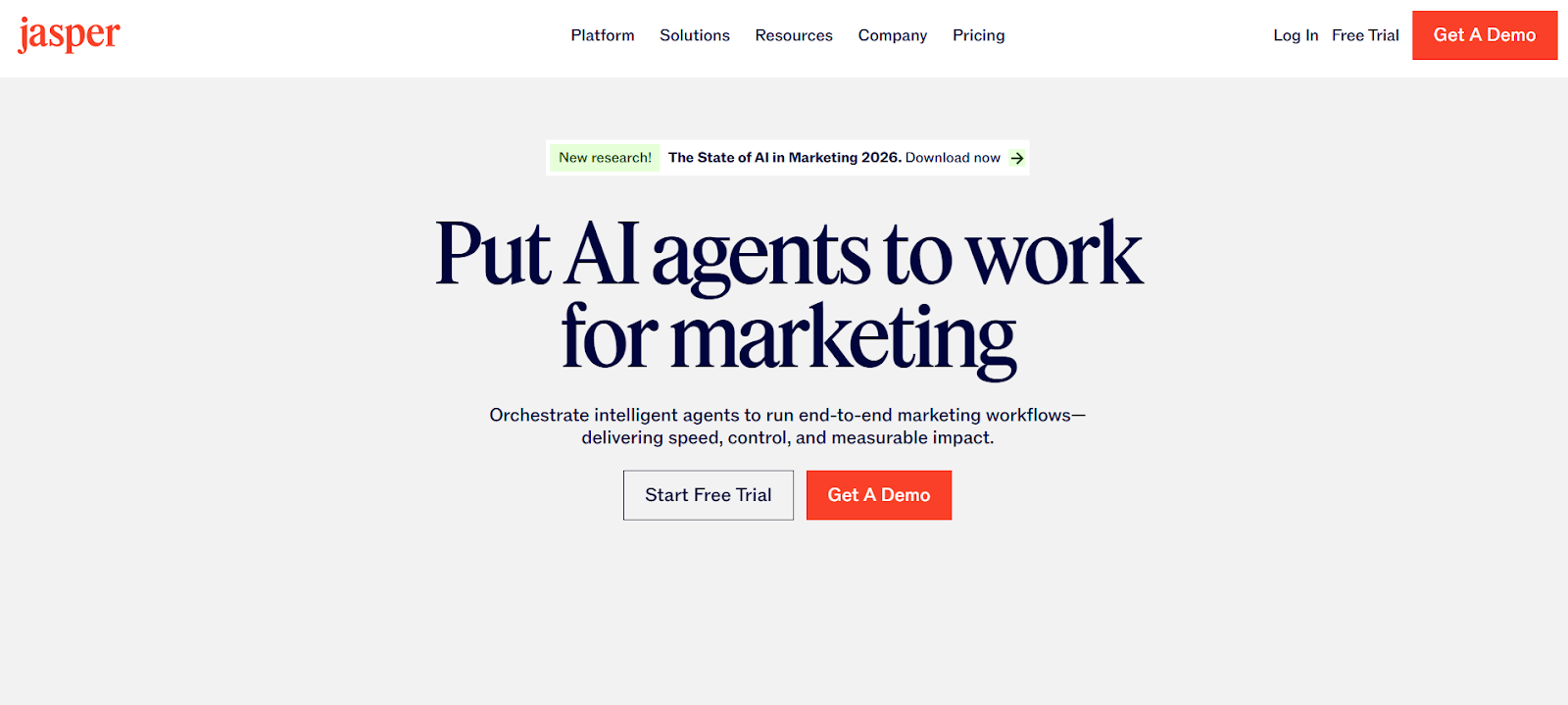
Jasper AI, developed by Jasper AI, Inc., is purpose-built for marketing teams seeking performance-driven ChatGPT alternatives. It specializes in campaign content, brand voice consistency, and conversion-focused copy. This makes it a preferred AI similar to ChatGPT for advertising, email marketing, SEO, and sales enablement workflows.
Prompt: Write a high-converting product launch campaign for a new fitness app in the US, including email sequences, ad copy, and landing page messaging.
Pros:
Cons:
Pricing: Jasper AI offers tiered subscription plans designed for individuals, teams, and enterprises. Pricing varies based on content volume, collaboration features, and brand voice customization, making it scalable for both startups and large marketing organizations.
ChatGPT continues to lead the AI landscape, but the rise of specialized ChatGPT alternatives has reshaped how businesses and professionals deploy AI. From coding copilots to marketing engines and research assistants, many tools now outperform general AI in focused use cases. The real advantage lies in selecting AI like ChatGPT that aligns with specific operational goals rather than relying on a single platform.
Instead of replacing ChatGPT entirely, most organizations gain more value by building a layered AI stack. Combining writing tools, automation assistants, and research-driven AI chatbot alternatives unlocks deeper productivity, accuracy, and scalability, turning AI chatbot into a full business growth engine.
What are alternatives to ChatGPT?
Leading ChatGPT alternatives include Claude, Google Gemini, Microsoft Copilot, Jasper AI, Perplexity AI, and GitHub Copilot. Each specializes in areas such as reasoning, productivity, marketing, or coding, offering capabilities beyond general conversational AI.
Are there free ChatGPT alternatives?
Yes. Several AI like ChatGPT offer free tiers, including Gemini, Claude, Perplexity AI, Poe, and Meta AI. Free plans typically include usage limits, with premium upgrades unlocking advanced models and enterprise features.
Can ChatGPT replace customer support?
ChatGPT and other AI chatbot alternatives can automate FAQs, lead qualification, and basic troubleshooting. However, human agents remain essential for complex, emotional, or compliance-sensitive interactions requiring judgment and empathy.
Is voice AI better than chatbots for leads?
Voice AI often converts leads faster through real-time conversations. However, chatbots scale better for web traffic. Businesses increasingly combine voice and websites like ChatGPT chat interfaces for omnichannel acquisition.