
If your team runs on Google Workspace, your clients are probably booking through a Google Calendar link or a basic scheduling page. That process confirms a time slot.
It does not qualify the client before the slot is confirmed, route the booking to the staff member whose skills match the service, require a deposit that gives the client a financial reason to attend, or prevent a double booking when a colleague manually blocks their calendar.
This guide covers the platforms that add each of those missing steps above Google Calendar.
What Is Appointment Scheduling Software for Google Workspace?
Scheduling tools for Gmail and Google Calendar connect to your existing workspace and enforce booking rules that neither native application can apply on its own.
Specifically, it handles:
- Structured intake forms that qualify clients before a slot is confirmed
- Deposit or payment collection tied directly to booking confirmation
- Automated multi-touch reminders sent at defined intervals before each appointment
- Multi-staff coordination preventing two clients from booking the same staff member simultaneously
- CRM integration storing structured client data against each confirmed booking
Google Calendar records when a booking exists.
Appointment scheduling software controls which clients can book, under what conditions, and with what pre-commitment required.
Key Features to Look for in Scheduling Software
Not every Google Calendar booking software or appointment scheduling software for Google Workspace prevents double bookings, qualifies clients, or collects payment before a slot is confirmed.
Evaluate these capabilities before committing to any tool.
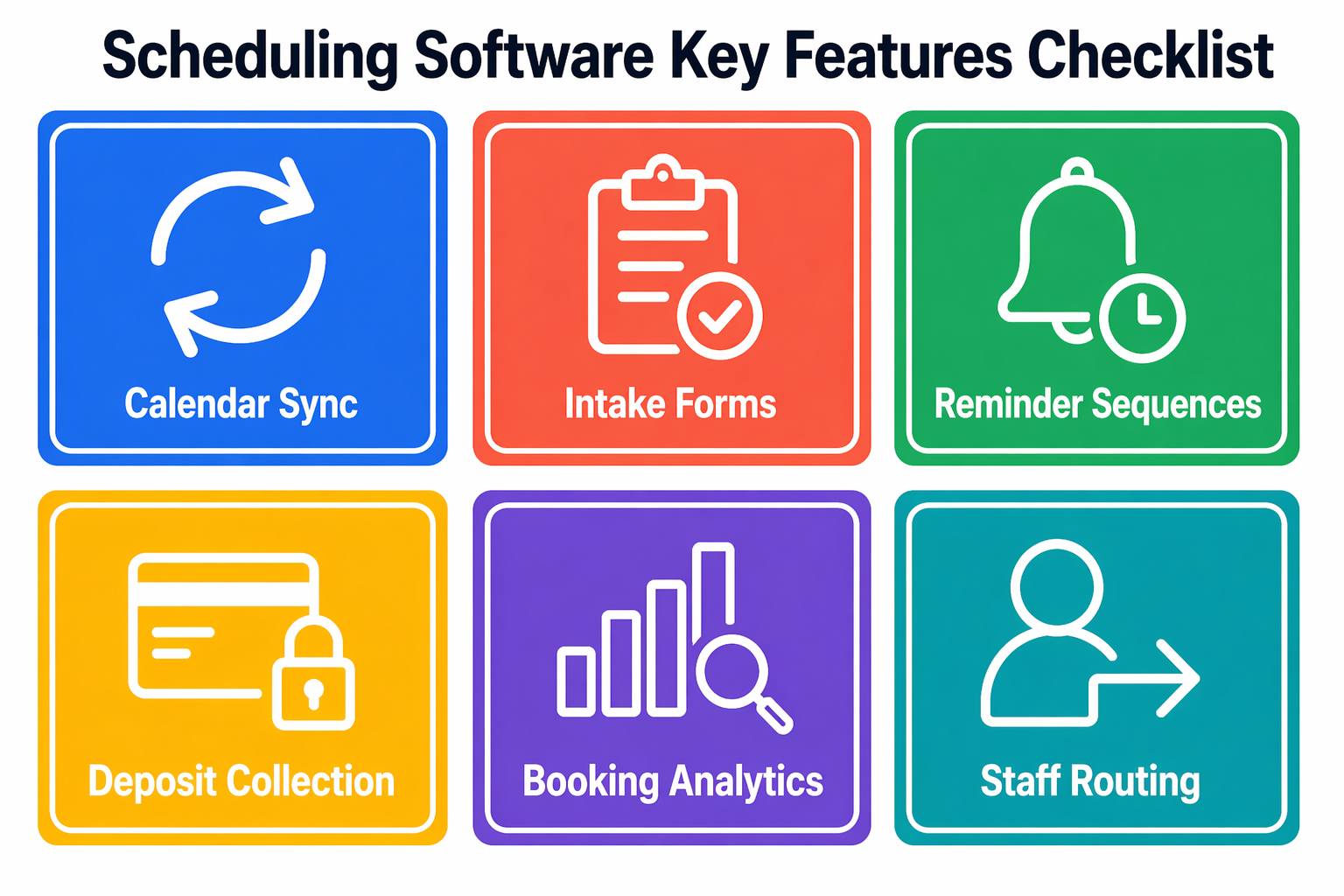
1. Google Calendar Synchronization
- Bi-directional sync so a manual block in Google Calendar immediately closes that slot in your booking portal
- Conflict detection preventing two clients from selecting the same staff member for overlapping time slots
- Multi-calendar support for meeting scheduling software for teams managing shared rooms, rotating specialists, or multiple locations
2. Intake Forms and Pre-Booking Qualification
- Custom intake fields collecting service type, client details, budget, and urgency before the slot is confirmed
- Conditional logic routing each intake response to the correct staff member
- Intake data written directly to your CRM at booking so no staff member re-enters it manually
3. Automated Reminders and Confirmation Enforcement
- SMS and email reminders sent at 72 hours, 24 hours, and 2 hours before each appointment
- Confirmation clicks or deposit payments clients must complete before their slot is secured
4. Payment and Deposit Collection
- Automated booking software for small business collects full payment or deposit via Stripe, Square, or PayPal at booking confirmation
- Payment status visible inside the Google Calendar event before each session
5. Reporting and Analytics
- Volume tracking by staff member and service type revealing which slots fill fastest
- Missed-call and missed-booking counts showing how many inquiries did not convert
6. Staff Routing
- Map each appointment type to the staff member whose specialization matches that service
- Routing bookings to whoever has open calendar time sends clients to unqualified staff
As online scheduling tools for businesses and scheduling tools for Gmail and Google Calendar evolve, evaluate each capability against your booking gaps before committing.
Best Appointment Scheduling Software for Google Workspace
Each platform below integrates with Google Workspace.
Online scheduling tools for businesses differ in which part of the booking process they strengthen: intake qualification, deposit enforcement, reminder automation, staff coordination, or phone-based inquiry capture.
1. Goodcall
Overview
Most Google Workspace appointment scheduling tools activate after a client selects a slot online. Goodcall handles the step before that. Its AI phone agent answers inbound calls, qualifies the caller, and writes confirmed bookings directly into Google Calendar without staff involvement.
See how Goodcall integrates with Google Workspace and how it syncs with Google Calendar in real time.
Key Features
- AI phone agent answers inbound calls 24/7 and writes confirmed appointments directly into Google Calendar
- Answers after-hours and overflow calls without additional front-desk staff
- Bi-directional Google Calendar sync preventing the same staff slot from being booked twice simultaneously
- Client CRM records surfaced during each inbound call so the AI agent responds with the caller's service history
- Call analytics recording how many calls were missed, at what hours, and how many resulted in a confirmed booking
Pricing
Goodcall starts at $59/month for small teams.
Custom pricing is available for larger operations based on call volume and integration requirements.
A 14-day free trial is available with no credit card required.
See Goodcall's current pricing plans.
Best For
Service businesses on Google Workspace where clients call to book appointments and unanswered calls result in those clients booking elsewhere.
2. Calendly

Overview
Calendly adds a client-facing booking page to Google Calendar that enforces availability rules, routes bookings to the correct staff member, and sends reminders automatically.
It requires no developer involvement to deploy and connects to Google Calendar within one configuration session.
Key Features
- Bi-directional Google Calendar sync detecting and blocking conflicting appointments across individual and shared team calendars
- Routing logic that sends each incoming booking request to the correct staff member based on their availability or predefined assignment rules
- Automated email and SMS reminders sent at configurable intervals before each confirmed appointment
- Custom intake forms collecting client-specific information before a booking slot is confirmed
- Stripe payment integration collecting upfront payment for paid consultation sessions at the time of booking
Pricing
- Free plan: one active event type, unlimited one-on-one meetings.
- Standard: $12/month per seat ($10 annually).
- Teams: $20/month per seat ($16 annually) with round-robin routing and collective scheduling across staff.
- Enterprise: starts at $15,000/year for organizations requiring SSO and advanced admin controls.
- A 14-day free trial is available on paid plans.
Best For
Teams and automated booking software for small business owners who need a client-facing portal connected to Google Calendar and operational within one working day.
3. Acuity Scheduling
Overview
Acuity is built for service businesses that need clients to answer qualifying questions and pay a deposit before a Google Calendar slot is confirmed.
Its intake form builder collects service-specific information from the client before the booking is written to your calendar.
Deposit requirements block the slot from being confirmed until the client has completed payment.
Key Features
- Custom intake forms collecting service type, event date, urgency level, and budget before the booking slot is confirmed
- Deposit and payment collection via Stripe, Square, or PayPal required from the client before a slot is written to Google Calendar
- Multi-calendar synchronization checking all staff Google Calendars for conflicts before confirming any booking
- Automated SMS and email reminders sent at intervals you define before each confirmed appointment
- Client history database storing every intake response against each confirmed booking for staff reference before each session
Note: SMS reminders require the Growing plan or above. The Emerging plan sends email reminders only.
Pricing
- Emerging: $20/month ($16 annually), one calendar.
- Growing: $34/month ($27 annually), up to six calendars with SMS reminders.
- Powerhouse: $61/month ($49 annually), up to 36 calendars with HIPAA compliance.
- A 7-day free trial is available across all plans.
Best For Service businesses that need clients to complete a structured intake form and pay a deposit before a Google Calendar booking is confirmed.
4. SimplyBook.me
Overview
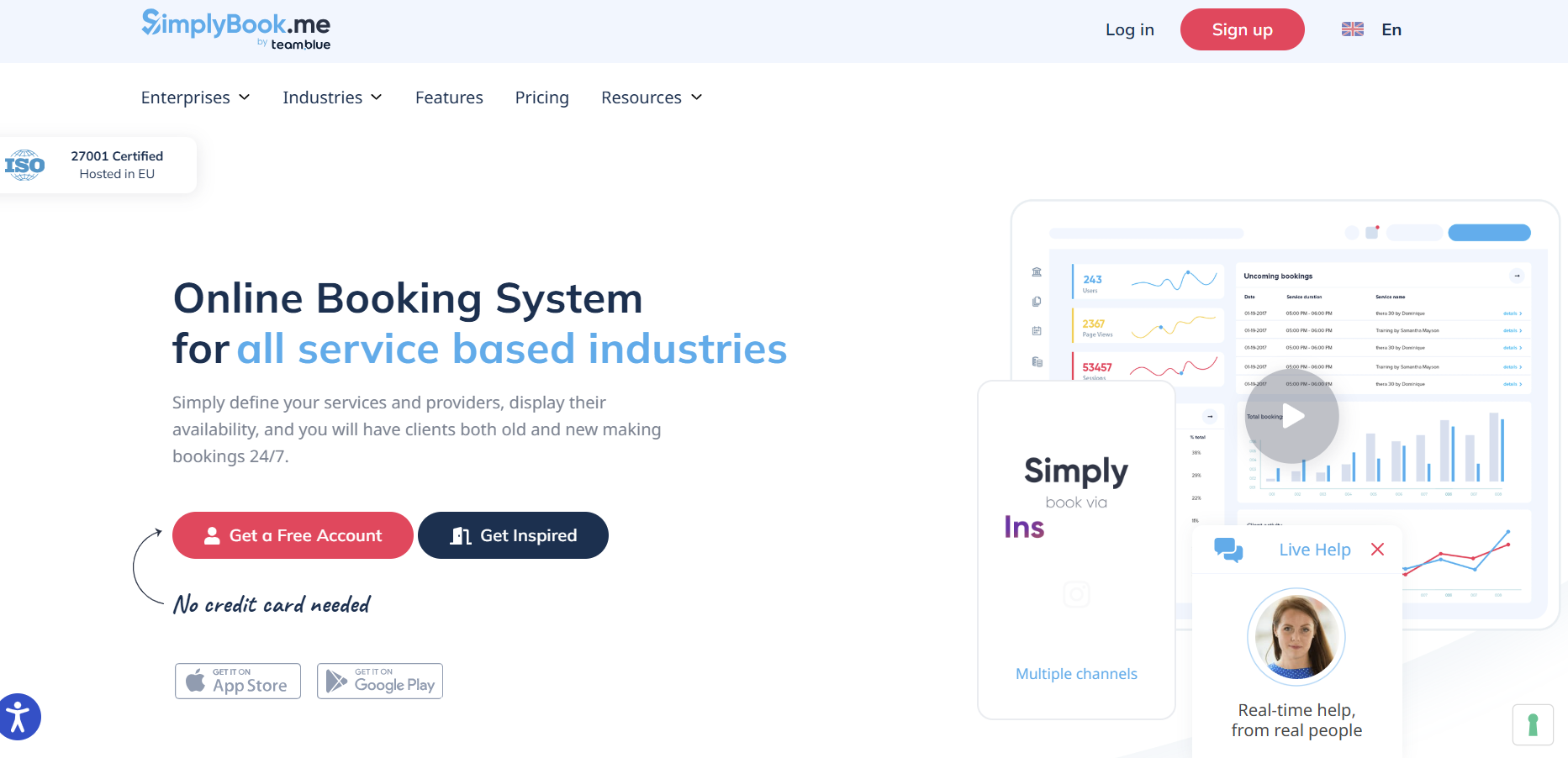
SimplyBook.me provides a branded booking page that connects to Google Calendar and displays real-time staff availability.
Its subscription tiers are priced by the number of bookings per month rather than the number of staff members on your account.
This pricing model costs less for businesses with multiple staff members who each handle a moderate number of appointments per month.
Key Features
- Branded booking pages that pull real-time staff and resource availability directly from Google Calendar
- SMS and email reminders configured separately per appointment type so each service category sends reminders on its own schedule
- Payment gateway integrations that require the client to pay a deposit before the booking is written to Google Calendar
- Client records storing every past appointment, payment, and service note so returning clients do not repeat their intake from the beginning
- Over 70 optional feature add-ons including HIPAA compliance, intake forms, and loyalty programs available on higher pricing tiers
Note: SMS credits are charged separately on all subscription tiers. Payment collection requires the Standard plan or above.
Pricing
- Free: 50 bookings/month, 1 provider.
- Basic: $13.90/month ($11.90 annually), 100 bookings, 5 providers.
- Standard: $29.90/month ($24.90 annually), 500 bookings, 15 providers.
- Premium: $49.90/month, 2,000 bookings, 30 providers.
- Annual billing saves approximately 17%.
Best For
Client-facing businesses that need a branded booking page with per-appointment-type reminder control and volume-based pricing inside Google Workspace.
5. Appointy
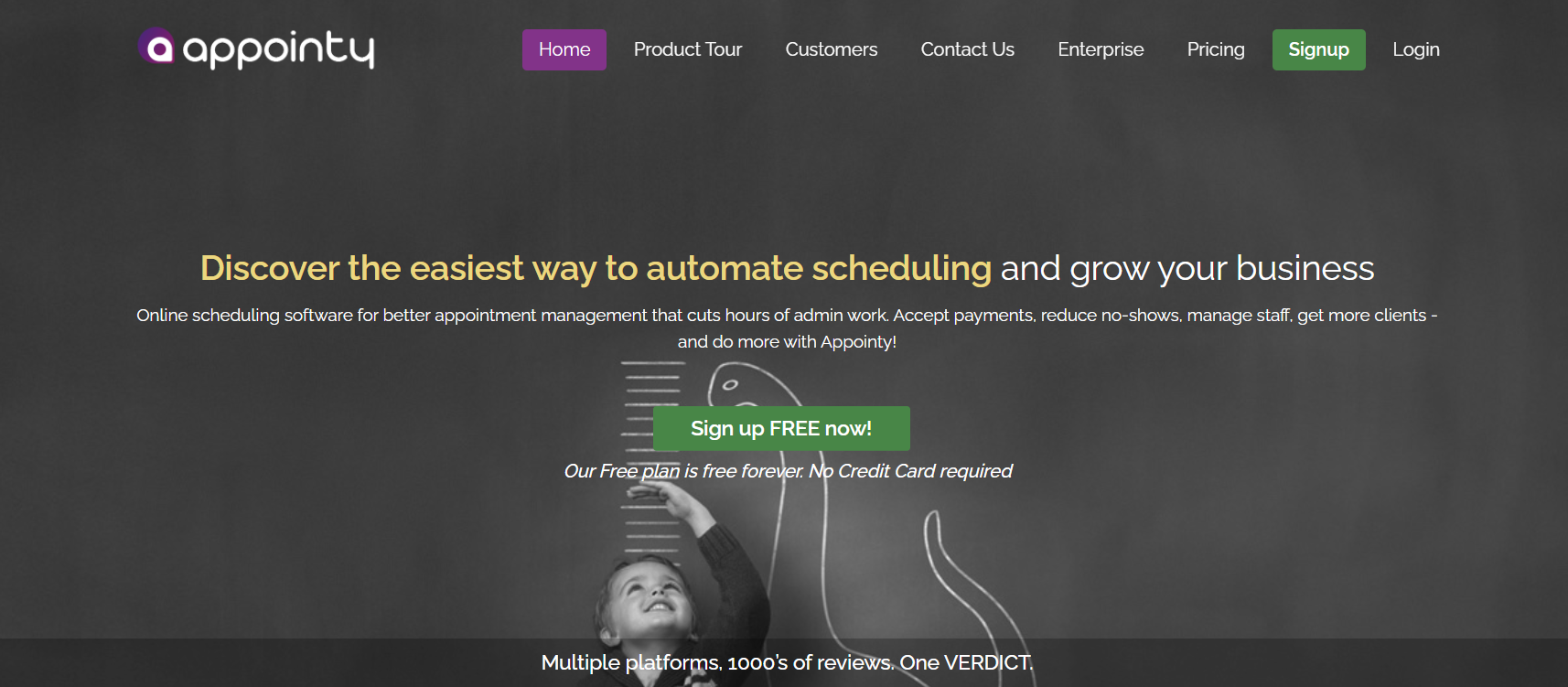
Appointy homepage highlighting scheduling automation, signup CTA, and benefits like payments, reduced no-shows, and client management tools
Overview
Appointy is built for teams where multiple staff members share a Google Workspace environment and need a single dashboard showing who is booked, when, and with what remaining capacity.
Every confirmed booking writes directly to the individual Google Calendar of the staff member assigned to that appointment.
Key Features
- Bi-directional Google Calendar sync that writes each confirmed booking to the assigned staff member's individual Google Calendar immediately
- Visual dashboards showing how many appointments each staff member has per day, week, and appointment type
- Capacity rules that prevent a meeting room or specialist from being double-booked across two simultaneous appointments
- Automated SMS and email reminders sent before each appointment at intervals you configure per service type
- Reporting showing booking volume, no-show count, and staff calendar utilization across a selected date range
Pricing
- Free: one staff member, basic appointment scheduling.
- Growth: $19.99/month, one staff member, unlimited appointments and service types.
- Professional: $49.99/month, up to five staff members with resource scheduling and individual staff login access.
- A 14-day free trial is available on paid plans.
Best For
Meeting scheduling software for teams with multiple staff members who need each confirmed booking written to individual Google Calendars with shared capacity visibility across the whole team.
How to Set Up Appointment Scheduling in Google Workspace
A scheduling platform connected to Google Calendar but configured incorrectly will still produce double bookings, unqualified clients, and missed payment collection.
Complete each step before accepting your first live booking.
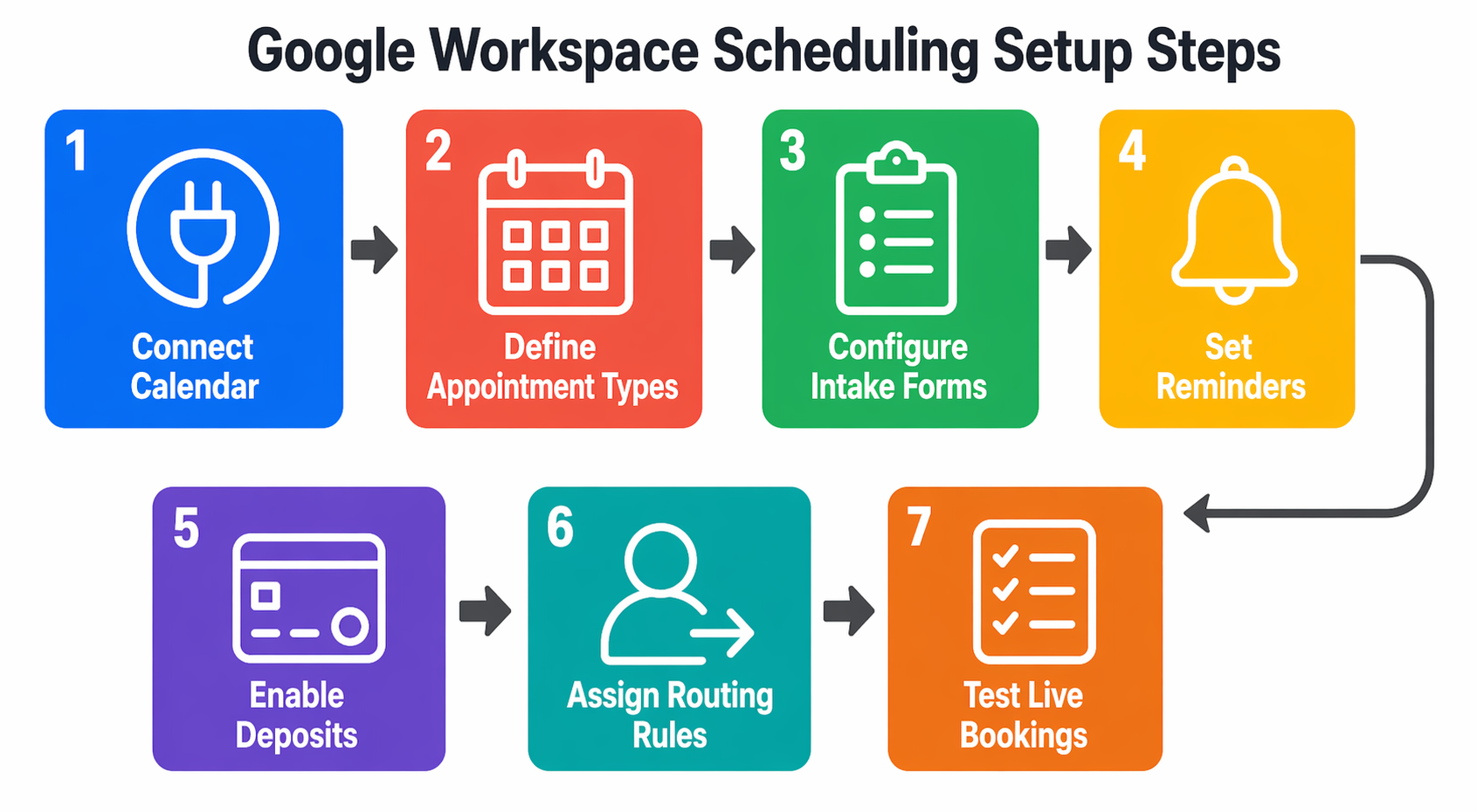
- Connect Google Calendar:
- Authorize bi-directional sync between your scheduling platform and every staff Google Calendar.
- Confirm that a block added manually in Google Calendar immediately removes that slot from your client-facing booking portal.
- Define appointment types:
- Create a separate booking category for each service you offer, with an accurate duration and a buffer period after each session.
- A 60-minute consultation followed immediately by another 60-minute session leaves no time for notes, payment processing, or room preparation.
- Configure intake forms:
- Attach a set of intake questions to each appointment type that collect the information your staff needs before the session begins.
- Connect the intake form output to your CRM so staff can review client details before arriving at the session.
- Set reminder sequences:
- Activate SMS and email reminders scheduled at 72 hours, 24 hours, and 2 hours before each appointment.
- Confirm that a client cancellation received within 24 hours automatically releases that slot to the next client on your waitlist.
- Enable deposit collection:
- Require clients to complete a payment or deposit before their booking is written to Google Calendar.
- A slot held for a client who has not paid prevents a paying client from selecting that time.
- Assign staff routing rules:
- Map each appointment type to the staff member whose specialization matches that service.
- Routing all bookings to whoever has open calendar time sends clients to staff who may not be qualified to deliver that specific service.
- Test before going live:
- Book simultaneous appointments across multiple staff calendars.
- Cancel one and confirm the slot immediately reopens to the next waitlisted client.
A misconfigured routing rule or missing deposit requirement discovered during testing takes minutes to fix.
The same error discovered when a client calls to complain about a double booking costs a confirmed appointment and the client relationship.
Use Cases by Industry
Professional Services: Law, Finance, Consulting
- Intake forms collect matter type, budget, and urgency before a slot is confirmed
- Deposit requirements block speculative bookings from occupying senior staff calendar time
- Routing logic assigns each booking to the correct fee earner based on matter type
Health and Wellness
- Per-service reminder sequences send alerts at intervals configured per treatment type
- Deposit collection gives clients a financial reason to attend or cancel early enough for reallocation
- Waitlist automation fills cancelled slots without manual staff intervention
Recruitment and HR Teams
- Collective scheduling surfaces only slots where every panel member is simultaneously free
- Intake forms collect role, experience level, and availability before confirmation
- Routing logic prevents candidates from booking the wrong interview stage
Service Businesses with Inbound Phone Volume
- AI phone agents answer every inbound call and write confirmed bookings directly into Google Calendar
- After-hours calls receive identical handling to calls during business hours
- Qualifying questions route each booking to the correct service type and staff member
See how AI call handling writes confirmed bookings directly into Google Calendar.
Growing Multi-Staff Operations
- Capacity rules check every staff Google Calendar before confirming any new booking
- Shared dashboards show each staff member's daily session count and remaining capacity
- Routing rules restrict each appointment type to qualified staff members only
Conclusion
Every Google Workspace appointment scheduling platform in this list adds a different capability above Google Calendar.
- Acuity requires clients to qualify and pay before confirmation.
- SimplyBook.me gives each appointment type its own reminder schedule and branded booking page.
- Calendly connects to Google Calendar and produces a live booking page within one configuration session.
- Appointy writes every confirmed booking to the assigned staff member's individual Google Calendar and shows team-wide capacity in one dashboard.
- Goodcall answers inbound calls, qualifies the caller, and writes the confirmed booking to Google Calendar when your staff cannot pick up the phone.
Identify which of those five capabilities your current booking process is missing.
Then select the platform that closes that specific gap first.
If clients are calling to book and those calls are going unanswered, see how Goodcall handles that step.