#Voice AI
March 18, 2026
Best AI Voice Services for Customer Engagement to Boost Customer Experience
Share this post


Explore AI Summary


.jpg)
Customer expectations have changed, and phone-based interactions must now feel instant, personalized, and conversational. This shift has driven rapid adoption of the Best AI Voice Services for Customer Engagement, enabling businesses to deliver human-like conversations at scale without increasing operational costs.
This article explains what AI voice services are, the features that define high-performing platforms, the best AI voice services for customer engagement, and how to choose the platform that's best for your business.
AI voice services are intelligent communication platforms that allow businesses to interact with customers through natural, spoken conversations. They combine speech recognition, conversational AI voice technology, and voice synthesis to understand requests, respond accurately, and complete tasks in real time.
For customer engagement, these systems act as a virtual front desk. An AI voice assistant for business can answer calls, provide information, schedule appointments, and route complex requests without human intervention. This makes Voice AI a practical solution for high-volume customer interactions.
Key aspects of AI voice services include:
The Best AI Voice Services for Customer Engagement combine intelligent automation with natural conversation to deliver fast, reliable, and personalized customer interactions. When evaluating Voice AI platforms, businesses should focus on the following essential features that directly impact performance and engagement quality:
High-quality speech recognition ensures customers are understood clearly, even with background noise or regional accents. Accurate transcription reduces misunderstandings and improves call resolution rates.
A strong conversational AI voice engine allows the system to respond naturally, handle follow-up questions, and maintain logical dialogue flow. This creates human-like conversations instead of robotic interactions.
Effective AI call handling software automatically routes calls based on intent and urgency. It also escalates complex requests to human agents while preserving conversation context.
Voice AI platforms should provide call summaries, intent detection, and performance metrics. These insights help businesses improve scripts, identify trends, and optimize customer engagement strategies.
Integration with customer databases, calendars, and support software enables personalized responses. This allows the AI voice assistant for business to reference customer history and complete actions instantly.
The system must handle peak call volumes without delays or downtime. Scalable infrastructure ensures consistent customer engagement during promotions or seasonal demand spikes.
Strong encryption, access controls, and regulatory compliance protect sensitive customer information. Security is critical for businesses handling payments, appointments, and personal data.
The landscape of voice AI for customer support and engagement is rich with capable platforms. Each service brings unique strengths, from developer-level customization to no-code deployment and natural, human-like conversation flows.
Let’s look at the leading AI voice services for customer engagement:
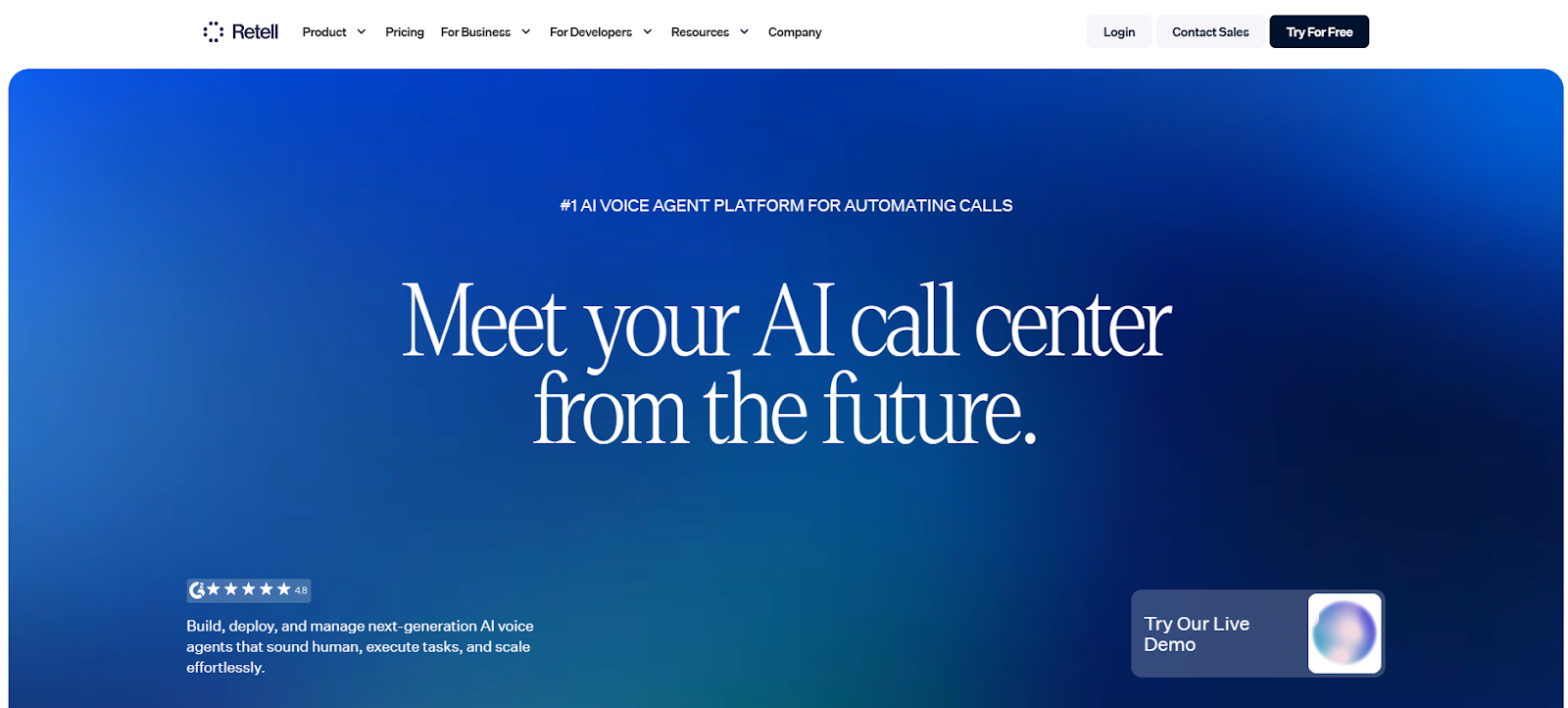
Retell AI is a conversational voice platform that automates phone interactions with context-aware AI agents that sound human and handle real business tasks seamlessly. It excels in both inbound and outbound call automation, integrating with existing systems to streamline customer support, reminders, and lead qualification.
Key Features:
Pricing: Retell AI uses a pay-as-you-go model with no platform fees and charges around $0.07 per minute for voice interactions, plus optional enterprise plans for higher throughput and support.
Pros:
Cons:
Best for: Enterprises and mid-sized businesses seeking reliable, scalable voice automation with realistic AI conversation quality.
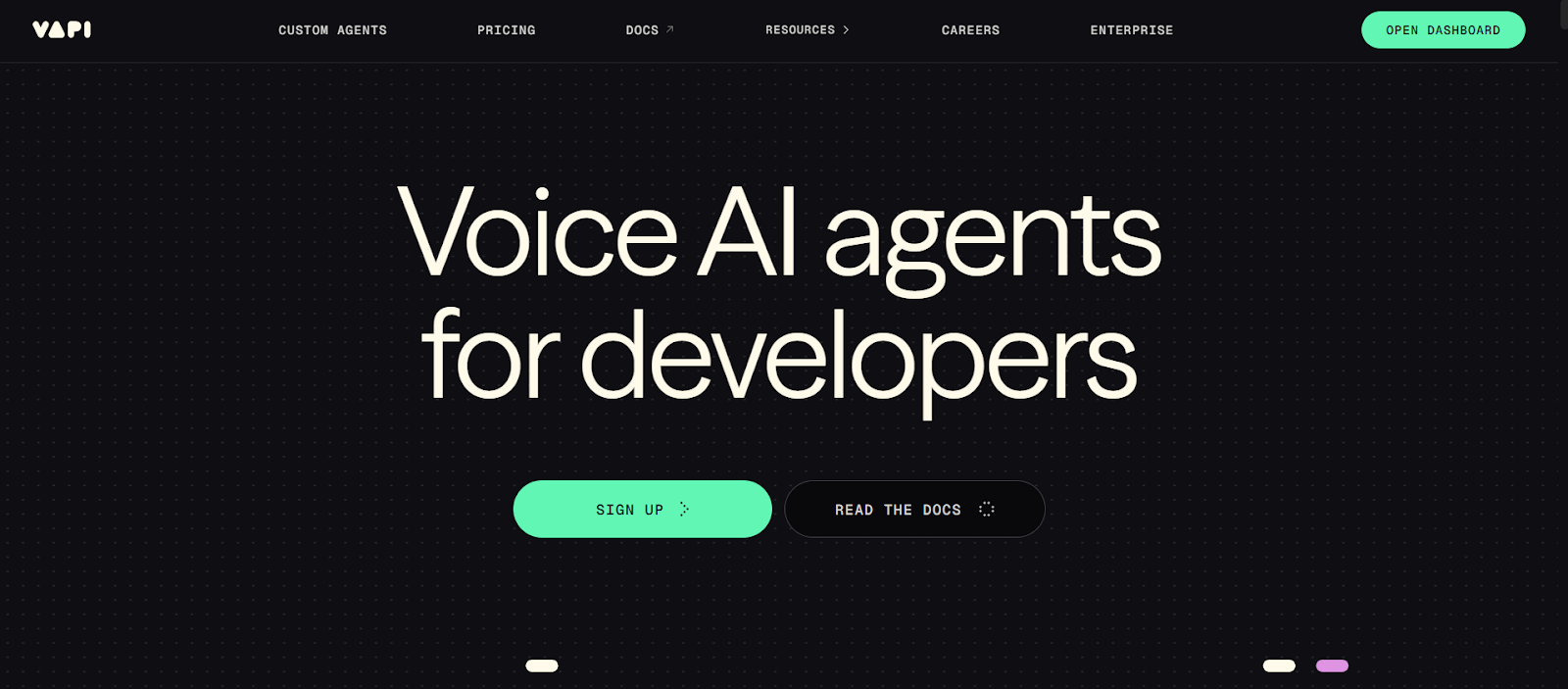
Vapi AI is a flexible voice automation platform that gives developers deep control over conversational agents and telephony logic. It emphasizes real-time data access and voice agent customization using modular components.
Key Features:
Pricing: Vapi offers base call pricing starting at roughly $0.05 per minute, but total costs often include transcription and telephony fees, and enterprise deployments may reach significant annual expenses.
Pros:
Cons:
Best for: Technical teams and enterprises that want full control over voice interactions and tailor every aspect of the AI voice experience.
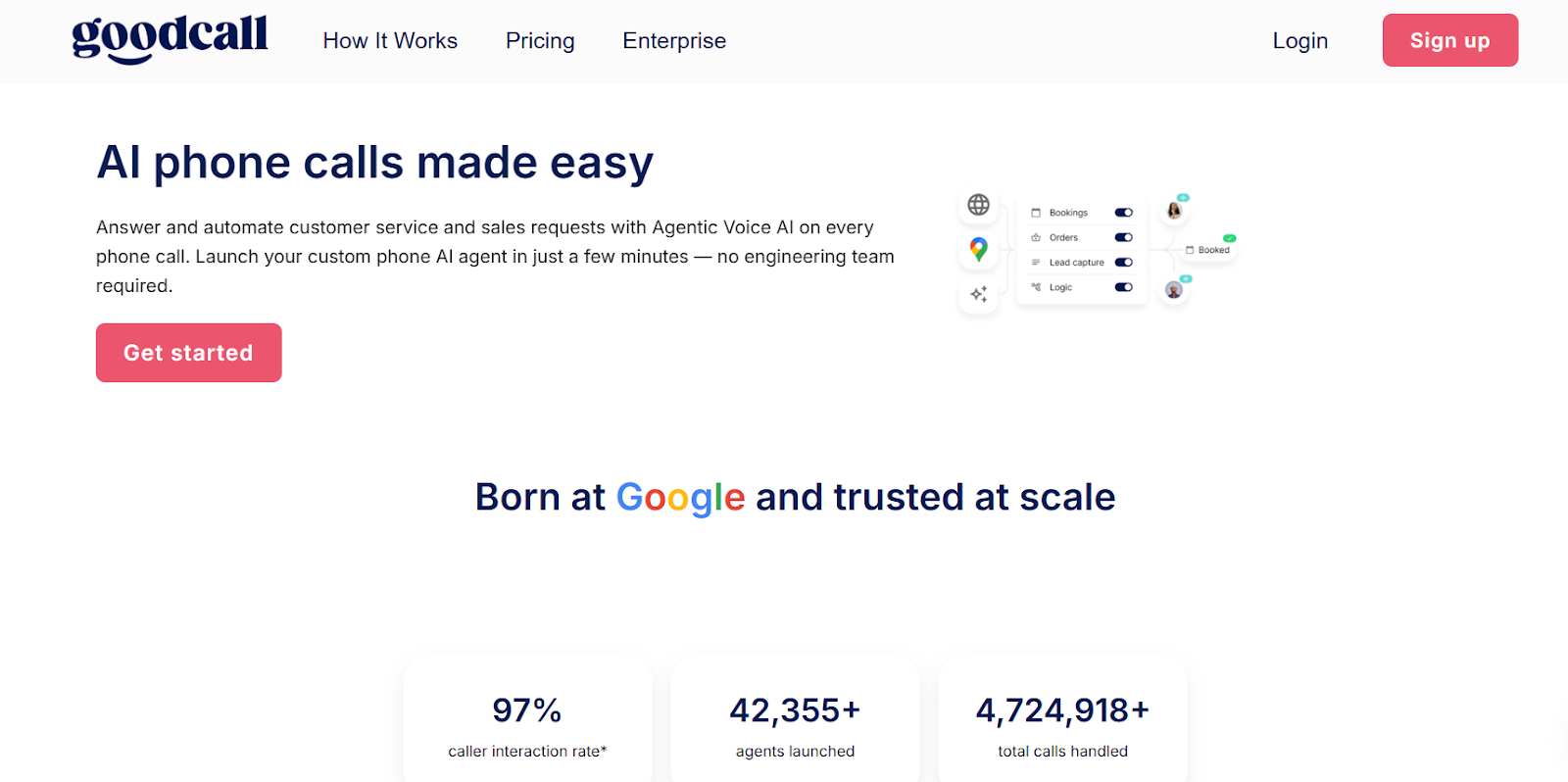
Goodcall blends ease of use with powerful conversational capabilities tailored for customer engagement. It focuses on practical business outcomes like answering calls, booking appointments, and automating everyday customer interactions without a heavy technical setup.
Key Features:
Pricing: Goodcall typically offers tiered plans based on call volume and feature set, with transparent options for scaling as business needs grow.
Pros:
Cons:
Best for: Small to mid-sized businesses focused on increasing customer engagement and operational efficiency without requiring a large technical team.
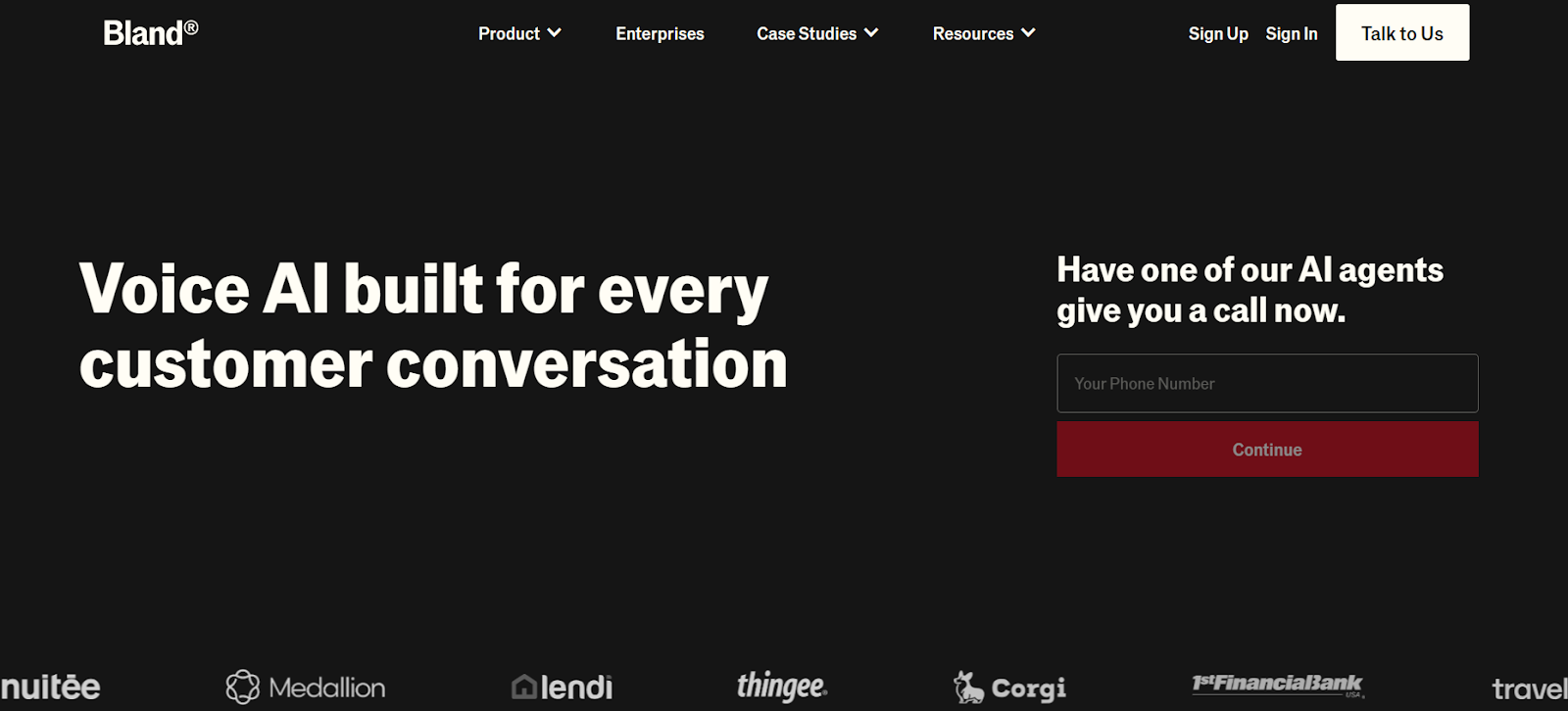
Bland AI is a flexible conversational voice platform designed to automate both inbound and outbound interactions. It aims to deliver realistic, context-aware conversations while integrating seamlessly with existing business workflows.
Key Features:
Pricing: Bland AI offers tiered pricing based on usage levels and support needs, with volume-based discounts for high call throughput.
Pros:
Cons:
Best for: Businesses looking for a customizable, mid-tier AI voice platform that balances flexibility with ease of use.
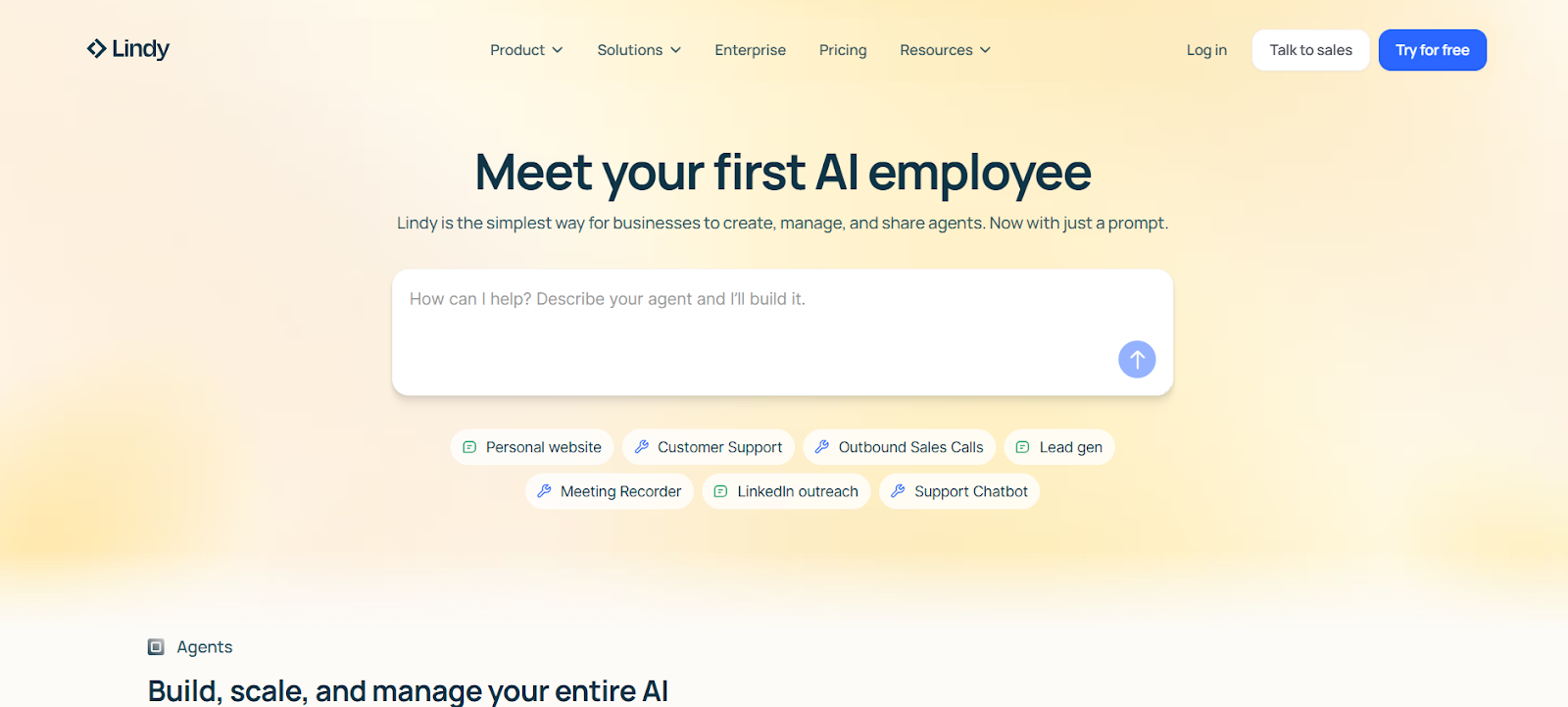
Lindy AI focuses on developer-first voice automation, allowing businesses to build highly tailored conversational experiences. It emphasizes modular control of each component of the voice stack, from speech recognition to intent handling.
Key Features:
Pricing: Lindy AI uses a usage-based model with separate charges for voice minutes, transcription, and advanced analytics, and offers enterprise contracts.
Pros:
Cons:
Best for: Technology-driven businesses and enterprises that need full control over conversational AI voice behavior and integration.
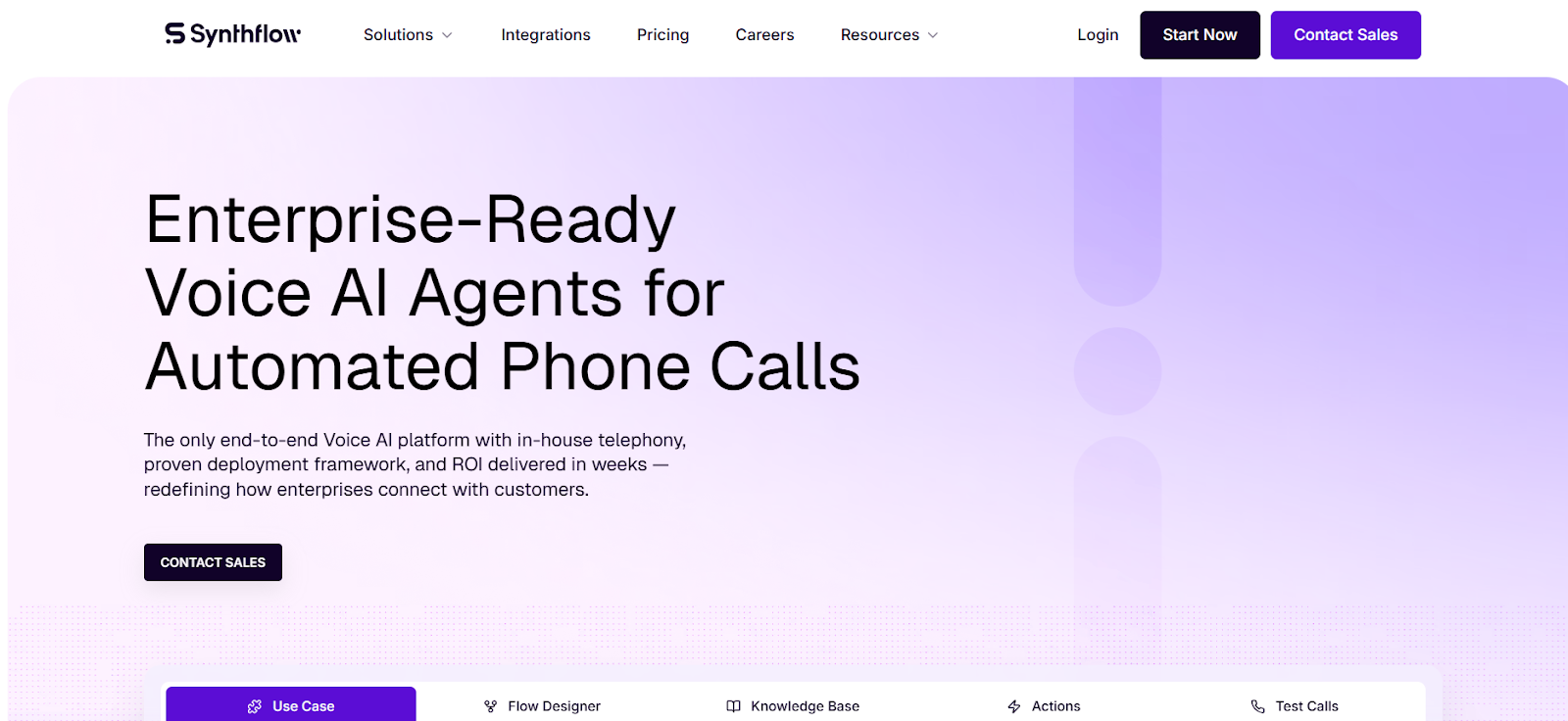
Synthflow AI is a voice automation platform focused on seamless conversational experiences and rapid deployment. It emphasizes intuitive dialogue design and supports multi-purpose engagement workflows.
Key Features:
Pricing: Synthflow AI offers a subscription model with different tiers based on call volume, feature access, and analytics capabilities.
Pros:
Cons:
Best for: Mid-sized businesses and support teams seeking quick deployment and robust engagement features without heavy technical overhead.
AI voice technology transforms how businesses communicate with customers by making interactions faster, smarter, and more human-like. The Best AI Voice Services for Customer Engagement help organizations deliver consistent experiences while reducing friction across every customer touchpoint.
Here are the key ways Voice AI strengthens customer engagement outcomes:
Goodcall is an advanced AI voice assistant for business designed to handle real customer conversations using natural, human-like speech. It automates both inbound and outbound calls, enabling businesses to answer questions, schedule appointments, and follow up without adding extra staff or hours.
Unlike traditional automated systems that rely on rigid menus, Goodcall’s Voice AI engages customers conversationally, interpreting intent and responding accurately in real time. This human-centered design improves engagement quality and strengthens customer trust over every interaction.
Benefits of Choosing Goodcall’s Voice AI for Customer Engagement:
Selecting the right platform requires aligning business goals with technical capabilities. The following criteria help identify the Best AI Voice Services for Customer Engagement for different business models.
Businesses should start by identifying primary use cases. These may include inbound support, outbound reminders, lead qualification, or appointment scheduling. Clear goals simplify platform selection.
Speech recognition accuracy directly impacts customer satisfaction. Businesses should test conversational AI voice platforms with real-world accents, background noise, and natural speech patterns.
A strong AI voice assistant for business should connect with CRM systems, calendars, and support platforms. Integration enables personalized responses and reduces manual work.
Customer calls often contain sensitive data. Businesses operating in the US must ensure platforms follow strong security standards and data protection practices.
Voice AI should support business growth without performance degradation. Uptime guarantees and infrastructure reliability are critical for customer-facing applications.
The right solution balances cost with performance. AI call handling software should deliver measurable improvements in call handling efficiency, response time, and customer satisfaction.
Voice is becoming the most natural way customers interact with businesses. The Best AI Voice Services for Customer Engagement combine speed, personalization, and conversational intelligence to deliver experiences that feel human while operating at scale.
As customer expectations continue to rise, Voice AI will define competitive advantage. Businesses that adopt AI-powered voice engagement today position themselves for stronger relationships, higher loyalty, and long-term growth.
Try Goodcall free for 14 days and transform missed calls into booked appointments with smart Voice AI that works 24/7 for your business.
What are AI voice services for customer engagement?
AI voice services for customer engagement use artificial intelligence to manage customer conversations over phone calls. These systems understand speech, respond naturally, and automate common tasks such as support inquiries, appointment scheduling, and lead qualification.
How do AI voice services improve customer engagement?
AI voice services improve customer engagement by providing instant responses, natural conversations, and consistent support. Voice AI for customer support reduces wait times, improves call resolution rates, and ensures customers receive accurate information at any time.
What is the best AI voice service for customer engagement?
The best AI voice service for customer engagement depends on business needs, call volume, and integration requirements. Platforms offering natural conversational AI voice, strong analytics, and reliable AI call handling software deliver the highest engagement value.
Are AI voice assistants better than traditional IVR systems?
AI voice assistants outperform traditional IVR systems by enabling natural conversations instead of menu-based navigation. Voice AI understands intent, adapts to customer responses, and reduces call abandonment rates significantly.
Can AI voice services handle real customer conversations?
Modern AI voice services handle real customer conversations effectively. Advanced speech recognition and conversational intelligence allow AI voice assistants for business to manage multi-step requests, clarify intent, and escalate complex issues when required.
Do customers know they are talking to an AI voice assistant?
In many cases, customers recognize they are speaking with an AI voice assistant. However, high-quality Voice AI systems sound natural and conversational, reducing friction and improving acceptance in customer interactions.