#Voice AI
June 22, 2026
5 Best Voice AI Tools For Warehouse Communication
Share this post


Explore AI Summary



Efficient communication is the backbone of modern warehouse operations, where speed, accuracy, and coordination directly impact productivity. Traditional communication methods often create delays, misunderstandings, and workflow bottlenecks. Voice AI is transforming warehouse communication by enabling hands-free, real-time interactions between workers, devices, and management systems.
From improving task execution to reducing errors and enhancing safety, Voice AI solutions are becoming essential tools for smart warehouses. In this blog, we’ll explore the 5 best Voice AI platforms designed to streamline warehouse communication and operations.
Warehouse communication voice AI should help teams manage calls, updates, and coordination around warehouse operations. That can include delivery calls, vendor questions, customer updates, dispatch routing, appointment requests, and after-hours inquiries.
Here is a quick comparison of the five tools.
Also Read: Best Voice AI Platform for Customer Support
Warehouse communication depends on speed, clarity, and routing. The right voice AI tool should help your team handle calls, collect details, reduce missed updates, and move requests to the right person or workflow.
Here’s a detailed comparison of each platform based on its best-fit use case for warehouse communication.
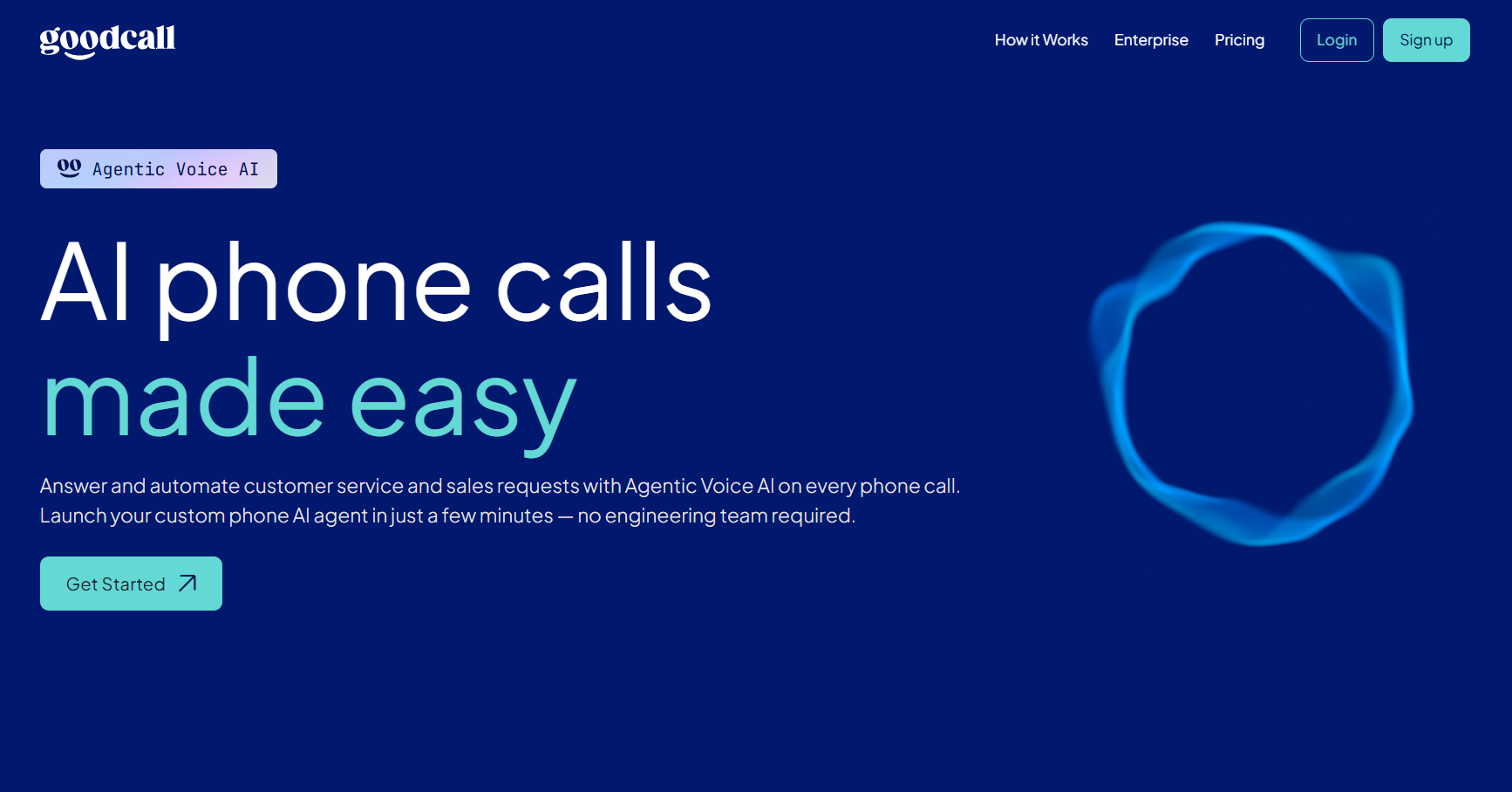
Goodcall is an AI phone agent platform that helps businesses answer calls, collect caller details, route requests, support appointment booking, and automate routine phone workflows. It is useful for warehouses that receive frequent calls from vendors, drivers, customers, dispatch teams, or service partners.
Goodcall helps warehouse teams reduce missed calls and route operational requests faster.
Best for:
Why users choose it:
Limitations: Goodcall is not a warehouse-floor voice-picking system. It is better for warehouse communication through phone calls, not hands-free picking or inventory execution.
Setup and Ease: Goodcall is designed for fast setup. Businesses can launch a custom phone AI agent in minutes without an engineering team.
Pricing: Starts at $66 per month per agent on the Starter plan.
Verdict:
Goodcall is the strongest fit if your warehouse communication problem starts with missed calls, slow routing, after-hours inquiries, or repeated phone questions. It helps keep calls moving without adding more manual work to warehouse staff.
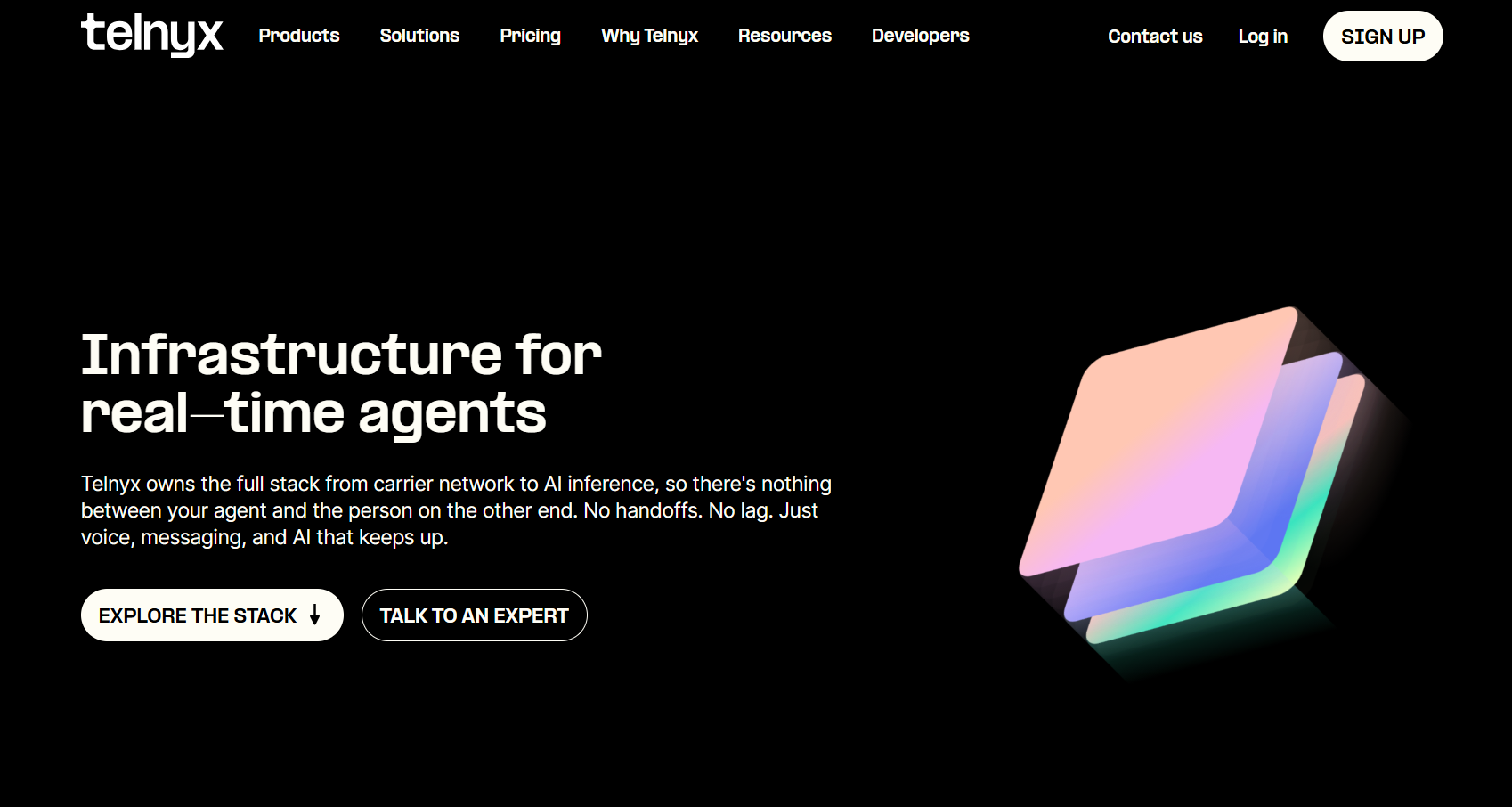
Telnyx provides voice infrastructure, APIs, and voice AI agents for teams that want to build custom phone workflows. For warehouse communication, it can support delivery calls, dispatch updates, vendor coordination, and internal operations call flows.
Telnyx helps technical teams build custom AI voice workflows across warehouse communication channels.
Best for:
Why users choose it:
Limitations: Telnyx needs technical setup. It is better for teams with developer support than for teams that want a ready-to-use AI phone answering system.
Setup and Ease: The setup depends on the workflow. Simple voice AI agents may be faster, but advanced warehouse communication flows may need API, telephony, and integration work.
Pricing: Telnyx offers a usage-based pricing model, where users pay only $0.05 per minute for conversational AI.
Verdict: Telnyx is a strong choice if your warehouse needs custom AI communication workflows and your team has the technical resources to build them.
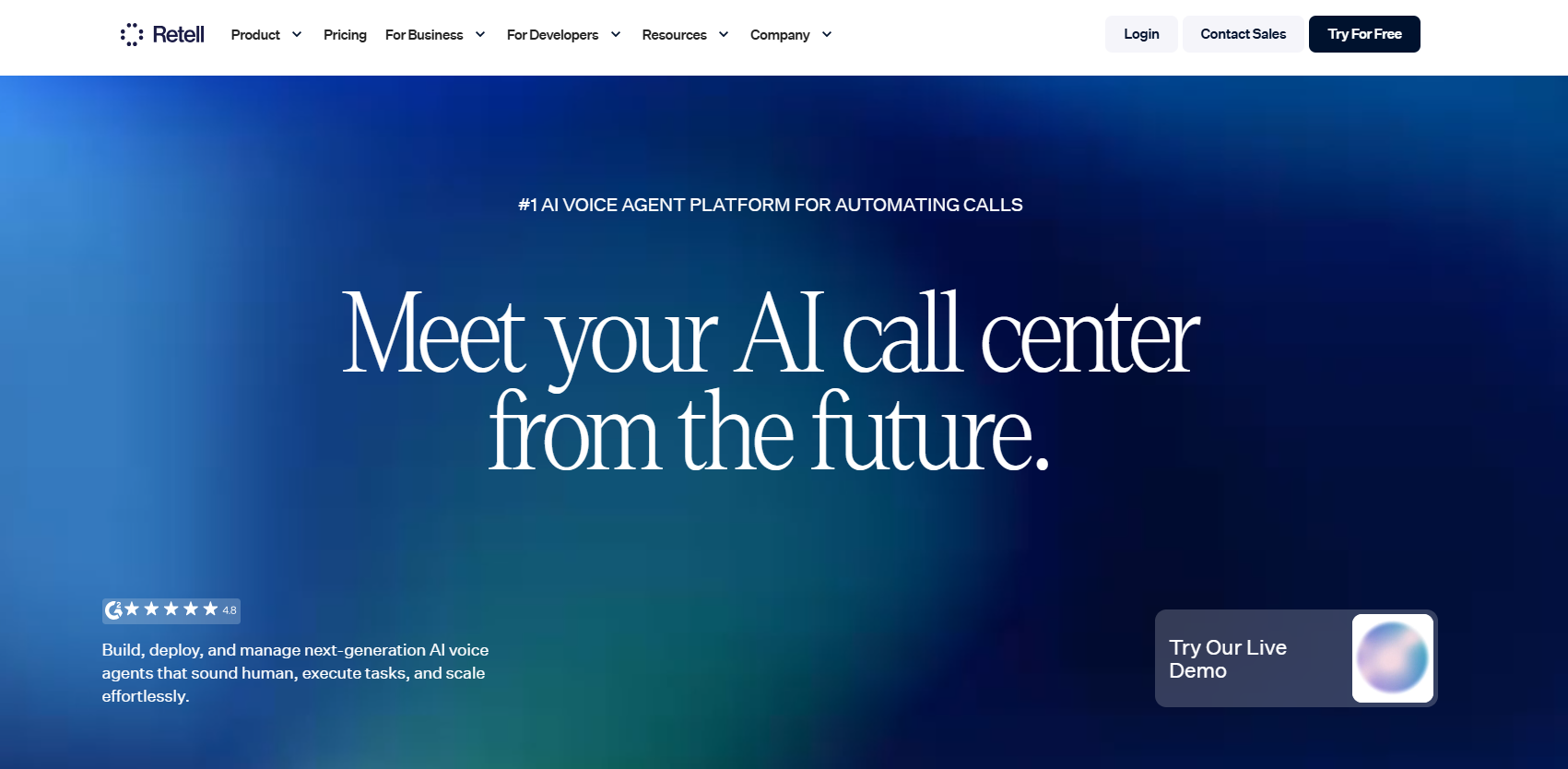
Retell AI helps teams build, test, deploy, and monitor AI voice agents for phone call automation. For warehouse communication, it can support call routing, scheduling calls, dispatch communication, customer updates, and operations intake.
Retell AI helps warehouses automate structured phone conversations with custom AI agents.
Best for:
Why users choose it:
Limitations: Retell AI is not built specifically for warehouse operations. Teams may need to design the warehouse-specific call flows themselves.
Setup and Ease: Retell is designed to help teams build and deploy voice agents without heavy engineering. Retell is an AI-native, no-code platform for natural-sounding voice agents that can answer questions, schedule appointments, and resolve administrative issues.
Pricing: Retell’s pricing starts at $0, and users pay only for the minutes they use. AI Voice Agents at $0.07-$0.31 per minute.
Verdict: Retell AI is a good fit if you want custom AI phone agents for warehouse communication and have clear call flows to automate.
aiOla helps frontline teams capture operational data through voice. For warehouse communication, it can support spoken updates, reports, checks, and workflow triggers during daily operations. aiOla helps warehouse teams turn spoken operational updates into structured data.
Best for:
Why users choose it:
Limitations: aiOla is stronger for operational data capture than for inbound call handling. It may not be the best fit if your main need is an AI phone answering system.
Setup and Ease: Setup depends on the workflow and systems involved. Teams may need to map forms, reports, and operational processes before deployment.
Pricing: aiOla uses custom pricing.
Verdict: aiOla is a strong fit if your warehouse communication problem is not missed calls, but slow field updates, manual reporting, or frontline data capture.
Lucas Systems provides warehouse voice-directed solutions, including its Jennifer voice system. It is built for warehouse execution tasks such as picking, replenishment, and hands-free worker guidance.
Lucas Systems helps warehouse teams use voice to guide workers through operational tasks.
Best for:
Why users choose it:
Limitations: Lucas Systems is not mainly a warehouse call communication tool. It is better for warehouse-floor execution than vendor calls, customer inquiries, or after-hours phone answering.
Setup and Ease: Implementation may require warehouse workflow mapping, WMS integration, device setup, and worker training.
Pricing: Lucas Systems uses custom pricing. Costs usually depend on warehouse size, workflows, integrations, hardware needs, and implementation scope.
Verdict: Lucas Systems is the best fit if your priority is voice-enabled warehouse management on the floor. For call handling and warehouse office communication, Goodcall, Telnyx, or Retell AI may be better aligned.
Also Read: Best Voice AI Platform for Customer Support to Improve Call Efficiency
Start with the exact communication problem. Missed calls, slow dispatch updates, vendor questions, and floor-level task guidance need different tools.
Use these checks:
The best warehouse voice AI solution should reduce communication gaps without adding more complexity for your team.
Choosing the right voice AI for your warehouse comes down to your biggest communication bottleneck. While platforms like Telnyx, Retell AI, aiOla, and Lucas Systems excel at custom workflows and frontline floor operations, Goodcall provides the most streamlined solution for automated call handling, vendor routing, and after-hours support.
Ready to eliminate missed inquiries and keep your logistics moving smoothly? Explore how Goodcall can transform your warehouse communication today.
What is the best voice AI for warehouse communication?
Goodcall is a strong fit for warehouse call handling, inbound requests, after-hours calls, routing, and appointment support. The best tool depends on your exact use case.
How does voice AI improve warehouse productivity?
Voice AI can reduce missed calls, speed up routing, collect caller details, automate updates, and reduce manual communication work for warehouse teams.
Is voice AI better than traditional voice picking systems?
They solve different problems. Voice AI helps with communication and calls. Voice-picking systems guide warehouse workers through floor-level tasks.
Can voice AI work in noisy warehouse environments?
Some voice AI tools can work in noisy settings, but performance depends on audio quality, microphones, noise handling, and the platform’s speech processing ability.
How much does warehouse voice AI cost?
Costs vary. Goodcall starts at $66 per month per agent. Retell AI and Telnyx use usage-based pricing. aiOla and Lucas Systems use custom pricing.
Is voice AI difficult to implement in warehouses?
It depends on the tool. AI phone answering systems are usually easier to launch. Custom workflows, WMS integrations, and voice picking systems may need more setup.