#Voice AI
March 16, 2026
Voice AI API for Global Telephony Integration: Build Borderless Voice Systems
Share this post


Explore AI Summary


.jpg)
What if every business call could listen, understand, and respond like a human anywhere in the world, at any hour? In today’s global economy, voice remains a critical channel, but traditional systems can’t keep up with the speed and scale modern businesses demand. A Voice AI API for Global Telephony Integration bridges that gap by turning calls into intelligent, scalable conversations.
This article explains how Voice AI APIs power global telephony systems. It covers essential features, integration requirements, and performance benchmarks businesses should evaluate before deployment.
A Voice AI API enables businesses to embed real-time speech recognition, natural language understanding, and voice synthesis into phone systems. It connects conversational AI engines with telecom infrastructure to power automated business calls, virtual agents, and intelligent call routing.
A Voice AI API for Global Telephony Integration allows organizations to deploy AI-powered voice workflows across regions, carriers, and networks. It supports real-time voice AI platforms that handle inbound support, outbound sales, appointment scheduling, and customer verification at scale.
Global telephony integration ensures consistent call quality, regulatory compliance, and local network optimization across international markets. Without proper integration, businesses face latency issues, dropped calls, and limited regional coverage.
Voice AI telephony integration also enables enterprises to operate centralized AI voice agents while serving customers globally. This capability improves response speed, reduces operational costs, and delivers seamless conversational AI for business calls across geographic boundaries.
Choosing the right Voice AI API requires evaluating technical performance, infrastructure reach, and enterprise readiness. Here are the key features of the voice AI API for global telephony that directly impact call quality, scalability, and long-term operational success:
Low-latency voice AI enables natural conversation flow. Sub-second response times reduce awkward pauses and prevent caller drop-offs. A real-time voice AI platform uses streaming speech recognition and edge-based inference. This architecture improves response speed during live customer interactions and outbound campaigns.
Global telephony API solutions must support international phone numbers and regional carrier connectivity. Local presence improves call routing efficiency and answer rates.
Voice AI telephony integration benefits from a distributed infrastructure. Regional data centers reduce network latency and ensure consistent voice quality across markets.
Modern voice automation requires compatibility across multiple communication channels. A strong AI voice agent API supports PSTN, VoIP, SIP trunking, and WebRTC connections. Multi-channel support enables unified communication workflows. It also improves redundancy and business continuity during network disruptions.
Enterprise voice AI solutions must handle sudden call volume spikes. Cloud-native architectures enable automatic scaling without manual configuration. High-availability infrastructure ensures uptime during peak business hours. Load balancing and regional failover systems prevent service interruptions.
Conversational AI for business calls depends on accurate intent recognition and contextual understanding. Advanced NLU engines improve dialogue accuracy. Multi-turn conversation management enables AI agents to handle complex workflows. These include authentication, scheduling, billing inquiries, and service escalation.
A Voice AI API for Global Telephony Integration must connect seamlessly with business systems. CRM platforms, analytics tools, and workflow automation software require native integration support. REST APIs and webhooks simplify deployment. Prebuilt connectors reduce implementation time and engineering effort.
AI phone automation APIs handle sensitive voice data. Strong platforms support encryption, role-based access control, and secure call recording. Compliance with standards such as SOC 2 and GDPR protects customer privacy. Regulatory-ready infrastructure enables deployment across global markets.
Selecting the right Voice AI API for Global Telephony Integration requires evaluating performance, coverage, customization, and enterprise readiness. Below are the leading platforms that support scalable voice automation and real-time conversational AI for business calls:
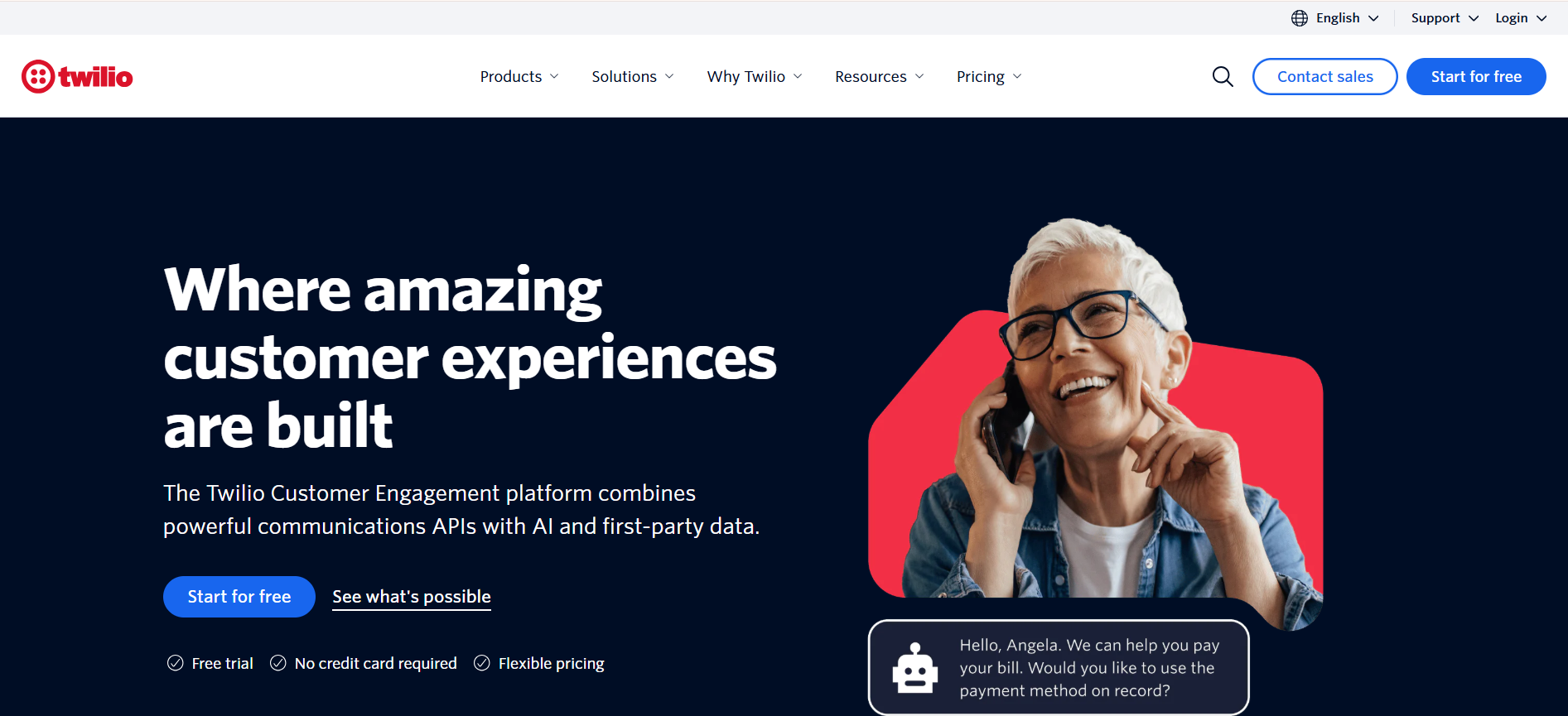
Twilio is a leading programmable voice API provider that enables enterprises to build scalable voice applications using cloud-based telecom infrastructure. It supports Voice AI API for Global Telephony Integration by connecting conversational AI engines with carrier-grade global networks.
Best for: Enterprises requiring mature global telephony API solutions with carrier-grade reliability.
Key strengths
Pricing model: Usage-based pricing per minute, plus phone number and carrier fees.
Global telephony capabilities
Twilio offers local phone numbers in over 100 countries and direct carrier interconnections. Its programmable voice API enables low-latency call routing and regional call optimization for global deployments.
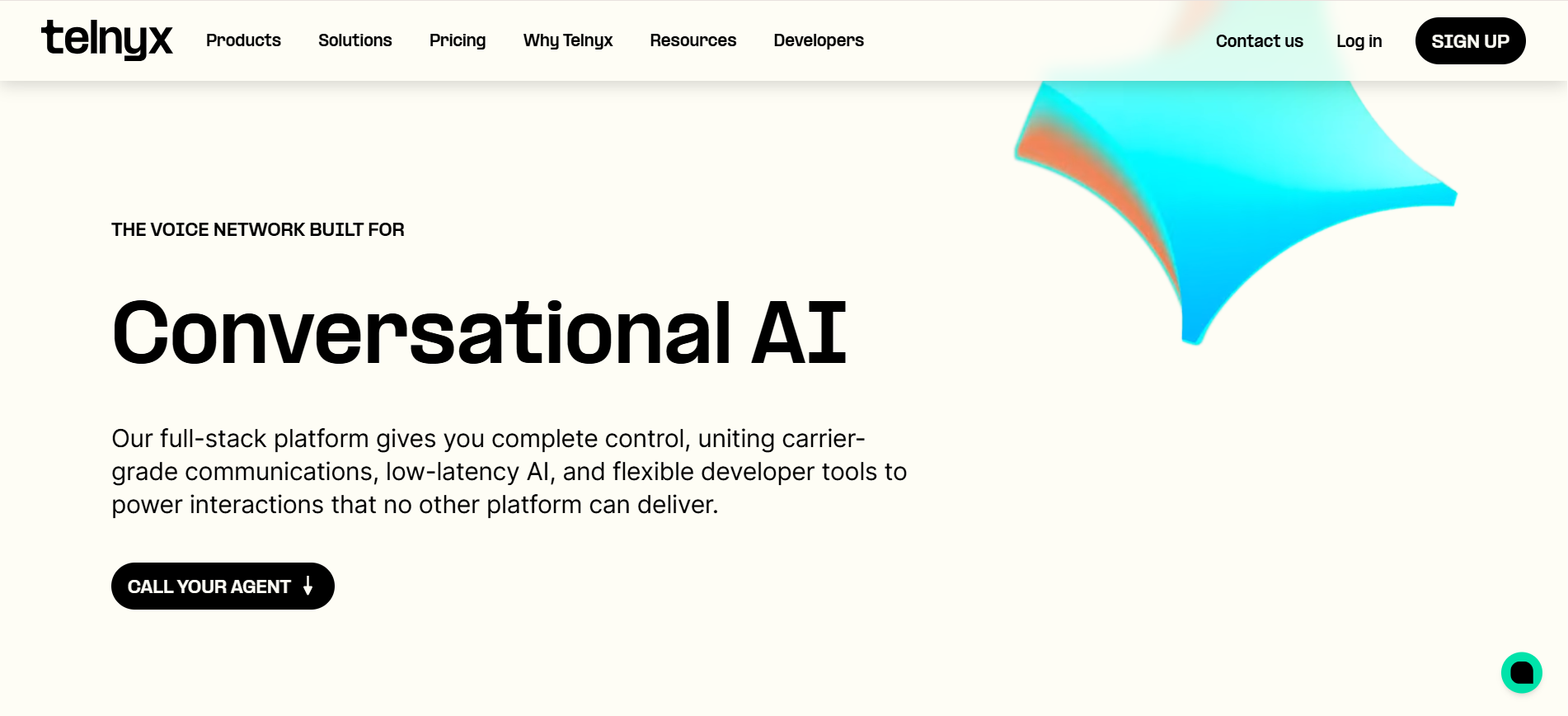
Telnyx provides a carrier-grade global telephony platform combined with programmable voice and AI-ready infrastructure. It enables Voice AI telephony integration via direct network connectivity and real-time call-control APIs.
Best for: Enterprises requiring low-latency voice delivery with direct-to-carrier network access.
Key strengths
Pricing model: Pay-as-you-go usage pricing with volume-based discounts.
Global telephony capabilities
Telnyx operates its own global network infrastructure across multiple regions. This enables consistent call quality and reduced latency for AI voice agent API deployments worldwide.
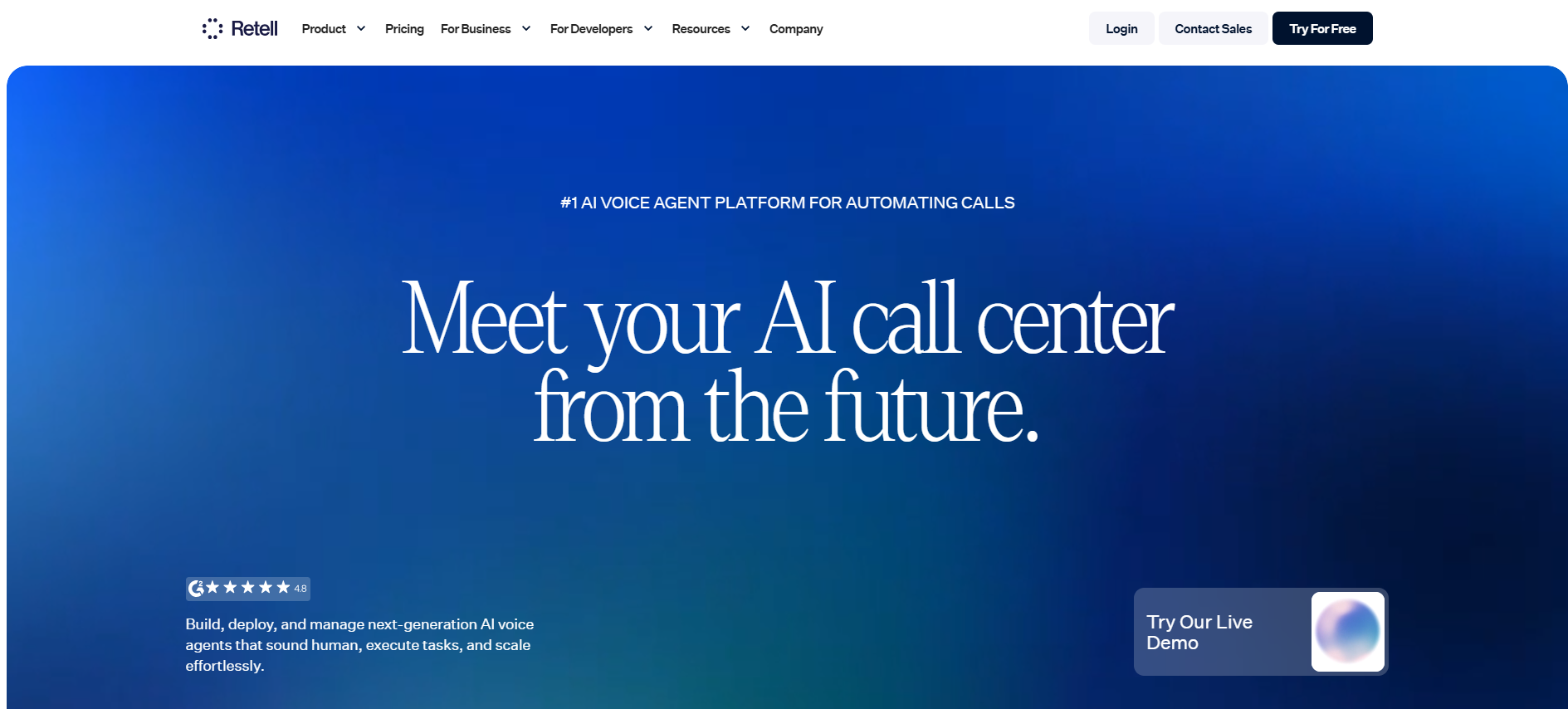
Retell AI focuses on building real-time AI voice agent infrastructure optimized for production environments. It provides low-latency conversational pipelines designed for a scalable voice AI API for global telephony integration.
Best for: Teams deploying real-time conversational agents for inbound and outbound business calls.
Key strengths
Pricing model: Usage-based pricing tied to AI processing and call minutes.
Global telephony capabilities
Retell AI integrates with global programmable voice providers and SIP platforms. This enables international Voice AI telephony integration with consistent latency performance.
Bland AI is a voice automation platform designed for the rapid deployment of outbound AI calling workflows. It supports Voice AI API for Global Telephony Integration by enabling automated conversational outreach across programmable telephony networks.
Best for: Sales and operations teams running simple outbound calling and lead qualification campaigns.
Key strengths
Pricing model: Per-minute usage-based pricing with volume discounts.
Global telephony capabilities
Bland AI integrates with global telephony API solutions to support international outbound calling. It enables scalable AI phone automation API deployments for appointment booking and customer outreach.
Vapi AI is a developer-first voice AI platform that enables full customization of conversational agents. It provides flexible APIs that support advanced Voice AI telephony integration workflows.
Best for: Engineering teams building custom AI voice agent applications.
Key strengths
Pricing model: Usage-based pricing with tiered access to advanced features.
Global telephony capabilities
Vapi AI connects with programmable voice providers and SIP trunking platforms. This enables Voice AI API for Global Telephony Integration across multiple regions and telecom environments.
Vonage Voice API is an enterprise communication platform offering programmable voice services with global carrier connectivity. It supports conversational AI for business calls through its AI Studio and automation tools.
Best for: Enterprises combining voice AI with omnichannel communication workflows.
Key strengths
Pricing model: Usage-based call pricing with regional rate structures.
Global telephony capabilities
Vonage provides international PSTN access and local number provisioning. It enables Global telephony API solutions with regional call routing optimization and enterprise-grade reliability.
Goodcall delivers a Voice AI API for Global Telephony Integration that prioritizes usability, speed, and enterprise reliability. Instead of complex development pipelines, Goodcall provides ready-to-deploy voice automation designed for real business workflows.
Its platform enables organizations to launch intelligent voice agents without heavy engineering investment. This makes Goodcall attractive for operations teams, customer support departments, and sales organizations.
Goodcall focuses on production-grade conversational AI for business calls. The platform supports inbound call handling, outbound outreach, and real-time voice interaction.
Key capabilities include:
These features enable Voice AI telephony integration without building custom orchestration layers.
Selecting the right Voice AI API for Global Telephony Integration requires aligning technical capabilities with business objectives. Decision-makers should evaluate infrastructure readiness, operational needs, and scalability requirements before deployment.
Selecting a Voice AI API for Global Telephony Integration depends on your organization’s technical maturity and deployment expectations. Matching platform complexity with team capability improves implementation speed and long-term scalability.
Clear use cases improve Voice AI telephony integration outcomes. Identify whether the AI will handle support calls, sales outreach, appointment scheduling, or internal workflows. Different use cases require different conversation logic and scalability levels.
Beyond per-minute pricing, evaluate infrastructure fees, AI processing costs, and maintenance expenses. Global telephony API solutions may include regional carrier charges. A full cost model prevents unexpected budget growth.
Voice performance varies by region and accent. Run pilot tests across target markets to validate latency, call quality, and conversation accuracy. Market testing ensures low-latency voice AI performance under real conditions.
Begin with controlled deployments before full rollout. Launch limited campaigns or call queues to measure performance. Scalable platforms allow rapid expansion once results meet business benchmarks.
Voice AI technology continues to evolve rapidly. Several trends will reshape the Voice AI API for Global Telephony Integration over the next few years.
Emotion detection enables AI voice agents to analyze tone, sentiment, and caller stress levels. This capability improves escalation logic and conversation personalization.
Emotion-aware conversational AI for business calls can route frustrated customers to human agents faster. It also improves sales conversations by adjusting speech tone dynamically.
Future Voice AI platforms will leverage CRM data and behavioral history to personalize conversations. AI voice agents will tailor responses based on customer profiles and past interactions.
Hyper-personalized Voice AI telephony integration improves engagement and conversion rates. Businesses gain more contextual interactions without manual scripting.
Edge-based voice processing reduces latency by moving AI inference closer to users. This architecture improves call responsiveness and reliability.
Low-latency voice AI will benefit from regional edge nodes. Businesses serving global audiences will experience faster response times and improved call quality.
Governments continue updating telecom and data protection regulations. Voice AI platforms must adapt to regional compliance requirements.
Global telephony API solutions will increasingly include built-in compliance tools. Automated call recording consent, regional data storage controls, and audit logging will become standard features.
Voice AI API for Global Telephony Integration is no longer optional for scalable business communication. It enables real-time automation, global reach, and consistent customer experiences across voice channels.
Choosing the right platform depends on performance, integration flexibility, and long-term scalability. Businesses that invest early gain operational efficiency, cost savings, and a competitive advantage.
Want to scale your business calls globally without extra hassle? Book your free demo with Goodcall and see how AI-powered voice boosts efficiency, customer satisfaction, and seamless international communication.
What's the difference between a voice AI API and traditional IVR systems?
A Voice AI API uses natural language processing to enable real conversations. Traditional IVR systems rely on keypad menus and rigid scripts. Voice AI telephony integration provides dynamic dialogue, contextual understanding, and real-time conversational experiences.
How much does voice AI API integration typically cost?
Costs vary based on call volume, AI processing usage, and telephony fees. Most enterprise voice AI solutions use usage-based pricing models. Businesses should also factor in integration, development, and infrastructure costs.
Can voice AI handle multiple languages and accents accurately?
Modern AI voice platforms support multilingual speech recognition and accent adaptation. Performance depends on training data quality and regional deployment infrastructure. Testing Voice AI telephony integration in target markets improves accuracy and reliability.
How long does it take to implement a voice AI API for global telephony?
Implementation timelines range from a few days to several weeks. No-code platforms deploy faster. Developer-focused platforms require additional integration and testing time. Deployment speed depends on use case complexity.
Is voice AI secure enough for handling sensitive customer data?
Enterprise-grade Voice AI platforms use encryption, access control, and compliance certifications. Businesses should verify SOC 2 compliance and regional data protection standards before deployment.
What happens if the AI doesn't understand a caller?
Advanced conversational AI systems use fallback workflows. These include clarification prompts, intent re-routing, or seamless transfer to human agents. This ensures call continuity and customer satisfaction.
Can I integrate voice AI with my existing CRM and business tools?
Most AI voice agent APIs support CRM and workflow integrations through REST APIs and webhooks. Platforms like Goodcall, Twilio, and Vonage offer prebuilt connectors for enterprise systems.
What's the typical ROI timeline for voice AI implementation?
Many businesses see measurable ROI within three to six months. Savings come from reduced staffing costs, improved call handling efficiency, and higher conversion rates from automated outreach.