

Top Voice AI Companies Transforming Business Communication

Voice AI companies are redefining how businesses communicate through real-time, human-like conversations powered by advanced speech recognition and natural language processing. The best voice AI platforms enable enterprises to deploy AI phone agents, AI receptionists, and conversational voice AI that integrate seamlessly with CRMs, payment systems, and customer workflows.
This article examines the top voice AI companies, key evaluation criteria, and leading platforms, and guides on selecting the right solution for your business.
Best AI Voice Companies 2026
- Goodcall – Best overall AI voice agent for businesses wanting fast setup, automation, and reliability
- Vapi – Best for real-time, developer-built voice-first products
- ElevenLabs – Best for ultra-realistic, expressive, and branded AI voices
- Deepgram – Best foundation layer for real-time transcription and voice intelligence
- Bland AI – Best API-driven platform for fully programmable AI phone agents
- Synthflow AI – Best no-code platform for deploying voice agents at scale
- Retell AI – Best for compliant voice automation in healthcare and finance
- Microsoft Azure AI Speech – Best enterprise-grade voice AI ecosystem
- Google Cloud Voice AI – Best for speech analytics and multilingual transcription
- AWS Polly & Lex – Best for scalable, infrastructure-level voice automation
Comparison Table: Top Voice AI platforms at a Glance
| Platform | Best For | Voice Latency | Integrations | Compliance & Security | Pricing Model | Typical Setup Time |
|---|---|---|---|---|---|---|
| ElevenLabs | Brands & creators | Low | App & media workflows | Standard enterprise security | Tiered subscription | Minutes - Hours |
| GoodCall | Large enterprises | Low (<300ms) | CRM, calendar, Zapier, phone systems | HIPAA-ready, enterprise-grade security | Flat subscription | 5 - 15 minutes |
| Vapi | Voice-first startups | Ultra-low (real-time) | Telephony, backend APIs | Standard security | Usage-based | Hours – Days |
| Deepgram | Developers & AI teams | Low | Custom pipelines | SOC 2 | Usage-based | Hours - Days |
| Bland AI | Engineering teams | Low | Custom backends | Enterprise-grade | Subscription + usage | Days |
| Synthflow AI | Non-technical teams | Low | CRM, phone systems | SOC 2, HIPAA, PCI DSS | Subscription | Hours |
| Retell AI | Regulated industries | Low | CRM, telephony | HIPAA, SOC 2, GDPR | Usage-based | Days |
| Microsoft Azure AI Speech | Large enterprises | Low | Microsoft ecosystem, enterprise apps | SOC 2, GDPR, ISO | Usage-based + enterprise | Weeks |
| Google Cloud Voice AI | Data-driven teams | Low | Google Workspace, cloud tools | SOC 2, GDPR | Usage-based | Days - Weeks |
| AWS Polly & Lex | Tech-heavy orgs | Low | Full AWS stack | HIPAA-eligible, SOC | Pay-as-you-go | Days |
Top Voice AI Companies Leading the Market
ElevenLabs
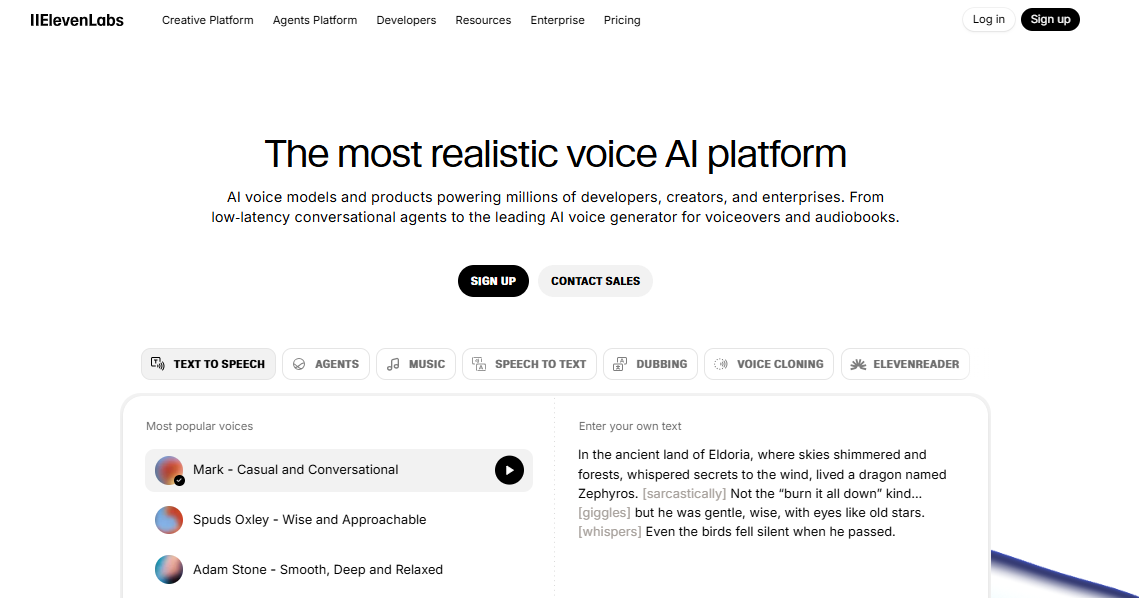
ElevenLabs is a leading generative voice AI platform that creates ultra-realistic, emotionally expressive synthetic speech from text for creators, developers, and enterprises.
Key Features:
- Expressive Text-to-Speech: Generates human-like voices with emotional nuance and natural pacing.
- Voice Cloning: Create digital replicas of unique voices with minimal audio input.
- AI Voice Agents: Build conversational voice bots that interact naturally and resolve tasks.
- Multilingual Support: Supports realistic voice synthesis in dozens of global languages.
- Developer APIs: Seamless integration into apps and workflows via powerful APIs and SDKs.
Best For: Content creators, marketing teams, and developers creating branded or storytelling voice experiences.
Use Cases: Audiobooks, podcasts, character voice generation, and branded conversational AI agents.
Pricing Model: Tiered plans starting at $5/month (10K characters), scaling up to enterprise APIs with unlimited characters.
Goodcall – Voice AI Agent for Enterprise
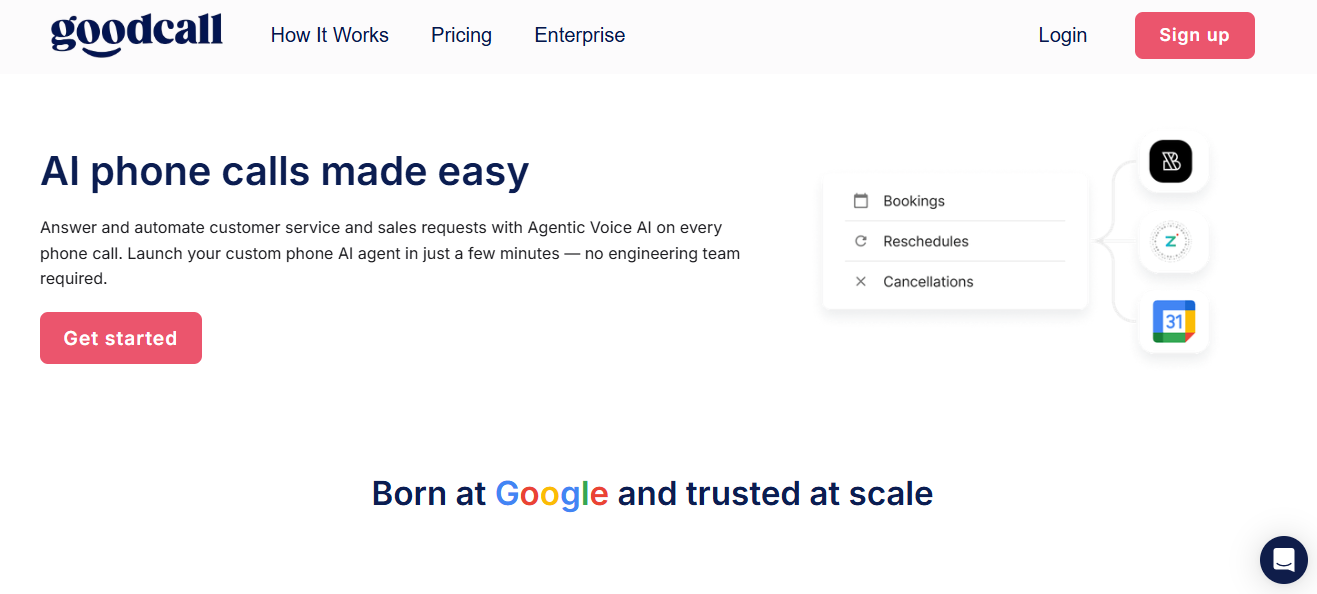
Goodcall is an AI-powered voice agent and virtual receptionist that automates customer calls, lead capture, and appointment scheduling with human-like conversations. Designed for ease of use, businesses can launch fully customizable AI phone agents in minutes without engineering expertise.
Key Features:
- AI Call Automation: Handles inbound and outbound calls automatically, reducing staff workload and wait times.
- Appointment Scheduling: Books, reschedules, and confirms meetings directly through natural conversations.
- Custom Call Logic Flows: Build conditional workflows to guide callers through tailored interaction paths.
- CRM & Tool Integration: Syncs with calendars, CRM systems, and business tools via APIs or Zapier connectors.
- Call Analytics & Insights: Provides transcription, caller intent, and performance analytics to optimize communication.
Best For: Businesses of all sizes, from solopreneurs to multi-location enterprises, that want rapid deployment without engineering overhead.
Use Cases: 24/7 business answering, lead capture, appointment booking, and intelligent call routing.
Pricing Model: Flat subscription model starting at $66/month, including local number setup and unlimited calls.
Vapi
Vapi is a developer-centric voice AI platform that enables businesses to build, test, and deploy advanced conversational voice agents for phone calls and applications. With real-time processing and deep customization, Vapi strengthens automated communication workflows across support and sales.
Key Features:
- Voice Agent API: Programmable APIs let developers create, manage, and deploy complex voice AI agents.
- Real-Time Conversational Flow: Low-latency interactions support live voice calls with natural responses.
- Telephony Integration: Connect voice agents with phone systems for inbound and outbound calling.
- Custom Logic & Workflows: Control conversation behavior with conditional flows and backend integrations.
- Multilingual Support: Enable voice agents that understand and speak multiple languages using external TTS/STT providers.
Best For: Startups and SaaS platforms developing voice-first products or customer-facing conversational experiences.
Use Cases: Voice-enabled apps, customer onboarding, automated sales calls, and conversational IVRs.
Pricing Model: Usage-based, $0.05–$0.10 per minute with free developer credits for prototyping.
Deepgram
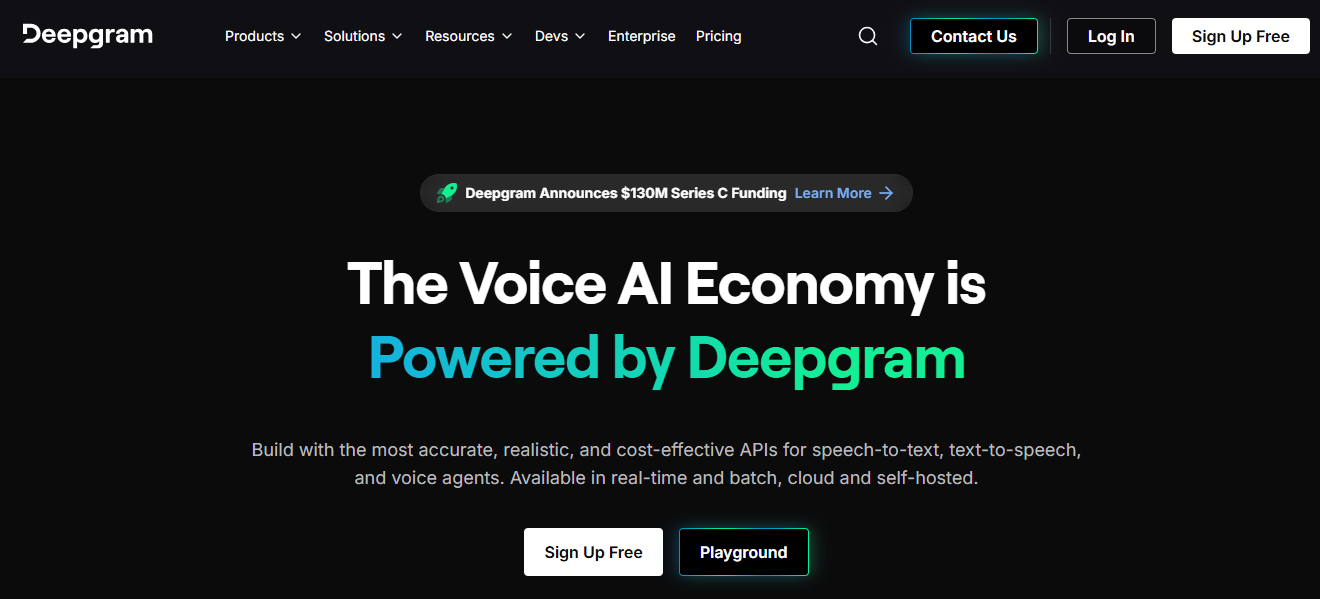
Deepgram is a cutting-edge voice AI platform that empowers developers and enterprises to build highly accurate speech-to-text, text-to-speech, and natural voice agents at scale. Deepgram accelerates voice-enabled products with robust audio intelligence and customization options.
Key Features:
- Speech-to-Text API: Fast, real-time transcription with high accuracy and support for live and prerecorded audio.
- Text-to-Speech Voices: Natural, expressive synthetic speech suited for voice experiences and user interactions.
- Voice Agent API: Unified voice-to-voice API that enables AI agents to converse naturally with humans.
- Audio Intelligence: Provides sentiment, topic, and intent analysis from audio content.
- Customization & Scalability: Fine-tune models for industry-specific vocabulary and deploy at enterprise volume.
Best For: Developers building custom voice analytics, transcription tools, or AI-driven assistants.
Use Cases: Voice analytics dashboards, real-time transcription, call intelligence, and conversational data extraction.
Pricing Model: Pay-per-minute usage, $0.004–$0.01 per minute based on model complexity, with developer credits available.
Bland AI
Bland AI is a developer-centric voice AI platform that automates inbound and outbound phone calls using human-sounding conversational agents for enterprise communication. It enables companies to build and deploy realistic voice bots that handle customer support, sales, and scheduling at scale.
Key Features:
- AI Phone Calling: Automates high-volume inbound and outbound calls with conversational AI agents that mimic natural speech.
- Human-Like Conversations: Voice agents engage callers with realistic intonation, dynamic responses, and contextual understanding.
- Self-Hosted Deployment: Offers enterprise-grade security and control by hosting models within your own infrastructure.
- Custom Voice & Cloning: Clone unique voices or create branded voice personas for personalized interactions.
- API-First Architecture: Flexible API and webhook integrations enable programmable workflows and automation.
Best For: Engineering teams needing programmable, highly customizable voice automation.
Use Cases: Automated outbound calling, lead qualification, feedback collection, and real-time voice workflows.
Pricing Model: Subscription starts at $20/month (1,000 calls), scaling by usage and concurrency requirements.
Synthflow AI
Synthflow AI is a no-code voice AI platform that automates real-world phone conversations using human-like voice agents built without technical expertise. It supports inbound and outbound calls, CRM integration, and multilingual conversational workflows.
Key Features:
- No-Code Voice Agent Builder: Create and deploy conversational phone agents with drag-and-drop design, no programming required.
- Natural Real-Time Conversations: AI handles live calls with contextual understanding and natural voice responses.
- CRM & Tool Integrations: Seamlessly connects to systems like Salesforce, HubSpot, and telephony stacks for unified workflows.
- Multi-Language Support: Enables voice agents to converse in various global languages for broader audience reach.
- Enterprise-Grade Compliance: Offers robust security and compliance for sensitive business communications.
Best For: Large-scale enterprises and contact centers requiring secure, customizable conversational frameworks.
Use Cases: Customer support automation, lead routing, compliance-sensitive voice operations, and telephony orchestration.
Pricing Model: Tiered business plans starting at $199/month, with enterprise pricing for high-volume use.
Retell AI
Retell AI is a scalable voice AI platform that enables businesses to build, test, deploy, and monitor natural-sounding AI voice agents for automated calling and communication tasks. It supports real-time conversational interactions with low latency and integrates with telephony, CRM, and backend systems.
Key Features:
- AI Voice Agents: Create production-ready voice agents that handle inbound and outbound calls intelligently and naturally.
- Low-Latency Conversations: Supports real-time voice interactions with responsive, natural dialogue flow.
- Multilingual Support: Enables voice agent comprehension and responses in multiple global languages.
- Telephony & CRM Integration: Connects seamlessly with phone systems, HubSpot, Salesforce, and business workflows.
- Compliance & Security: Meets enterprise security standards like SOC 2, HIPAA, and GDPR for safe deployment.
Best For: Healthcare, fintech, and enterprise sectors needing HIPAA- and GDPR-compliant AI communication.
Use Cases: Medical scheduling, financial verification, call routing, and patient support automation.
Pricing Model: Usage-based, around $0.07 per active minute, with volume discounts for enterprise clients.
Microsoft Azure AI Speech Services
Microsoft Azure AI Speech Services offers powerful voice AI capabilities that transform business communication with accurate speech-to-text, text-to-speech, and real-time voice translation. Its flexible APIs integrate seamlessly into apps, contact centers, and enterprise workflows. Backed by deep learning models, users get scalable and secure voice solutions.
Key Features:
- Speech-to-Text: Converts audio to highly accurate text with support for real-time and batch transcription.
- Text-to-Speech: Natural, expressive voice generation with customizable voices and pronunciation control.
- Speech Translation: Real-time multilingual voice translation to bridge global communication gaps.
- Custom Voice Models: Train and deploy branded or domain-specific voice personas for unique user experiences.
- Security & Compliance: Enterprise-grade data protection and compliance with major regulatory standards.
Best For: Large enterprises leveraging Microsoft’s ecosystem that need scalable, multi-language voice automation.
Use Cases: Contact center automation, multilingual voice assistants, transcription systems, and enterprise telephony integrations.
Pricing Model: Usage-based, approximately $1 per audio hour for speech-to-text and $16 per 1 million characters for neural text-to-speech, with a limited free tier.
Google Cloud Speech-to-Text & Voice AI
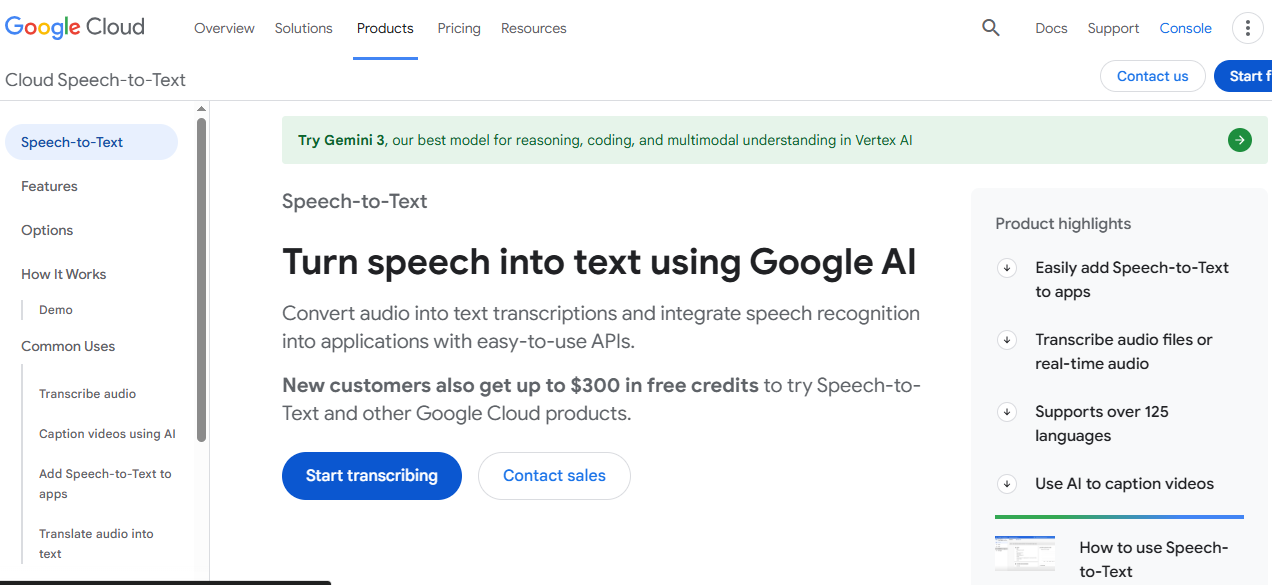
Google Cloud Speech-to-Text & Voice AI delivers robust voice recognition and synthesis powered by Google’s deep learning infrastructure, enabling accurate speech transcription and natural voice responses.
Key Features:
- Accurate Speech Recognition: Transcribes spoken language reliably, even in complex, noisy audio conditions.
- Real-Time and Batch Modes: Supports streaming transcription and large audio file processing for flexible use.
- Multi-Language Support: Recognizes and synthesizes speech across a broad range of global languages.
- Speaker Diarization: Identifies and distinguishes individual speakers in multi-speaker audio.
- Custom Vocabulary: Tailors transcription accuracy with domain-specific terms and industry jargon.
Best For: Businesses already using Google Workspace or Google Cloud seeking AI-driven speech analytics and automation.
Use Cases: Call analytics, voice-enabled customer support, conversational IVRs, and multilingual transcription pipelines.
Pricing Model: Usage-based, $0.006 per 15 seconds for speech recognition and $16 per 1 million characters for TTS, with free credits for new users.
Amazon Web Services (AWS) – Amazon Polly & Lex
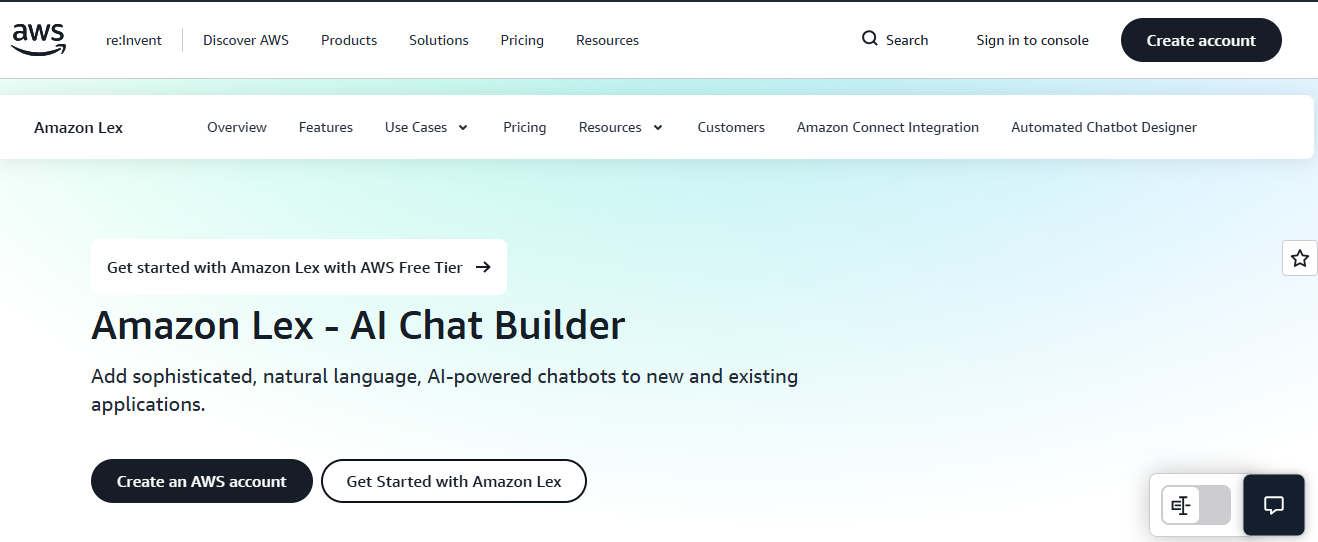
Amazon Web Services (AWS) - Amazon Polly & Lex combines advanced voice AI services to transform business communication with lifelike speech synthesis and conversational interfaces. Polly converts text into natural, expressive speech for engaging user experiences. Lex enables intelligent chatbots with speech and text understanding for seamless customer interactions.
Key Features:
- Natural Speech Synthesis (Polly): Generates clear, life-like voices tailored for diverse applications.
- Conversational Interfaces (Lex): Builds chatbots with automatic speech recognition and natural language understanding.
- Multi-Language & Voice Options: Offers numerous language and voice selections for localized experiences.
- Integration with AWS Ecosystem: Seamlessly connects with AWS services for scalable deployment.
- Custom Lex Bots: Creates tailored conversational workflows for specific business communication needs.
Best For: Tech-driven companies requiring modular, customizable, and globally scalable voice AI infrastructure.
Use Cases: IVR systems, voice commerce assistants, healthcare chatbots, and real-time conversational experiences.
Pricing Model: Pay-as-you-go, Polly costs ~$16 per 1 million characters, and Lex costs $0.004 per request, with a free tier included.
IBM Watson Speech Services
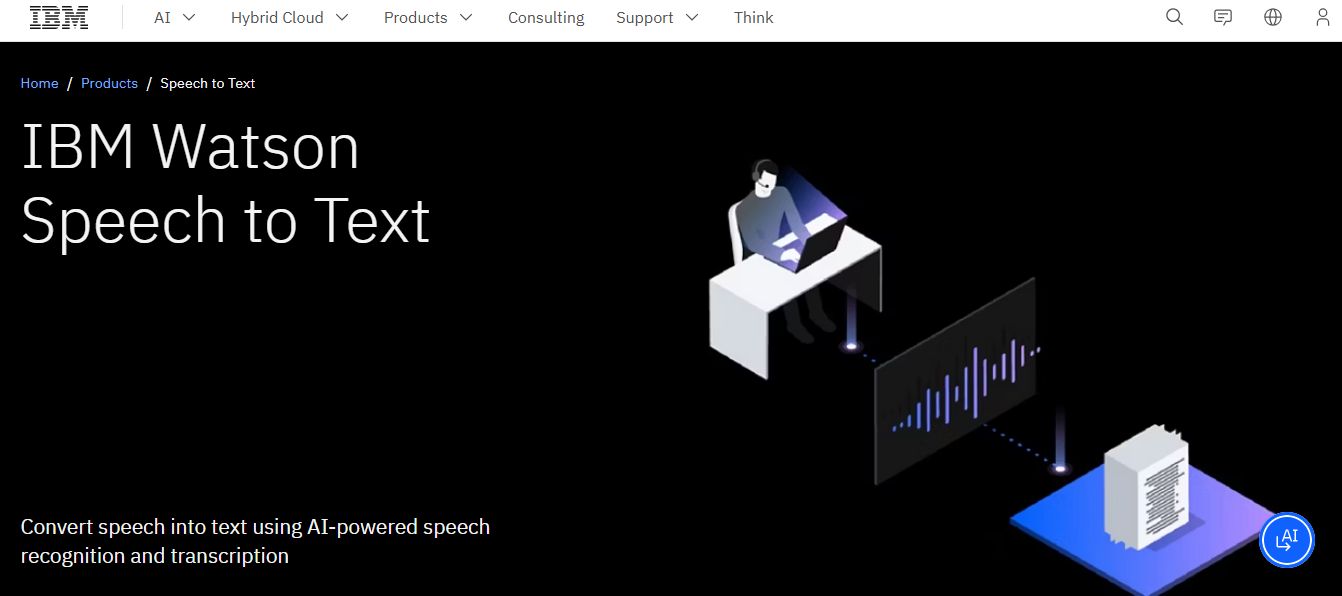
IBM Watson Speech Services offers enterprise-grade voice AI solutions that convert speech to text and generate natural audio responses for smarter communication. Built on IBM’s AI expertise, it supports secure, scalable speech analytics and transcription.
Key Features:
- Speech-to-Text: High-accuracy transcription with real-time and batch processing capabilities.
- Text-to-Speech: Natural, expressive synthesized voices with customizable intonation and pronunciation.
- Voice Analysis: Detects sentiment, emotion, and speech patterns for richer insights.
- Multi-Language Support: Supports numerous global languages and dialects for broad deployment.
- Enterprise Security: Ensures robust data protection and compliance suited for regulated industries.
Best For: Regulated industries like healthcare, banking, and legal sectors needing strict data security.
Use Cases: Secure transcription, internal communication automation, and compliance-heavy voice processing.
Pricing Model: Usage-based, around $0.02 per audio minute for speech-to-text and $16 per 1 million characters for neural TTS; enterprise licenses available.
Smith.ai
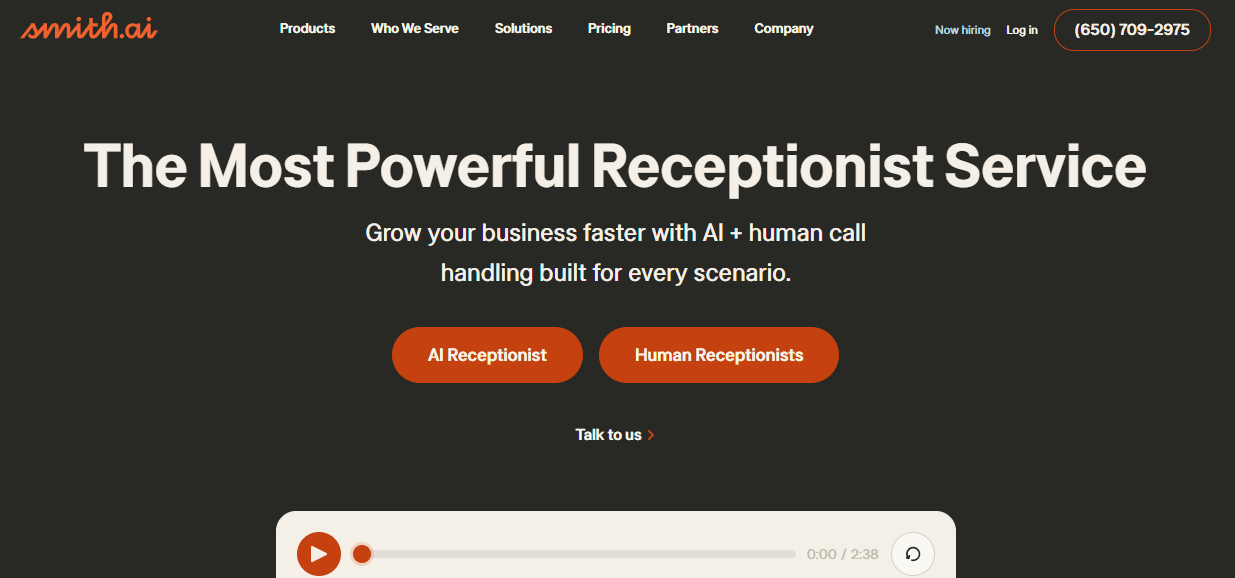
Smith.ai offers a hybrid AI-powered virtual receptionist and call handling service that combines conversational voice AI with live human support to manage business calls 24/7. It handles inquiries, schedules appointments, and qualifies leads while integrating with CRMs and workflows.
Key Features:
- 24/7 AI Receptionist: Answers incoming calls around the clock with a natural conversational voice AI.
- Human Agent Support: Escalates complex interactions to trained live receptionists seamlessly.
- Lead Qualification & Scheduling: Screens callers, books appointments, and captures key business information.
- CRM & App Integrations: Syncs call data automatically with CRMs like HubSpot and Clio.
- Call Recording & Transcription: Provides recordings and transcripts for quality, tracking, and follow-up.
Best For: Law firms, medical practices, and professional services firms that require human-level nuance for intake, screening, and customer communication.
Use Cases: Client intake, call screening, appointment scheduling, and after-hours coverage.
Pricing Model: Pay-per-call model starting at $255/month for 30 calls, with higher tiers for large-volume firms.
My AI Front Desk (Frontdesk)
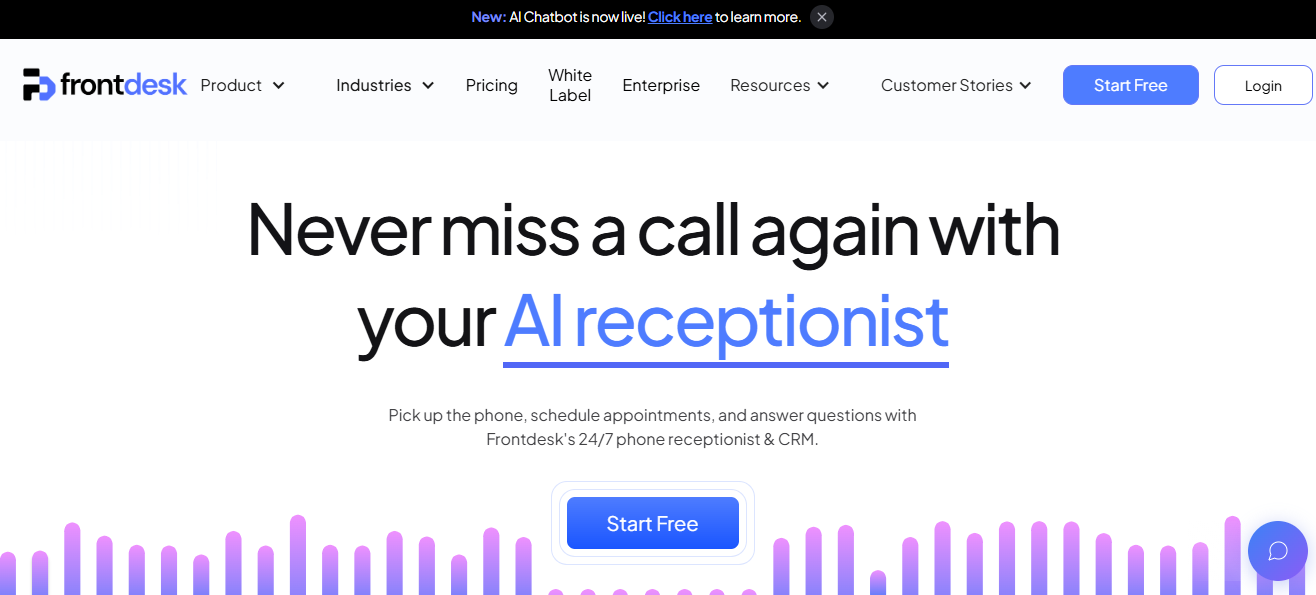
My AI Front Desk (Frontdesk) is an AI-powered virtual receptionist that answers business calls, schedules appointments, and handles customer questions automatically. Designed for small businesses, it’s easy to set up and helps capture leads and bookings without human staff.
Key Features:
- 24/7 AI Call Answering: Always-on automated phone receptionist answers inquiries day and night.
- Appointment Scheduling: Books, reschedules, and manages calendar events during calls.
- Voice Customization: Choose from multiple AI voices to reflect your brand’s personality.
- Multilingual Support: Engage callers in 25+ languages for global customer coverage.
- SMS & Workflow Automation: Sends SMS messages and triggers workflows based on conversational context.
Best For: Service-based businesses such as plumbers, locksmiths, HVAC companies, and local contractors.
Use Cases: Call answering, scheduling, inquiry handling, and post-call SMS follow-ups.
Pricing Model: Subscription-based from $99/month; proven ROI includes up to $800K in revenue increase over six weeks.
RingCentral AI Receptionist
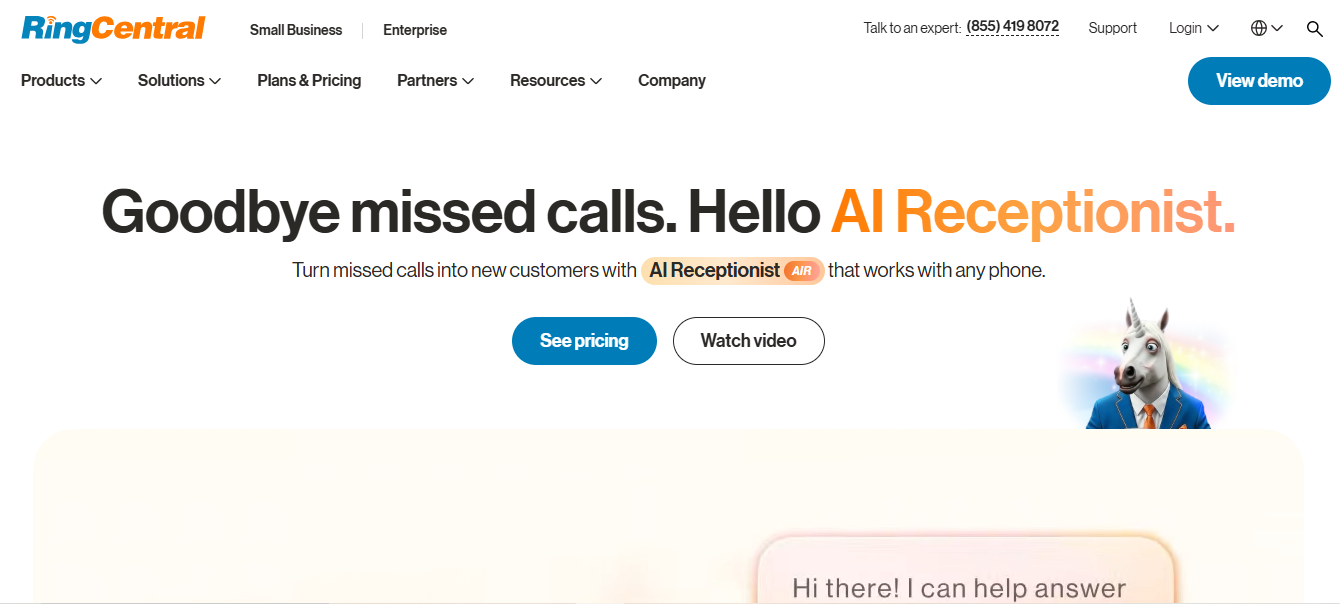
RingCentral AI Receptionist is an intelligent voice AI front-desk solution that answers, understands, and routes business calls 24/7 with natural language capabilities.
Key Features:
- 24/7 Natural Call Answering: Engages callers with human-like conversations and immediate responses at any hour.
- Intelligent Call Routing: Uses context and keywords to route calls to the right person or department every time.
- Lead Capture & CRM Sync: Collects caller details and flows them into Salesforce, HubSpot, or native data stores.
- Appointment Scheduling: Books meetings across multiple calendars and sends confirmations via SMS.
- Custom Greetings & Personalization: Customize voice, tone, and routing logic to reflect your brand identity.
Best For: Mid-to-large organizations are already using RingCentral for business communications.
Use Cases: Automated call handling, IVR routing, voicemail transcription, and real-time escalation.
Pricing Model: Included in RingCentral business plans (~$30/user/month), with AI add-ons for analytics and call intelligence.
How to Choose the Right Voice AI Company for Your Business?
- Use-case alignment: Identify whether you need AI voice agents, real-time transcription, customer support automation, or enterprise voice workflows.
- Deployment & pricing: Compare setup time (minutes vs. weeks) and pricing models (flat subscription vs. usage-based) for predictable ROI.
- Integrations & scalability: Ensure compatibility with CRM, calendars, telephony, and the ability to scale call volume reliably.
- Security & compliance: Verify HIPAA, SOC2, GDPR compliance, data encryption, and proven production performance.
FAQs
How does voice AI differ from chatbots?
Voice AI and chatbots both run conversational AI, but voice AI communicates through speech for natural, hands-free conversations on calls or smart speakers. Chatbots are text-based (websites/apps), usually faster for quick, structured queries, though modern conversational AI can blur the line.
What industries benefit most from voice AI?
Industries with high call volume and repetitive workflows benefit most from voice AI, especially healthcare, retail/e-commerce, banking/finance, and automotive. It improves customer service, speeds up operations (booking, support, verification), and enables hands-free, personalized experiences across channels.
Is voice AI safe for healthcare and finance?
Yes. Voice AI can be safe in healthcare and finance only when it’s deployed with strong security controls (encryption, access controls, audit logs), fraud protections, and strict compliance with regulations like HIPAA and GDPR. Without these safeguards, the risk of data breaches, fraud, and legal liability is high.
What trends will shape voice AI?
Voice AI will be shaped by converging trends like deeper generative AI integration, emotion-aware speech, and seamless multimodal experiences (voice + text + vision). Together, these will make voice agents more autonomous, personalized, and embedded in daily life and enterprise workflows.
Will voice AI replace call centers?
No. Voice AI won’t fully replace call centers; it will shift them to hybrid models where AI handles routine work (FAQs, routing, simple bookings) and humans handle complex, emotional, and high-stakes cases. Expect AI to improve speed and cost-efficiency, while agents remain essential for empathy and nuanced problem-solving.