

Best Voice AI for Fraud Detection Workflows
.jpg)
Fraud losses continue to rise across banking, fintech, insurance, and telecom sectors. According to the Federal Trade Commission, U.S. consumers lost over $12.5 billion to fraud during 2024, a 25% increase over 2023. Early 2025 reports indicate the trend is still accelerating, with AI-enabled scams contributing to sustained growth in financial losses.
As fraudsters adopt AI-driven impersonation tactics, organizations increasingly seek the best voice AI for fraud detection workflows to mitigate real-time risk. This article explains why voice AI is becoming central to fraud prevention strategies. It evaluates leading platforms, explores real-time detection mechanisms, and provides guidance for selecting the right solution for US enterprises.
Why Voice AI Is Becoming Critical in Fraud Detection Workflows
Fraud has evolved from simple social engineering to AI-powered impersonation and deepfake attacks. Criminals now use synthetic voices and automated scripts to bypass traditional security layers.
Here is why Voice AI is critical to fraud detection:
- Real-Time Voice Fraud Monitoring: Voice AI analyzes speech patterns, caller behavior, and contextual signals during live interactions. It flags anomalies instantly, enabling intervention before transactions complete or sensitive account changes occur.
- Stronger AI Voice Fraud Prevention: AI models detect synthetic voices, impersonation attempts, and scripted responses. This layered detection reduces reliance on outdated knowledge-based authentication methods that attackers frequently exploit.
- Advanced Voice Authentication Software: Voice biometrics validates identity using unique vocal characteristics. Authentication happens passively during natural conversation, improving security while minimizing friction for legitimate customers.
- Conversational AI Fraud Detection Intelligence: Modern systems evaluate tone shifts, hesitation patterns, and request sequencing. These signals strengthen risk-scoring engines and improve fraud-detection accuracy in high-volume environments.
- AI Fraud Detection Workflow Automation: Voice AI automatically triggers account lockouts, step-up authentication, or case creation when risk thresholds are exceeded. This automation reduces delays in manual review and limits financial exposure.
- Protection Against Deepfake and Synthetic Speech: Advanced platforms analyze acoustic artifacts and waveform inconsistencies to detect AI-generated voices. This capability is increasingly important as voice cloning tools become widely accessible.
- Enhanced Call Center Fraud Detection AI: Call centers remain the primary targets of fraud. Voice AI protects agents by providing real-time alerts and decision support, thereby reducing the number of successful social engineering attacks.
As fraud tactics grow more sophisticated, the best voice AI for fraud detection workflows provides scalable, intelligence-driven defense across every voice interaction.
Top Voice AI Platforms for Fraud Detection Workflows
- Pindrop: Real-time voice intelligence and contact center fraud detection platform
- Veriff: AI identity verification with voice and biometric fraud detection
- Telnyx: Voice AI APIs enabling biometric authentication and fraud monitoring
- VoiceVault: Enterprise voice biometrics and secure authentication systems
- Vox-ID: Passive voice biometrics and real-time identity verification platform
- Resemble AI: Deepfake audio detection and synthetic voice fraud monitoring
1. Pindrop

Pindrop provides advanced voice security and fraud detection technology designed for contact centers and financial institutions. The platform analyzes call audio, network signals, and behavioral patterns to identify fraud, authenticate callers, and detect synthetic voices in real time.
Key Features
- Voice biometrics and passive caller authentication
- Deepfake and synthetic audio detection
- Real-time call risk scoring and fraud alerts
- Acoustic fingerprinting and device intelligence
- IVR authentication and contact center integration
- AI-powered fraud analytics and threat intelligence
2. Veriff
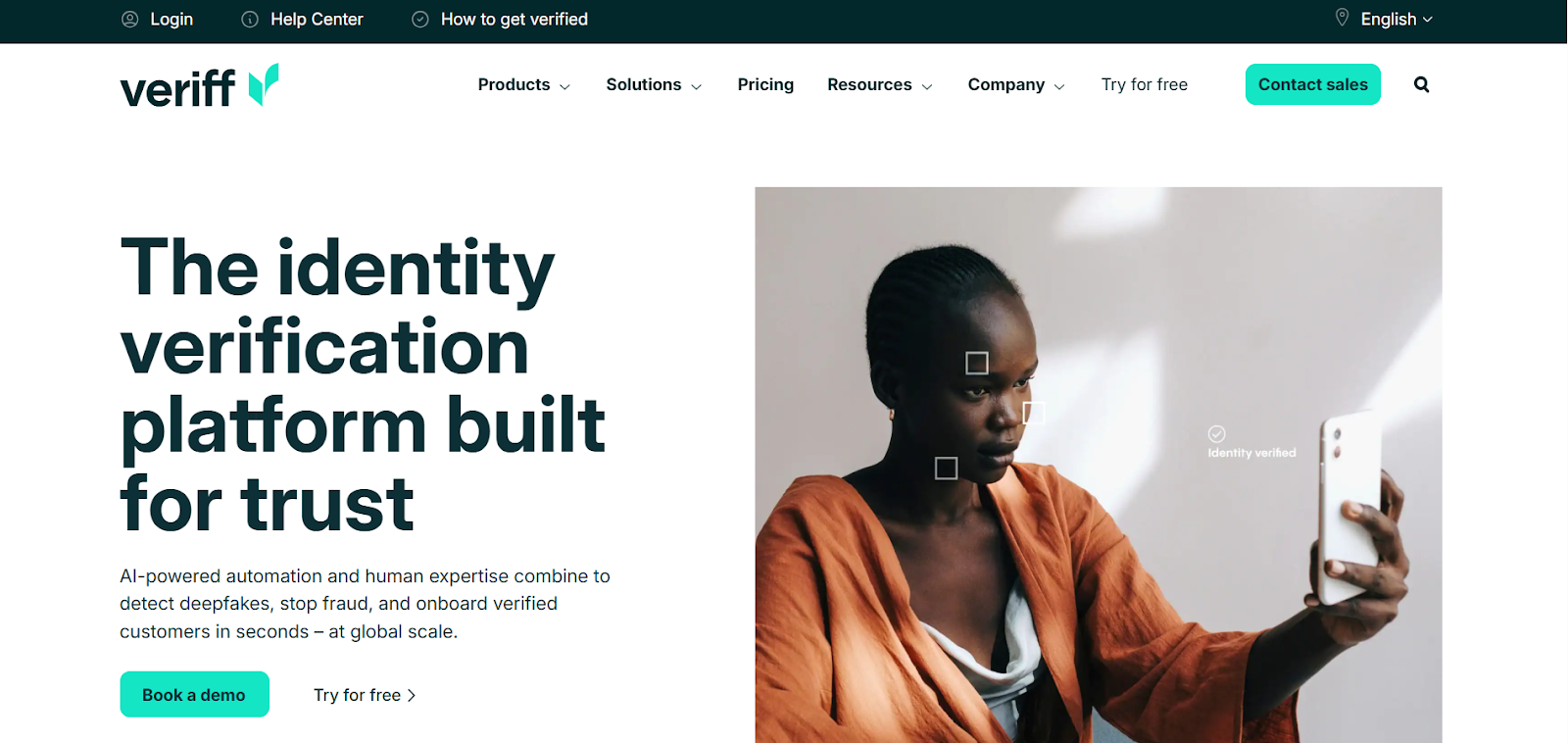
Veriff is an AI-powered identity verification and fraud-prevention platform used by fintech companies, marketplaces, and financial institutions. It combines biometric authentication, document verification, and fraud intelligence to detect identity fraud and prevent suspicious access to accounts.
Key Features
- AI-powered identity and document verification
- Biometric authentication and liveness detection
- Fraud intelligence with behavioral and device analysis
- Cross-link analysis to identify repeat fraudsters
- Automated verification decisions with human fallback
- Compliance-ready KYC and AML verification tools
3. Telnyx AI

Telnyx provides a programmable voice AI platform that enables businesses to build real-time voice applications, automated call workflows, and authentication systems. Its infrastructure supports conversational AI fraud detection, biometric verification, and scalable real-time voice communications.
Key Features
- Programmable Voice API for real-time call automation
- AI voice agents for conversational workflows
- Global telephony infrastructure with low latency
- Real-time speech-to-text and voice intelligence
- Scalable voice authentication and verification tools
- Integration with AI models and CRM platforms
4. VoiceVault by Modulate

VoiceVault is an AI-driven fraud-detection platform built by Modulate to detect fraud and suspicious activity in voice interactions. It analyzes speech patterns, tone, and conversational signals to detect impersonation attempts and fraudulent behavior in real time.
Key Features
- Real-time voice fraud detection during conversations
- Behavioral and acoustic signal analysis
- AI-driven intent and tone recognition
- Integration with enterprise communication systems
- Synthetic voice and impersonation detection
- Scalable deployment for financial and customer service environments
5. Vox-ID
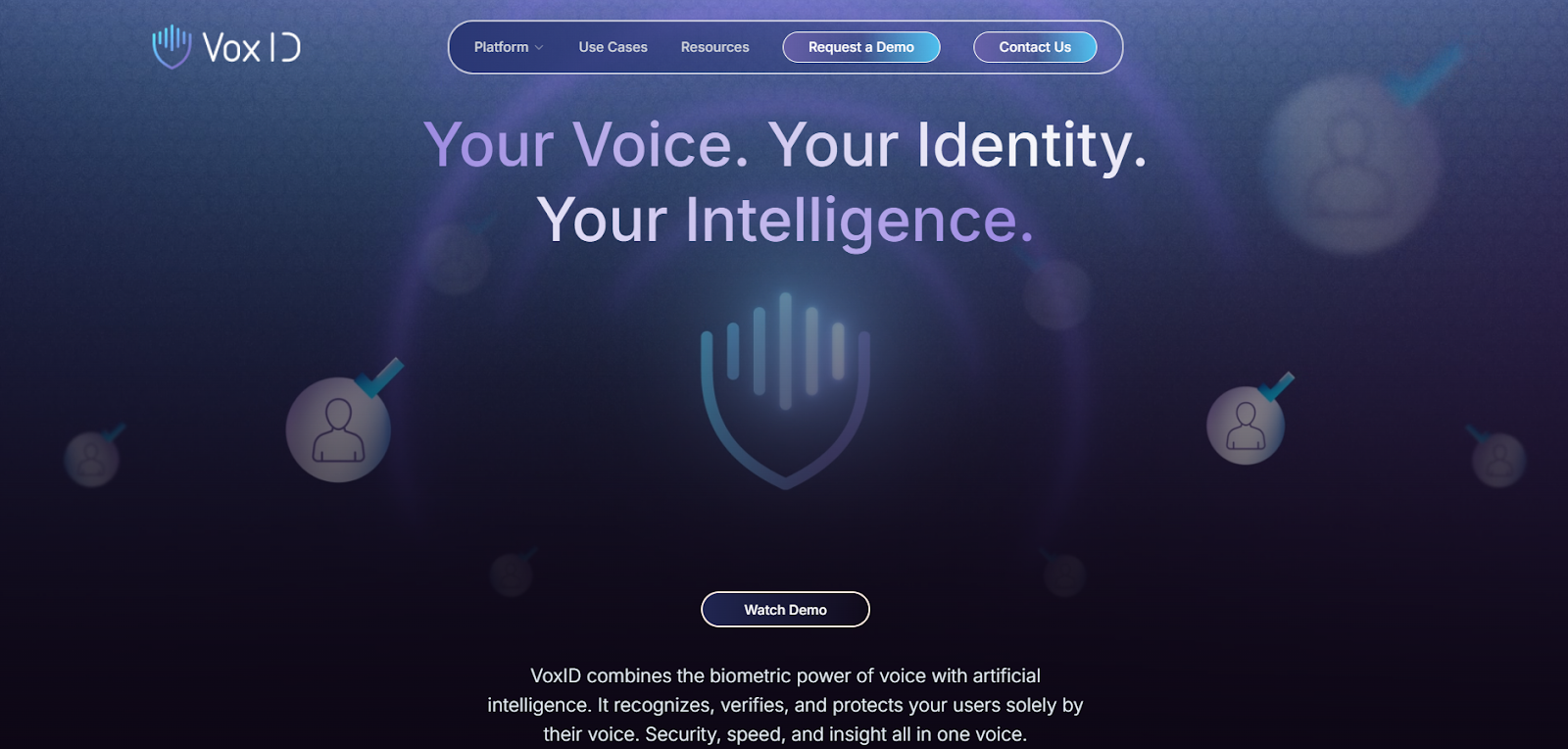
Vox-ID provides AI-driven voice biometric authentication and fraud detection designed for contact centers, banking, and digital identity verification. The platform analyzes vocal biometrics and behavioral anomalies to detect impersonation, replay attacks, and deepfake voices in real-time interactions.
Key Features
- Real-time voice biometrics for caller authentication
- Detection of synthetic voices and replay attacks
- Behavioral and channel anomaly analysis
- Fraud alerts during live customer interactions
- Integration with contact center platforms
- Privacy-first architecture with minimal data storage
Pricing
- Usage-based pricing typically aligned with call volume
- Enterprise subscription packages available
- Custom pricing offered through vendor consultation
6. Resemble AI
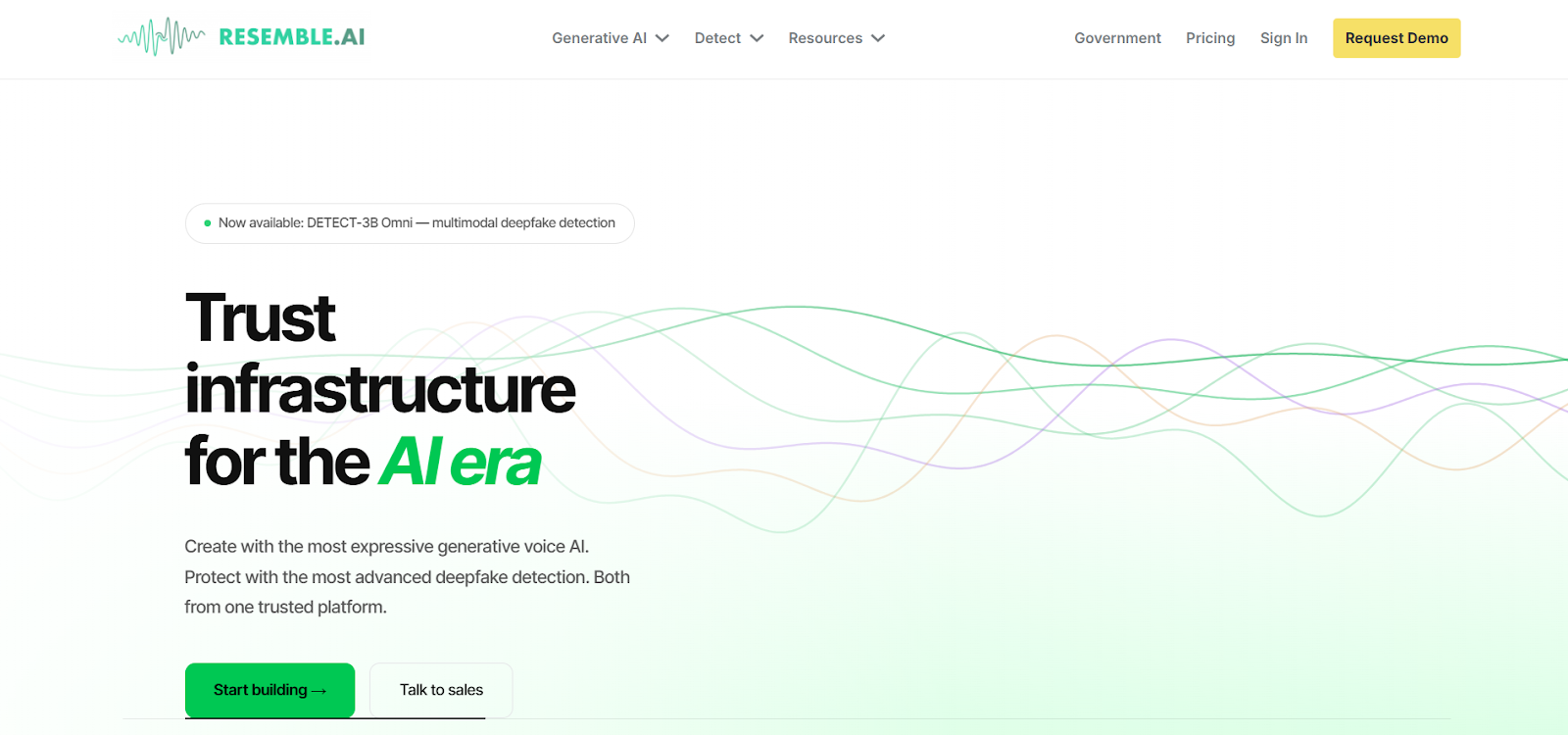
Resemble AI provides generative voice technology combined with advanced deepfake detection. Its detection models analyze audio signals in real time to identify manipulated or synthetic speech used in fraud, impersonation, or misinformation attacks.
Key Features
- AI deepfake audio detection and analysis
- Real-time speaker verification and identity search
- Multimodal detection across audio, video, and images
- AI watermarking for audio authenticity verification
- Voice cloning and speech synthesis tools
- API integrations for enterprise voice applications
7. Mihup AI

Mihup AI is a conversational voice intelligence platform designed for enterprises and contact centers. It analyzes conversations using speech recognition, NLP, and real-time analytics to uncover intent, detect anomalies, and automate decision-making during customer interactions.
Key Features
- Real-time speech analytics and interaction monitoring
- Conversational AI for automated voice agents
- Sentiment, intent, and behavioral analysis from voice interactions
- Real-time agent assistance during live calls
- Automated quality assurance across 100% of calls
- Scalable voice AI APIs and SDK integrations
How Voice AI Detects Fraud in Real-Time
Modern fraud attacks often occur during live customer interactions, particularly in call centers and financial service environments. Voice AI helps organizations detect suspicious activity in real time by analyzing speech, behavioral patterns, and contextual signals during conversations.
Here is how voice AI detects fraud in real time:
1. Voice Biometrics
Voice authentication software analyzes unique vocal characteristics such as pitch, tone, cadence, and speech rhythm. These biometric markers create a voiceprint for each user. When a caller speaks, the system compares the voice with stored profiles to verify identity and detect impersonation attempts.
2. Behavioral Analysis
Conversational AI fraud detection systems monitor behavioral patterns during conversations. These include:
- Speech hesitation patterns
- Scripted responses
- Emotional inconsistencies
- Abnormal interaction speed
Behavioral signals help identify social engineering attempts or suspicious caller activity.
3. Deepfake and Synthetic Voice Detection
AI-powered fraud tools analyze acoustic artifacts, waveform patterns, and spectral anomalies to identify synthetic or manipulated voices. This capability helps organizations prevent fraud attempts involving voice cloning, impersonation scams, or AI-generated speech.
4. Risk Scoring Engines
Voice AI platforms continuously generate risk scores during interactions. The system evaluates multiple signals, including:
- Caller history
- Behavioral deviations
- Device metadata
- Network signals
- Conversational context
to determine whether the interaction presents a potential fraud risk. If risk crosses thresholds, systems escalate to human agents or block transactions.
5. Automated Workflow Actions
AI fraud detection workflow automation allows systems to trigger security responses instantly. These may include step-up authentication, transaction blocking, account lockouts, or escalation to fraud investigation teams when suspicious activity is detected.
Benefits of Using Voice AI for Fraud Detection
Voice AI strengthens fraud prevention by combining biometric security, behavioral intelligence, and automation within live customer interactions. Organizations adopting the best voice AI for fraud detection workflows gain measurable operational, financial, and security advantages:
1. Reduced Fraud Losses
Real-time voice fraud monitoring stops account takeovers and unauthorized transactions before completion. Early intervention limits financial damage and reduces recovery costs.
2. Faster and Frictionless Authentication
Voice authentication software verifies identity passively during conversation. Customers avoid repetitive security questions while institutions maintain strong protection.
3. Stronger AI Voice Fraud Prevention Against Deepfakes
Advanced models detect synthetic speech and impersonation attempts. This protects financial institutions from AI-driven voice cloning attacks targeting call centers.
4. Improved Call Center Efficiency
AI for call center fraud detection reduces average handling time by automating verification. Agents focus on resolution rather than on manual identity checks.
5. Scalable AI Fraud Detection Workflow Automation
Automated risk scoring, alerts, and case creation reduce dependence on manual fraud-review teams. Systems scale across high call volumes without increasing staffing.
6. Enhanced Regulatory and Compliance Alignment
Voice AI platforms align with federal cybersecurity and identity verification guidelines. Automated audit logs and risk documentation strengthen compliance readiness.
7. Better Customer Trust and Experience
Customers feel more secure when institutions proactively prevent fraud. Seamless protection enhances brand credibility while reducing account disruption incidents.
How to Choose the Right Voice AI for Your Business
Selecting the right solution requires balancing security, scalability, and customer experience. The best voice AI for fraud detection workflows should protect against sophisticated attacks while integrating smoothly into existing operations. When evaluating platforms for AI voice fraud prevention, organizations should consider the following factors:
1. Accuracy of Voice Biometrics and Authentication
Choose platforms with advanced voice authentication software that analyzes vocal traits such as pitch, tone, and speech patterns. These systems create a voiceprint and match it during calls to verify identity securely.
2. Real-Time Fraud Detection Capabilities
Effective systems provide real-time voice fraud monitoring during live conversations. They detect anomalies in speech patterns, caller behavior, and call metadata before fraudulent transactions occur.
3. Deepfake and Synthetic Voice Detection
Modern fraud often involves voice cloning and AI-generated audio. Select solutions that analyze acoustic artifacts and detect manipulated or synthetic voices to strengthen conversational AI fraud detection.
4. Workflow Automation and Risk Scoring
Platforms should support AI fraud detection workflow automation with automated alerts, step-up authentication, and case creation. This reduces manual investigation and accelerates response to suspicious activity.
5. Contact Center and System Integrations
The right solution should integrate with CRM platforms, telephony infrastructure, and fraud management systems. Seamless integration improves operational efficiency and strengthens AI capabilities for call center fraud detection.
6. Scalability and Performance
Enterprises must handle large call volumes across multiple regions. A scalable platform ensures consistent performance without increasing operational complexity.
7. Security, Privacy, and Compliance
Voice AI platforms should comply with data protection regulations and use encrypted storage for voiceprints. Voiceprints are mathematical representations of vocal traits rather than raw recordings, helping protect user privacy.
Redefining Fraud Prevention Through Voice AI
Fraud tactics are evolving rapidly as criminals adopt AI-powered impersonation and deepfake technologies. Organizations can no longer rely on static authentication or reactive investigations. Deploying the best voice AI for fraud detection workflows enables real-time voice fraud monitoring, stronger AI voice fraud prevention, and faster response to suspicious activity.
As financial institutions, fintech companies, and contact centers handle increasing call volumes, voice intelligence will become a critical security layer. Businesses that invest in voice authentication software, conversational AI fraud detection, and AI fraud detection workflow automation will be better equipped to prevent fraud while delivering seamless customer experiences.
Ready to make every customer call smarter? Explore how Goodcall’s voice AI platform automates conversations, reduces operational workload, and helps businesses deliver faster, more reliable customer experiences.
FAQs
What is the best voice AI for fraud detection workflows?
The best voice AI for fraud detection workflows combines real-time voice fraud monitoring, voice authentication software, and AI fraud detection workflow automation. Enterprise solutions such as Pindrop and VoiceVault lead in AI-powered voice fraud prevention capabilities.
How does voice AI detect fraud?
Voice AI detects fraud by analyzing biometric voiceprints, behavioral patterns, conversational anomalies, and deepfake signals during live interactions. It generates risk scores in real time and triggers automated security responses.
Is voice biometric authentication secure?
Yes. Voice authentication software uses unique vocal characteristics that are difficult to replicate. When combined with behavioral analytics and encryption, it provides strong multi-layer protection aligned with federal security recommendations.
Can voice AI prevent deepfake fraud?
Advanced platforms detect synthetic voices using acoustic artifact analysis and anomaly detection. While no system is infallible, modern conversational AI-based fraud detection significantly reduces the risk of deepfake-related fraud.
How much does voice AI for fraud detection cost?
Costs vary based on call volume, integration complexity, and the size of biometric enrollment. Enterprise pricing typically includes licensing, implementation, and support. ROI often offsets expenses through reduced fraud losses and operational efficiency.