What Is Area Code 801?
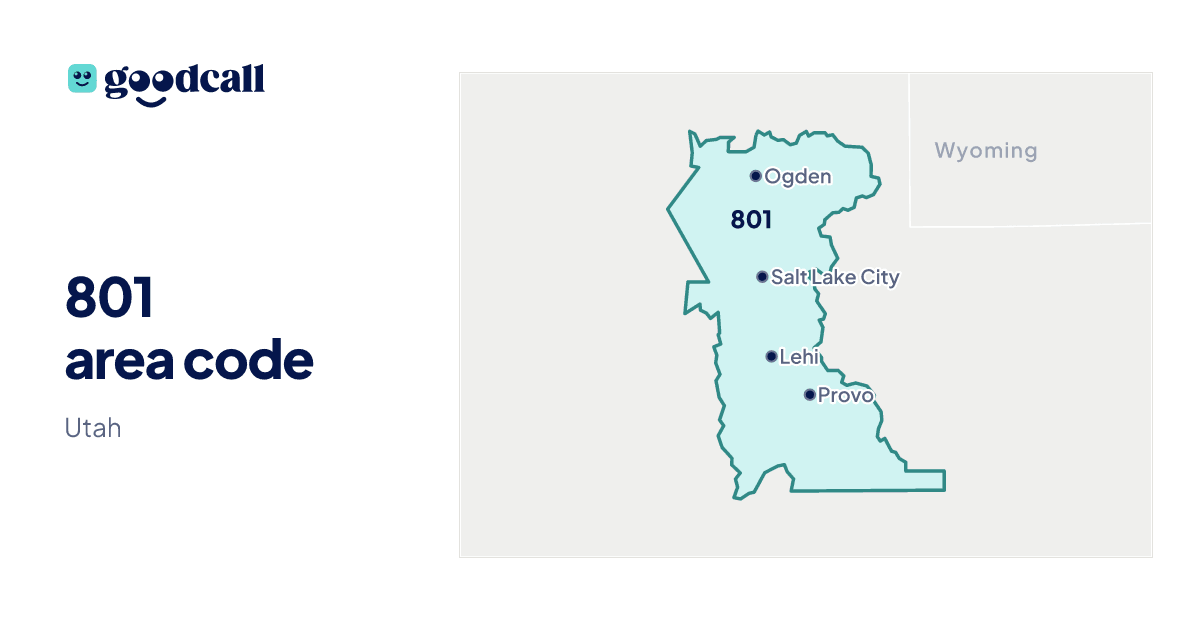
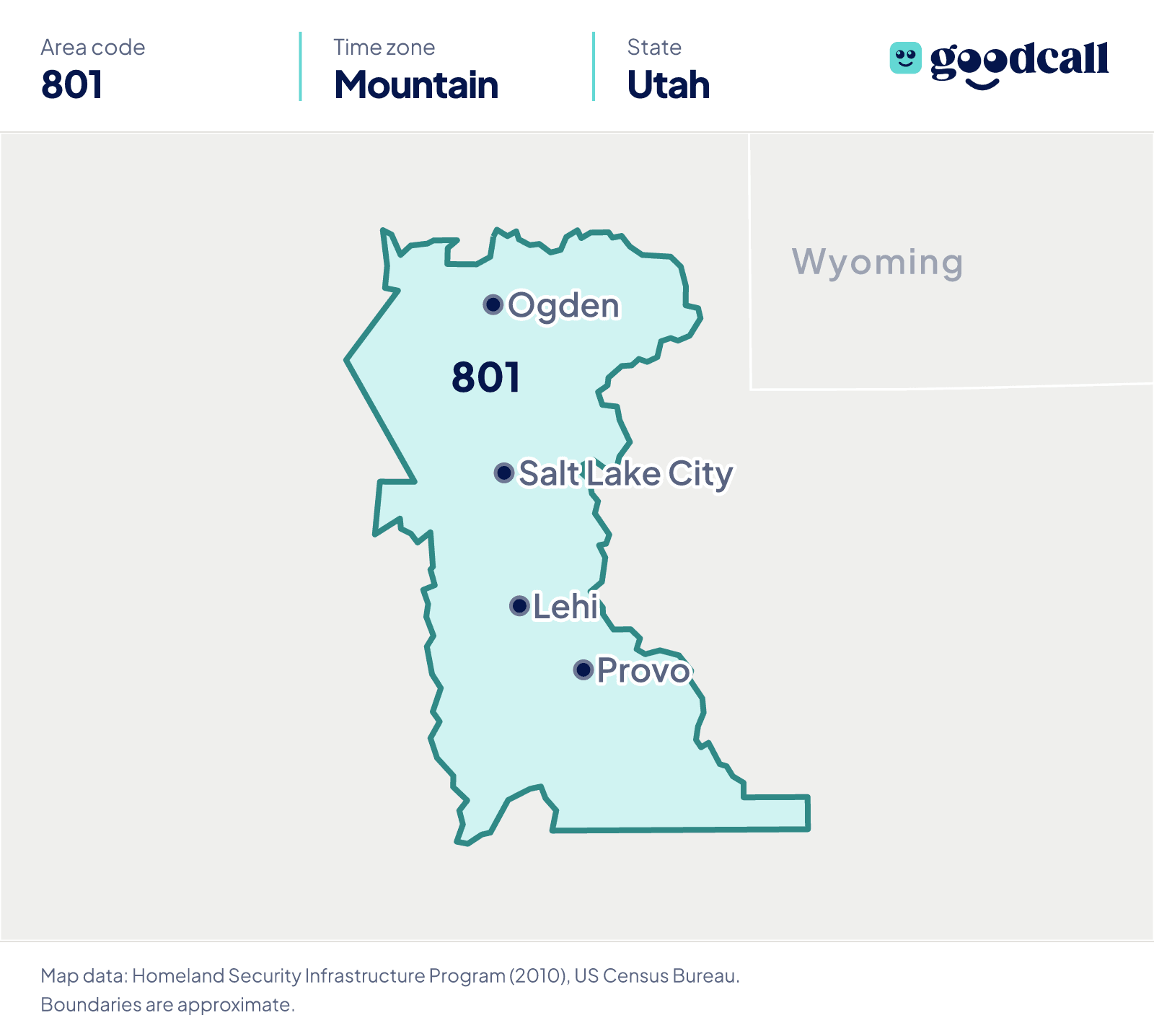
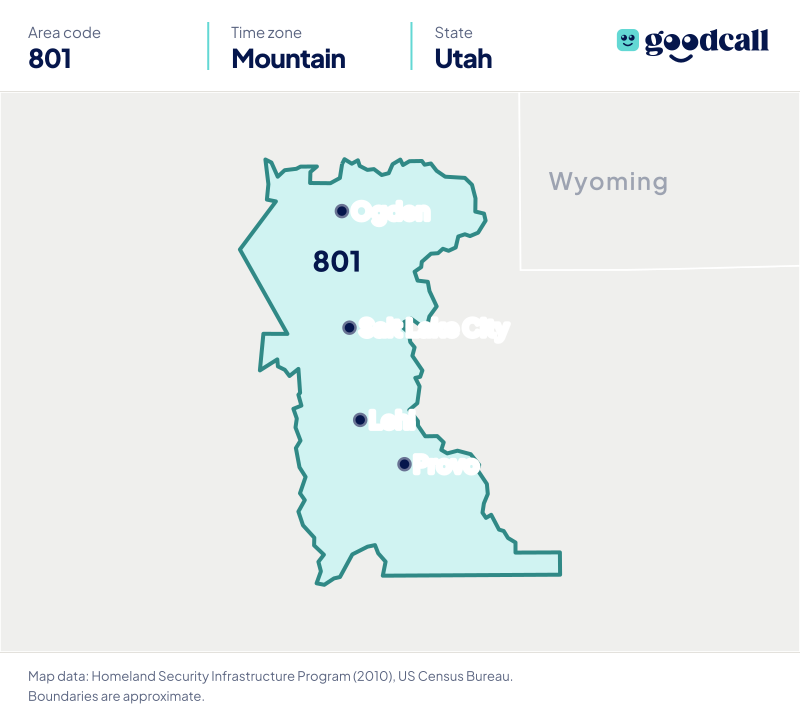
Area code 801 is a telephone area code serving the Wasatch Front in northern Utah, including Salt Lake City, Provo, Ogden, and surrounding communities. It covers the state's most concentrated population corridor and operates alongside area code 385, which serves the same geographic region as an overlay.
Introduced in 1947 as one of the North American Numbering Plan area codes, 801 covered the entire state of Utah. After Utah's population expanded, area code 435 was created in 1997 for most of the state outside the 801 region. The 385 overlay was later introduced to add numbering capacity without requiring existing 801 customers to change their numbers.
- State: Utah
- Primary Cities: Salt Lake City, Provo, Ogden, West Valley City, Orem, Sandy, Layton
- Time Zone: Mountain Time (MT)
- Established: 1947
- Overlay Area Code: 385
- Region: Wasatch Front, northern Utah
- Primary Uses: Residential phone service, business numbers, mobile phones, VoIP, healthcare, technology, education, finance, retail, and professional services
What Time Zone Is Area Code 801 In?
Area code 801 is entirely within the Mountain Time Zone (MT).
- Mountain Standard Time (MST): UTC−7
- Mountain Daylight Time (MDT): UTC−6 during daylight saving time
The region follows seasonal daylight saving time changes. For businesses serving customers outside Utah, Mountain Time places the 801 region one hour behind the East Coast and one hour ahead of the Pacific Coast during standard and daylight time.
Population & Demographics of Area Code 801
Area code 801 serves the densely populated Wasatch Front in northern Utah, including Salt Lake, Utah, Davis, Weber, and Morgan counties within the 801/385 service territory. Because telephone area-code boundaries do not exactly match county boundaries, there is no single official Census population figure for the entire 801 service area.
The broader 801/385 region represents approximately 2.65 million residents, with Salt Lake and Utah counties accounting for the largest share of the population. The region includes Utah's largest urban center, rapidly growing communities in Utah County, established suburbs along the Wasatch Front, and smaller communities around Morgan County.
- Estimated Population: Approximately 2.4 million residents
- Region: Wasatch Front in northern Utah
- Average Household Size: Approximately 3.1 people
- Gender Distribution: Approximately 49.35% female and 50.65% male
- Population Density: Highest around Salt Lake City, Provo, Orem, Ogden, and the major Wasatch Front suburbs
- Largest Population Centers: Salt Lake City, West Valley City, Provo, West Jordan, Orem, Sandy, Ogden, and Layton
- Age Distribution: The region has a relatively young population, particularly in Utah County, where approximately 29.8% of residents are under 18 and 8.8% are 65 or older
- Major Industries: Technology, healthcare, finance, higher education, logistics, manufacturing, retail, professional services, and tourism
County and City Covered by Area Code 801
The 801/385 overlay serves the Wasatch Front across Salt Lake, Utah, Davis, Weber, and Morgan counties. NANPA identifies communities within the 801/385 numbering area, including American Fork, Bountiful, Kaysville, Morgan, Ogden, Orem, Provo, Salt Lake City, and Spanish Fork.
The exact telephone prefixes assigned can vary by community. Area code 385 is an overlay, rather than a separate geographic region, so customers throughout the 801 service area can have either an 801 or 385 number.
History & Background of Area Code 801
Area code 801 was introduced in 1947 as one of the original 86 North American area codes and initially covered the entire state of Utah. As population and telephone-number demand increased, Utah eventually divided the original numbering area.
- 1947 – Creation: Area code 801 was established as Utah's original area code and served the entire state.
- 1997 – Area Code 435 Created: On September 21, 1997, area code 435 was introduced to serve most of Utah outside the 801 region. This left 801 concentrated around the Wasatch Front.
- 2007 – Overlay Approved: The Utah Public Service Commission approved an all-services overlay rather than splitting the existing 801 region. Area code 385 was selected as the new overlay.
- 2008 – 385 Introduced: Permissive 10-digit dialing began June 1, 2008, as the 385 overlay was implemented.
- 2009 – Mandatory 10-Digit Dialing: Ten-digit dialing became mandatory on March 1, 2009, meaning callers must include the area code for local calls.
- Today: 801 and 385 serve the same Wasatch Front geography.
Why Local Numbers Build Trust
A local number can provide geographic context when a customer sees an incoming call, but it should not be treated as a guarantee of higher answer rates. Research on caller ID has found that local or familiar numbers can influence willingness to answer, although results vary by audience and calling situation.
- Higher Call Pickup Rates: A recognizable local area code can reduce some of the uncertainty associated with an unfamiliar caller. In a national AARP survey, 59% of respondents said they were very or somewhat likely to answer a call displaying a local area code.
- Build Local Credibility: An 801 number can communicate that a business serves the Salt Lake City and Wasatch Front market. This can be useful for businesses whose customers are concentrated in Utah.
- Support Consistent Local Search Information: A local number can be part of consistent business information across a website, Google Business Profile, and directories. Google recommends keeping business information complete and accurate for local search, although area code alone is not a direct guarantee of higher rankings.
- Establish Familiarity Before the Call: Customers can use caller ID to decide whether a call appears relevant. A recognizable 801 number gives local customers geographic context, but businesses should also use an identifiable business name and avoid practices that could cause calls to be labeled as spam.
Benefits of Using GoodCall for 801 Area Code Businesses
Businesses across the 801 region handle calls for appointments, estimates, customer questions, reservations, sales inquiries, and service requests. GoodCall can automate these inbound conversations and connect them to business workflows.
24/7 AI Call Answering With a Voice Agent
A voice agent can answer incoming calls continuously, including after business hours and during periods of high call volume. Goodcall's AI answering system handles conversations using natural language rather than traditional phone-tree menus.
Intelligent Lead Capture & Qualification
An AI phone agent can collect caller details, identify the purpose of the call, qualify leads, and route relevant information to the business. This is useful for service companies, healthcare practices, real estate businesses, and other organizations that depend on inbound inquiries.
Automated Appointment Scheduling
An AI answering service can handle appointment requests during phone conversations. Goodcall supports appointment workflows that can direct callers to online booking or handle scheduling according to the configured workflow.
CRM & Calendar Integration
GoodCall can connect phone interactions with calendars, CRMs, and other supported business workflows, reducing manual entry after each call.
Full Call Recording & Analytics
Call recordings and analytics provide businesses with information about call volume, conversation outcomes, and customer interactions. GoodCall also supports call summaries and performance insights for reviewing how calls are handled.
How to Get an 801 Area Code Phone Number With GoodCall
Businesses looking for an 801 number can use GoodCall to combine a local phone number with an AI phone agent. GoodCall's current 801 setup process includes account creation, plan selection, verification, number selection, agent configuration, and activation.
- Create Your Account: Enter your business information and start your Goodcall setup.
- Choose a Plan: Select the plan that fits your business's call-handling requirements.
- Complete Verification: Provide the required business and identity information.
- Choose an 801 Number: Select an available 801 number based on current inventory.
- Configure Your AI Agent: Add FAQs, greetings, call-routing rules, and other business instructions.
- Connect Business Tools: Set up calendar, CRM, and other supported integrations.
- Go Live: Test the call flow and activate your AI phone agent.
You can also explore Goodcall's local phone number options and its Utah business phone and answering service.
Nearby Area Codes to 801
Area code 801 is part of Utah's northern Wasatch Front numbering system. The most important related code is 385, which overlays the same region.
Here are the nearby regions and their area codes: