The best conversational AI platforms are Goodcall, Kore.ai, LivePerson, and Cognigy.AI. Goodcall leads in AI voice automation and appointment handling, Kore.ai dominates enterprise workflows, LivePerson powers high-volume messaging at scale, and Cognigy.AI is built for contact center-grade deployments.
These platforms are optimized for a different channel and use case, which means the strongest pick for a contact center rarely works the same way for a voice-driven business. This guide breaks down how each platform work, what they cost, and which one is the ideal fit for your operation.
Key Takeaways
Unlike rule-based chatbots, conversational AI platforms interpret user intent and generate relevant replies across multi-turn conversations without manual scripting.
Goodcall is the only platform with scheduling built in, and a setup time measured in minutes, not weeks.
Kore.ai, LivePerson, Cognigy, Watsonx, and Dialogflow CX all use custom pricing and require internal engineering resources or professional services to deploy.
Before committing to any platform, verify NLU accuracy, native CRM connectors, compliance certifications, and uptime SLAs in writing.
Each platform in this guide was built for a specific operational reality, and the wrong choice creates integration debt, slower teams, and frustrated customers.
What is a Conversational AI Platform?
A conversational AI platform is software that lets businesses build, deploy, and manage AI-powered agents, including chatbots and voice bots, that understand and respond to human language in real time.
Unlike rule-based chatbots that follow fixed response trees, the best conversational AI platforms interpret user intent, retain context across a multi-turn conversation, and generate relevant replies without manual scripting for every possible input.
A Quick Look at the Best Conversational AI Platforms
Parameter
Goodcall
Kore.ai
LivePerson
NICE CXone Mpower
IBM watsonx Assistant
Google Dialogflow CX
Best For
Businesses of any size that handle inbound calls and need scheduling
Large enterprises in finance, healthcare, and retail
Large enterprises managing customer messaging at scale
Large enterprises running contact centers
Enterprises with existing IBM infrastructure
Developer teams building custom chatbots on Google Cloud
Primary Channel
Phone calls (inbound)
Voice + chat + messaging
Chat, SMS, and social messaging
Voice + chat
Chat + voice
Chat + voice
Starting Price
$86/month
Custom pricing
Custom pricing
Custom pricing
$110/month (or pay-as-you-go)
Billed per chat and voice
Scheduling Built-In
Yes
No
No
No
No
No
Setup Time
Minutes
Weeks to months
Weeks
Weeks to months
4 to 8 weeks minimum
Hours to weeks
Key Strength
Phone AI and scheduling in one tool; pricing is public and predictable
100+ built-in integrations; low-code builder for contact centers
Meets HIPAA and FedRAMP compliance; accurate intent recognition
Backed by Google Cloud; scalable at lower usage volumes
Best Conversational AI Platforms
1. Goodcall – Best for AI Call and Appointment Scheduling
What It Does: Goodcall is an AI voice agent that answers inbound calls, captures leads, books appointments, and handles FAQs 24/7. It delivers automated customer communication to businesses of all sizes without an engineering team or complex setup.
Best For:
Service businesses in restaurant, salon, and healthcare verticals with high missed-call rates
Teams that want AI call automation without the overhead of a full-time receptionist
HIPAA-compliant environments that require CRM-connected AI call answering
Multi-location operations with inconsistent call coverage across sites
Why Users Choose It:
Unlimited minutes and AI tokens on every plan, no per-call fees
Goes live in minutes with no code
Syncs with CRMs, Google Calendar, and scheduling tools for real-time appointment booking
Captures lead details instantly and routes complex calls to human agents when needed
14-day free trial, no long-term contract required
Limitations:
Primarily inbound; native outbound campaign support is limited
Text and chat support are secondary to its core voice functionality
Setup & Ease:
No-code setup
No engineering background required
Pricing:
Starter: $79/month ($66/month billed annually)
Growth: $129/month ($108/month billed annually)
Scale: $249/month ($208/month billed annually)
Verdict: The most accessible and affordable conversational AI platform for businesses that need real call-handling results without enterprise complexity or hidden fees.
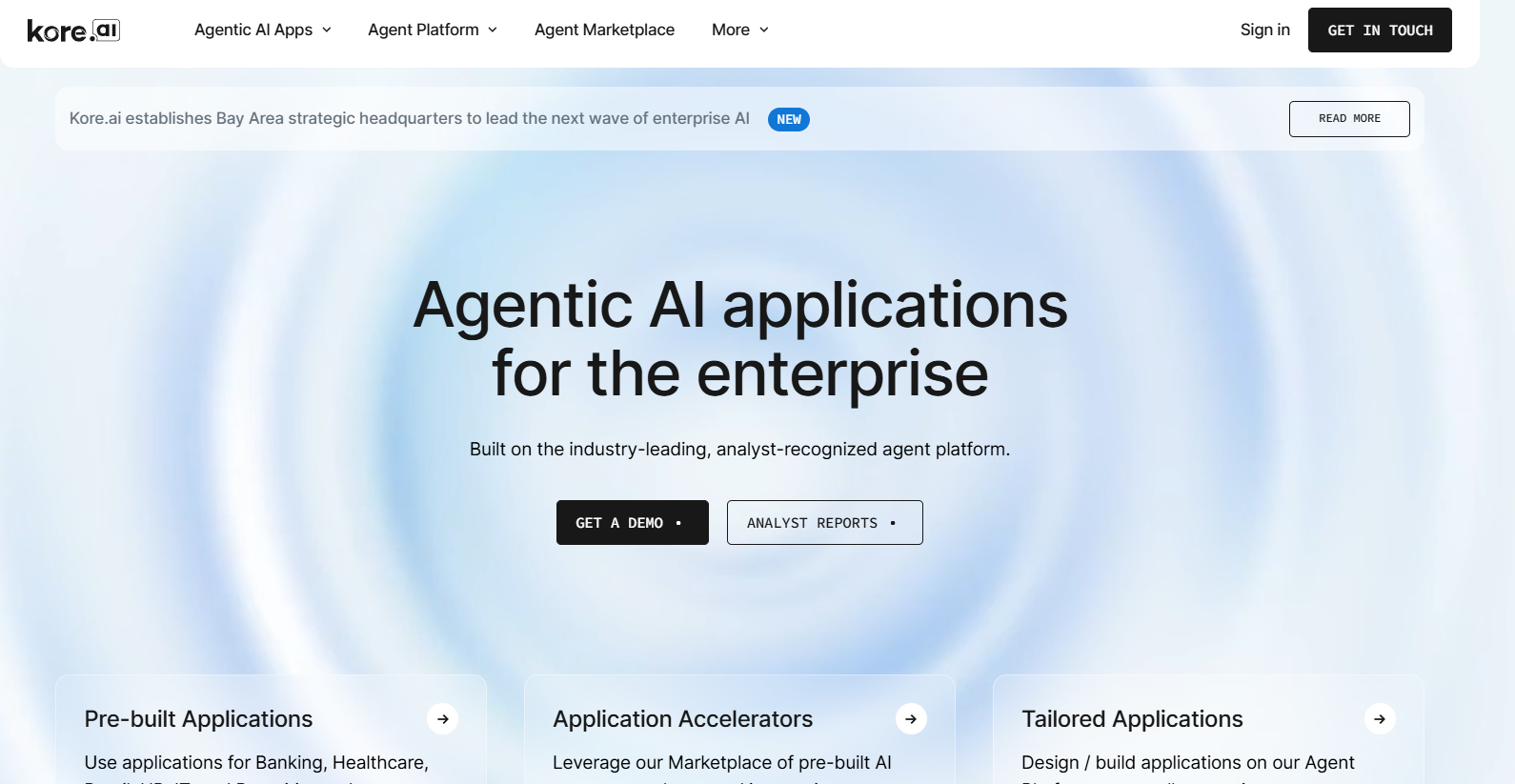
2. Kore.ai – Best for Multi-Agent AI Orchestration
What It Does: Kore.ai is an agentic AI platform for building and deploying virtual assistants and multi-agent systems across voice, chat, email, and messaging. It targets large organizations that need AI operating at scale across multiple departments and backend systems.
Best For:
Large enterprises in banking, healthcare, and retail with cross-channel AI automation at scale
Contact centers already integrated with Salesforce, ServiceNow, or Microsoft Teams
IT teams with complex, multi-step workflows that span multiple backend systems
Mandatory GDPR, SOC 2, and HIPAA compliance requirements
Why Users Choose It:
100+ pre-built connectors for major enterprise system integrations
No-code and pro-code tools for both business users and developers
Limitations:
Session-based billing (per 15-minute block) makes cost forecasting unpredictable
Third-party ticketing platform integrations can be inconsistent
Advanced features require dedicated technical resources and carry a steep learning curve
Setup & Ease:
Enterprise deployments require extended timelines and internal engineering involvement
Not practical for self-serve onboarding at production scale
Pricing:
Custom pricing
Verdict: An analyst-recognized platform, but the cost structure and technical demands make it impractical without a dedicated AI engineering function.
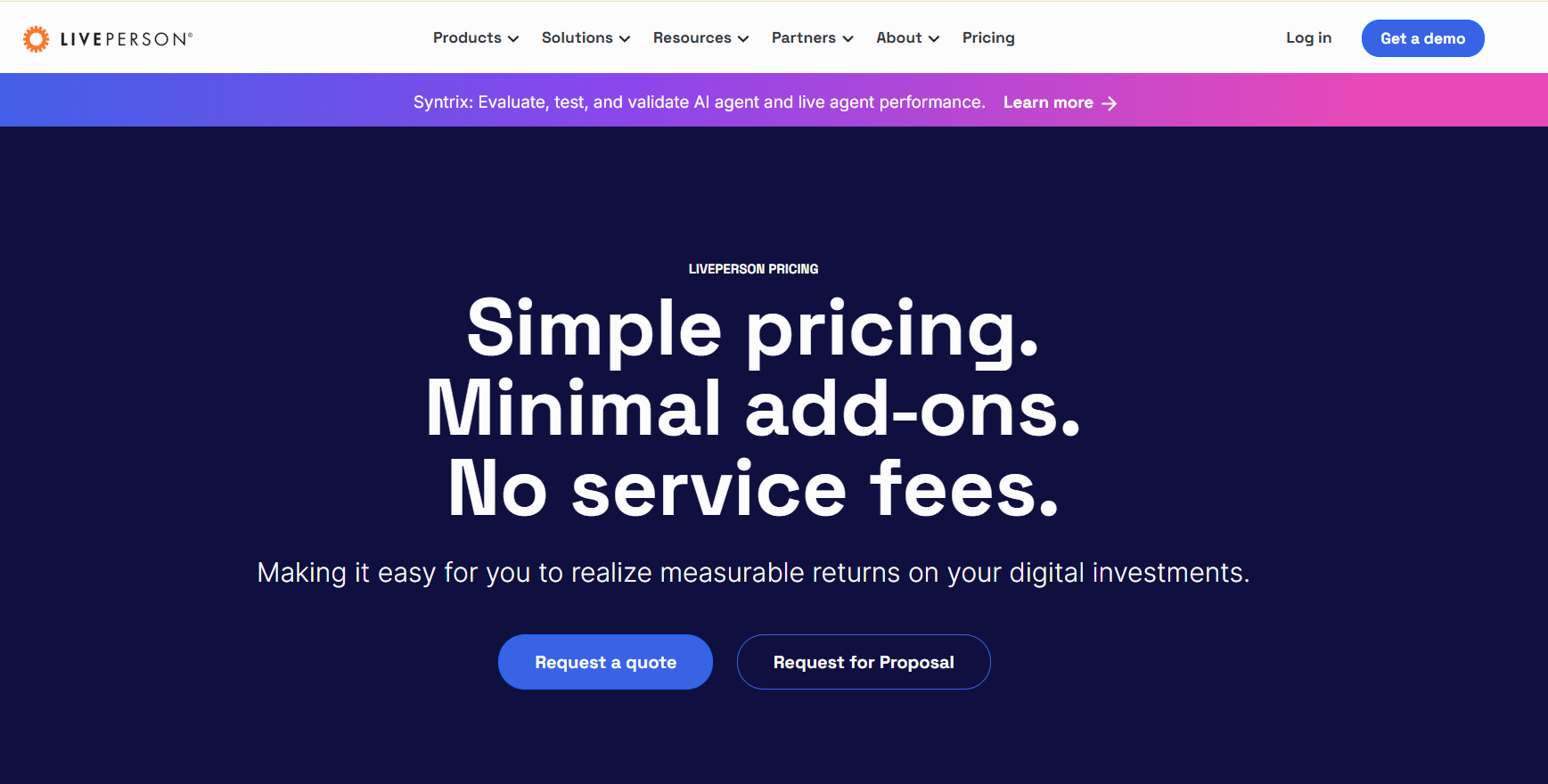
3. LivePerson – Best for Omnichannel Messaging and Intent-Driven Customer Engagement
What It Does: LivePerson's Conversational Cloud connects businesses with customers across web, SMS, and social messaging using AI-driven intent recognition and live agent escalation.
Best For:
Retail, telecom, and financial services brands active across 14+ messaging channels
Contact centers with high escalation volume that demand intelligent conversation routing
Teams that tie intent data directly to sales and support performance metrics
May require a learning curve for teams new to enterprise chat platforms
Enterprise onboarding is guided but follows a longer implementation timeline
Pricing:
Custom pricing
Verdict: A capable AI-powered customer support platform for enterprise messaging teams, but pricing opacity and setup complexity raise the barrier for smaller organizations.
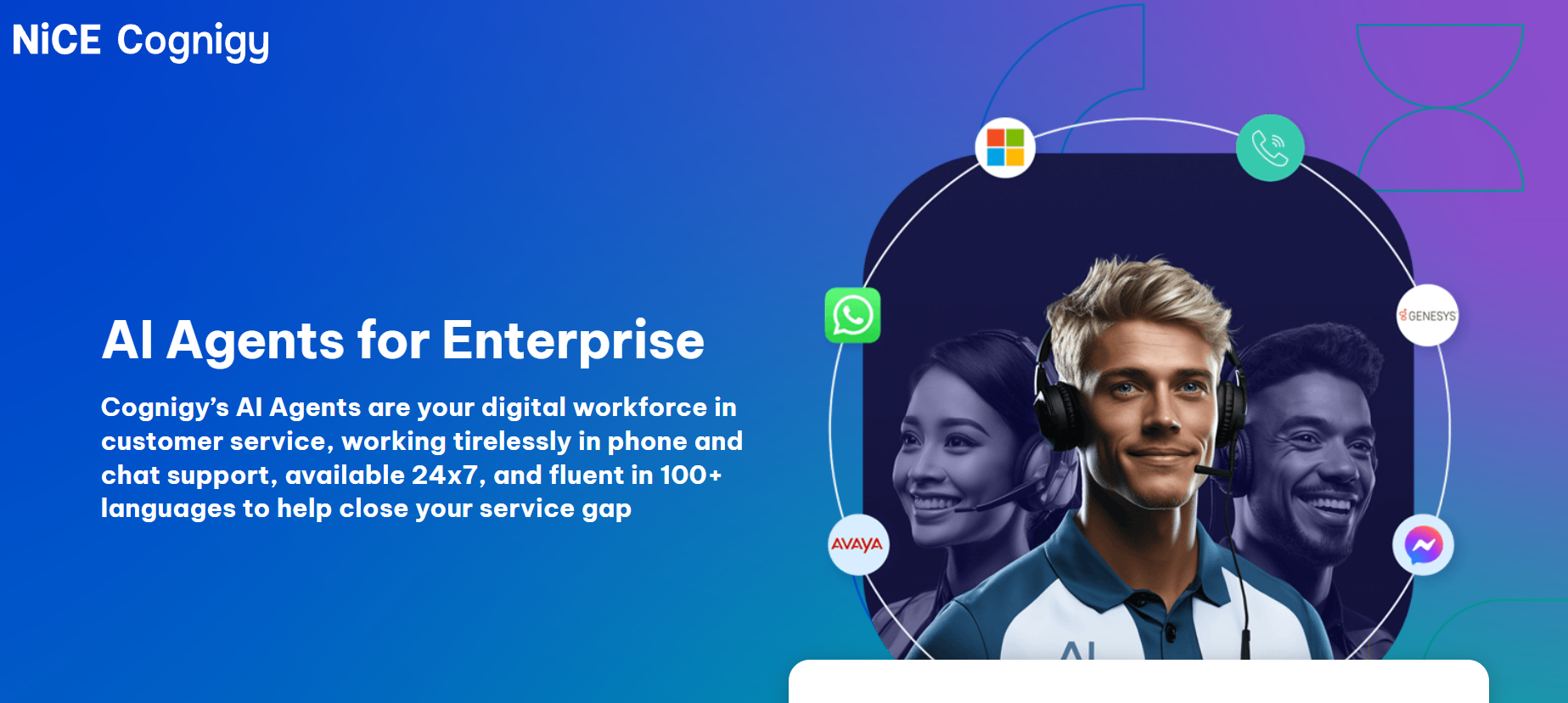
4. NiCE Cognigy – Best for Global Enterprise Contact Center Automation
What It Does: NiCE Cognigy is an enterprise conversational AI platform for deploying voice and chat AI agents at a global scale. It integrates with NICE CXone, Genesys, and Salesforce for end-to-end contact center automation.
Best For:
Organizations already on NICE CXone that want a consolidated, single-vendor CX stack
Enterprises with front-office and back-office workflows that both require AI automation
Teams operating under strict GDPR, HIPAA, SOC 2, and ISO 27001 mandates
Why Users Choose It:
Low-code visual canvas for designing and adjusting conversation flows post-deployment
20+ language-specific NLU models for multilingual contact center operations
Tight NICE CXone integration delivers AI and contact center functionality under one vendor
Limitations:
Voice, chat, and LLM workloads billed separately, plus add-on costs for Agent Copilot and Knowledge AI
Deployments typically run two to four months from contract to go-live
Setup & Ease:
Requires skilled internal resources or professional services for the initial build
Low-code interface supports business users post-build, not during initial setup
Not viable without an internal AI or CX engineering function
Pricing:
Custom pricing only
Verdict: Purpose-built for global contact center automation at scale, but the cost, timeline, and vendor consolidation risk make it the wrong fit outside that profile.
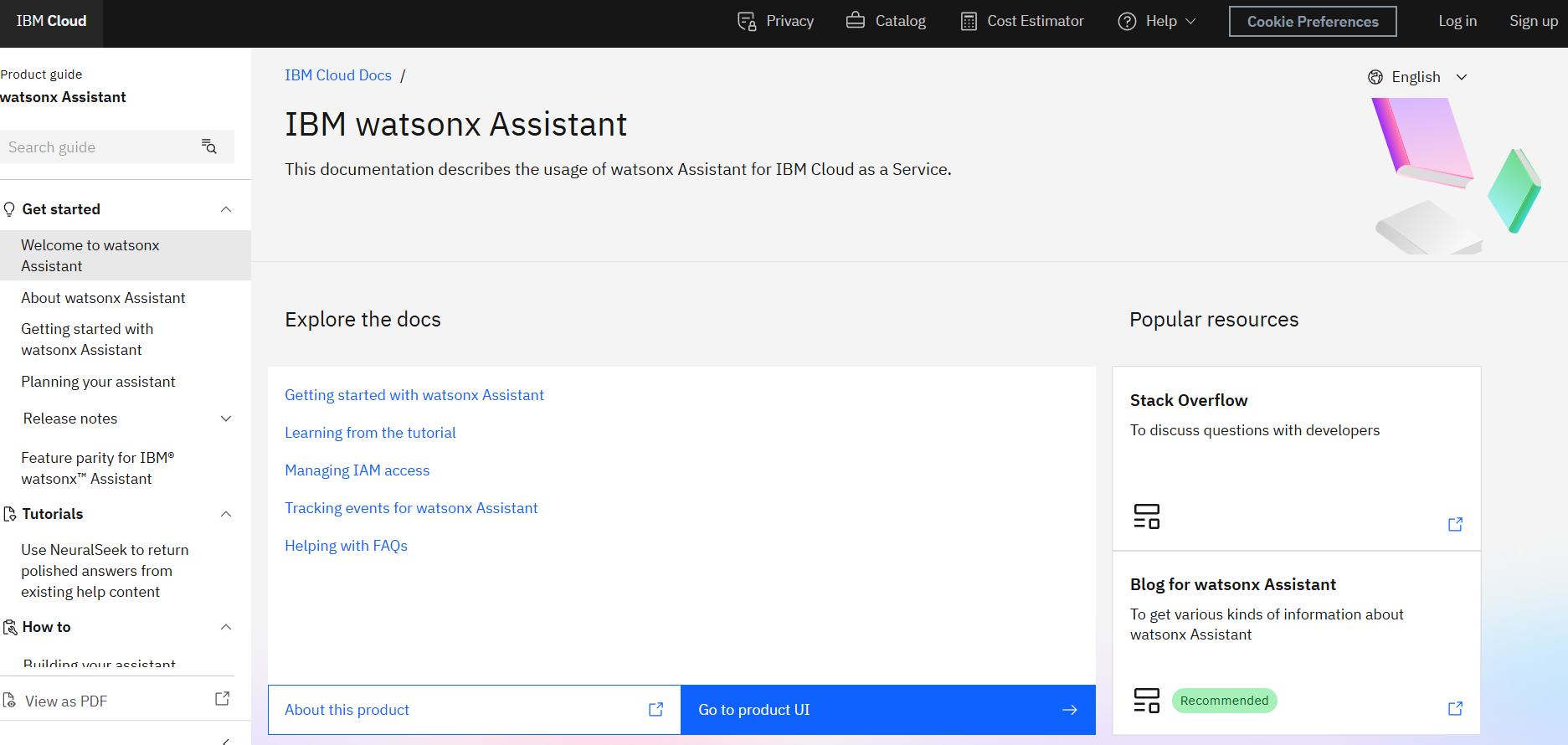
5. IBM Watsonx Assistant – Best for Industries with Strict Security Requirements
What It Does: IBM Watsonx Assistant is an enterprise conversational AI platform for building virtual assistants that handle customer service, IT support, and internal operations. Its primary differentiator is strong NLU accuracy paired with security certifications targeting banks, hospitals, and government agencies.
Best For:
Banks, hospitals, government agencies, and insurers, where compliance is non-negotiable
High-volume operations processing 50,000+ monthly interactions on production-grade NLU
Teams already invested in IBM Cloud or hybrid cloud infrastructure
Businesses that want one build deployed across web, mobile, voice, and messaging simultaneously
Why Users Choose It:
NLU engine requires fewer training examples than most AI-powered customer support platforms
Meets SOC 2, HIPAA, FedRAMP, ISO 27001, and ISO 27017 compliance standards
Deploy once across web, mobile, WhatsApp, Slack, Facebook Messenger, and voice via SIP trunking
Visual dialog builder lets business users create basic flows without developer support
Limitations:
The user interface feels dated compared to newer conversational AI solutions
Anything beyond basic flows requires developer experience with APIs and webhooks
Minimum setup time is four to eight weeks
IBM's enterprise sales cycle adds significant procurement time before deployment begins
Setup & Ease:
Free plan available to evaluate core capabilities
Paid setup requires developer resources for all but the simplest flows
Multi-channel deployment requires individual configuration per channel
Pricing:
Free plan available
Paid plans start at $1110/month
Enterprise: custom pricing based on usage volume and deployment scope
Verdict: A dependable choice for regulated industries where compliance is the top priority, but the dated interface and slow setup will frustrate teams that need to move fast.
6. Google Dialogflow CX – Best for Teams Building Custom Voice and Chat Agents
What It Does: Google Dialogflow CX is a conversational AI platform for building custom virtual agents with multi-turn dialogue management, enhanced by Gemini generative AI models. It runs on Google Cloud and supports both text and voice deployments.
Best For:
Teams that build custom chatbots and voice IVR systems on Google Cloud
Businesses already embedded in the Google Cloud ecosystem
Organizations with a multilingual customer base
Developers who want full control over conversation flows, NLU models, and session state
Gemini integration brings generative AI into agent responses for more adaptive conversations
45 pre-built agent templates reduce initial development time
Connects with 14+ messaging and voice channels, including WhatsApp, Messenger, and Slack
Limitations:
No built-in human agent handoff; requires a third-party integration
Proactive outbound messaging requires custom code
Requires developer expertise
Reporting and analytics are limited
Costs are difficult to forecast for high-volume deployments
Setup & Ease:
Self-serve signup through Google Cloud
Requires coding knowledge for most customization and channel integrations
Pricing:
Pay-as-you-go: billed per chat and voice
Free tier available within Google Cloud's standard usage allowances
Verdict: A strong developer platform for custom AI agent builds on Google Cloud, but most business teams will need in-house engineering resources to extract real value from it.
How to Choose the Best Conversational AI Platform
The wrong conversational AI solutions cost you more than just money. It creates integration debt, slows your team down, and frustrates the customers it was supposed to serve. Before you commit, run every option through these criteria.
NLU Accuracy: Platforms with intent recognition below 90% create more escalations than they prevent.
CRM and System Integration: Native connectors to your CRM and ticketing tools matter more than the number of integrations listed on a pricing page.
Omnichannel Coverage: Voice, SMS, web chat, and messaging should run through one system, not a patchwork of separate tools.
AI Voice and Phone Support: If you handle inbound calls, the platform needs to treat the phone as a native channel, not an optional add-on.
Appointment and Workflow Automation: Conversational AI tools for business should book appointments, route requests, and trigger follow-ups, not just answer questions.
Deployment Flexibility: Match the platform to your team's actual technical capacity, whether that's a no-code builder or a developer API.
Security and Compliance: GDPR, HIPAA, and SOC 2 adherence should be verified before shortlisting, not after.
Scalability and Uptime SLAs: Get the vendor's uptime commitments in writing. Performance under peak load is where most platforms show their real limits.
Conclusion
Each platform in this guide was built around a specific operational reality. Enterprises with dedicated AI teams, compliance mandates, and six-figure budgets have strong options here. Businesses that run on phone calls and need results without a months-long deployment have one clear answer, and that is Goodcall.
Goodcall answers calls around the clock, books appointments in real time, and captures every lead automatically, with a setup that takes minutes. Start your free 14-day trial today.
FAQs
What is the best conversational AI platform?
The best conversational AI platforms are Goodcall for AI voice automation, Kore.ai for enterprise scale, IBM WatsonX Assistant for regulated industries, and Google Dialogflow CX for custom developer-built flows.
Which conversational AI platform supports voice calls?
Goodcall, LivePerson, and NICE Cognigy all support voice calls. Goodcall is the strongest pick for pure AI voice automation, while LivePerson and NICE Cognigy lean more toward blended chat and agent-assist workflows.
How much does a conversational AI platform cost?
Goodcall starts at $66/month, IBM WatsonX Assistant at $1110/month, and Google Dialogflow CX charges per request, starting around $0.007. Enterprise platforms like Kore.ai and LivePerson use custom contracts that scale with your deployment size.
Can conversational AI replace human agents?
No, but it substantially reduces the call volume your team has to manage. AI handles routine inquiries, appointment scheduling, and FAQs, then escalates complex cases to human agents with full call context.
Is conversational AI hard to set up?
No, most platforms today require little to no technical knowledge to get started. Goodcall, for example, gets you live in minutes, making it one of the best conversational AI platforms for businesses that want fast deployment.
Explore Goodcall For Free
Try Goodcall's AI Phone Assistants Free for the first 14 days!