

How to Build an AI Voice Agent: Step-by-Step Guide for Businesses
.jpg)
Building a Voice AI agent for your business can completely transform the way you engage with customers. Instead of long wait times and repetitive queries, imagine offering instant, intelligent conversations that feel natural and personalized. Voice AI agents can handle support requests, qualify leads, book appointments, and provide real-time information, all while scaling effortlessly as your business grows.
This article explains how to build an AI voice agent step by step, from defining the right use case to deploying and optimizing a production-ready voice AI system.
What Is an AI Voice Agent & How It Works
An AI voice agent is a software-powered conversational system that understands spoken language and responds in natural speech. It uses artificial intelligence to interpret user intent, retrieve information, and complete tasks in real time.
Unlike traditional IVR systems, a conversational AI voice bot can manage open-ended dialogue, follow contextual queries, and deliver personalized responses. Organizations deploy AI voice agents across customer service, sales, healthcare, and internal operations. These systems automate high-volume interactions while maintaining a human-like level of engagement.
To understand how to build an AI voice agent, it is essential to break down the core technologies powering real-time voice interactions.
How It Works:
- Automatic Speech Recognition (ASR): Converts spoken audio into text using acoustic modeling and language prediction algorithms in real time.
- Natural Language Processing (NLP): Analyzes transcribed text to detect user intent, entities, sentiment, and contextual meaning accurately.
- Dialogue Management System: Determines next actions using business rules, AI reasoning, and contextual conversation memory.
- Backend Integrations: Connects with CRMs, databases, and APIs to retrieve or update customer information instantly.
- Text-to-Speech (TTS): Synthesizes natural, human-like voice responses with appropriate tone, pacing, and pronunciation.
- Analytics & Learning Layer: Tracks conversations, performance metrics, and errors to continuously improve voice AI accuracy and experience.
How to Build Your AI Voice Agent?
Building a scalable voice system requires aligning business objectives, conversational design, and technical architecture. Here are the essential stages involved in AI voice agent development:
1. Define Your Goal & Use Case
Every successful implementation starts with a well-defined purpose. Teams must identify where the AI voice assistant delivers the highest value and lowest risk.
Who is it for?
Identify the primary audience early. AI voice agents may serve external customers, internal teams, sales representatives, or support staff. Each audience requires different conversational depth, tone, and compliance controls.
What problems will it solve?
High-impact voice AI use cases in customer support include call deflection, after-hours handling, appointment scheduling, and account inquiries. Internal use cases may include IT helpdesk automation or HR self-service.
ROI expectations & KPIs
Define success metrics before development begins. Common KPIs include:
- Call containment or deflection rate
- Average handle time reduction
- Customer satisfaction (CSAT)
- First-call resolution
- Cost per interaction
Clear ROI targets ensure that efforts to build an AI voice assistant for business remain aligned with operational goals rather than experimentation.
2. Choose the Right Tech Stack
Selecting the correct technology stack determines scalability, latency, and long-term maintainability. The easiest way to build conversational AI depends on whether teams prefer low-code platforms or fully custom pipelines.
A typical AI voice agent stack includes:
- Automatic Speech Recognition (ASR) for transcription accuracy
- NLP / LLM layer for intent detection and reasoning
- Dialogue orchestration to manage flows and context
- Text-to-Speech (TTS) optimized for natural prosody
- Backend integrations with CRMs, ticketing, or databases
Enterprises often combine open-source components with managed cloud services to balance control and speed. This decision directly affects AI voice agent development timelines and compliance posture.
3. Design Voice Conversation Flows
Voice interfaces impose different constraints than chat or UI-based systems. Users cannot skim options or re-read responses, making conversational UX design critical.
Effective conversational AI voice bot design focuses on:
- Short, clear prompts
- Minimal cognitive load
- Explicit confirmation for critical actions
- Graceful handling of ambiguity
Flows should account for interruptions, silence, and off-topic responses. Unlike scripts, voice conversations must feel adaptive, especially for customer-facing deployments.
4. Build & Train
The build phase integrates models, logic, and data sources into a functioning system. Teams implementing an AI voice agent typically follow an iterative approach.
Key activities include:
- Training intent classification and entity extraction models
- Configuring prompt logic for LLM-driven responses
- Connecting APIs for real-time data retrieval
- Tuning speech recognition for accents and noise
Training data quality directly impacts reliability. Diverse datasets improve performance across regional accents and speaking styles common in the US market.
5. Deploy & Integrate
Deployment moves the voice agent from testing to real-world usage. Production systems must integrate with telephony providers, customer databases, and analytics platforms.
Common deployment considerations include:
- Call routing and escalation to human agents
- Authentication and identity verification
- CRM synchronization
- Failover and uptime guarantees
Cloud-native deployments enable rapid scaling for high-volume scenarios, especially in contact centers that use natural language voice agents for enterprises.
6. Test, Monitor & Improve
AI voice agents require continuous optimization. Testing should simulate real call patterns rather than scripted paths.
Ongoing monitoring focuses on:
- Conversation drop-off points
- Recognition accuracy trends
- Latency and response timing
- Customer sentiment signals
Feedback loops allow teams to refine prompts, retrain models, and expand capabilities. This continuous cycle distinguishes experimental systems from reliable production-grade voice AI.
Designing Conversational UX That Feels Human
Designing conversational UX is the most underestimated layer in AI voice agent development. Even advanced models fail when dialogue design ignores human speech behavior. Voice interfaces must adapt to unpredictability, emotional tone, and real-time conversational shifts.
Real Speech Isn’t Perfect - Handling Pauses, Accents, Interruptions
Human conversations include filler words, pauses, restarts, and overlapping speech. Systems built only on clean training data struggle in production.
Key design considerations include:
- Pause tolerance: Allow silence without prematurely ending calls
- Accent adaptation: Train models on regional US dialects
- Interrupt handling: Let users barge in during long responses
- Disfluency filtering: Ignore “um,” “uh,” and repeated words
Speech recognition + NLP for voice AI must operate together to interpret meaning rather than literal phrasing. This improves containment rates of voice AI in customer support.
Best Practices for Fallback Messaging
No conversational AI voice bot achieves 100% understanding. Fallback strategies prevent frustration when intent confidence is low.
Effective fallback design includes:
- Acknowledge uncertainty politely
- Offer clarifying options
- Provide human escalation paths
- Avoid repetitive error loops
Memory & Context Management
Context retention distinguishes basic bots from advanced natural-language voice agents for enterprises. Users expect continuity within a conversation.
Context design includes:
- Session memory (current call)
- Short-term history (recent interactions)
- Long-term profile data (CRM records)
For example, if a caller confirms an account number once, the system should not request it again. Persistent memory reduces friction and improves CSAT.
Emotional Understanding With Voice Tone
Voice carries emotional signals absent in text. Modern systems analyze tone, pace, and pitch to detect sentiment.
Applications include:
- Escalating angry callers faster
- Slowing speech for confused users
- Offering empathy statements
- Adjusting response tone dynamically
Emotion-aware design strengthens the human feel of systems built using a voice AI assistant guide methodology.
Top AI Voice Agent Development Tools and Frameworks
Selecting frameworks is a critical step in building an AI voice agent. Development tools determine the depth of customization, the flexibility of training, and the level of deployment control.
1. Google Dialogflow
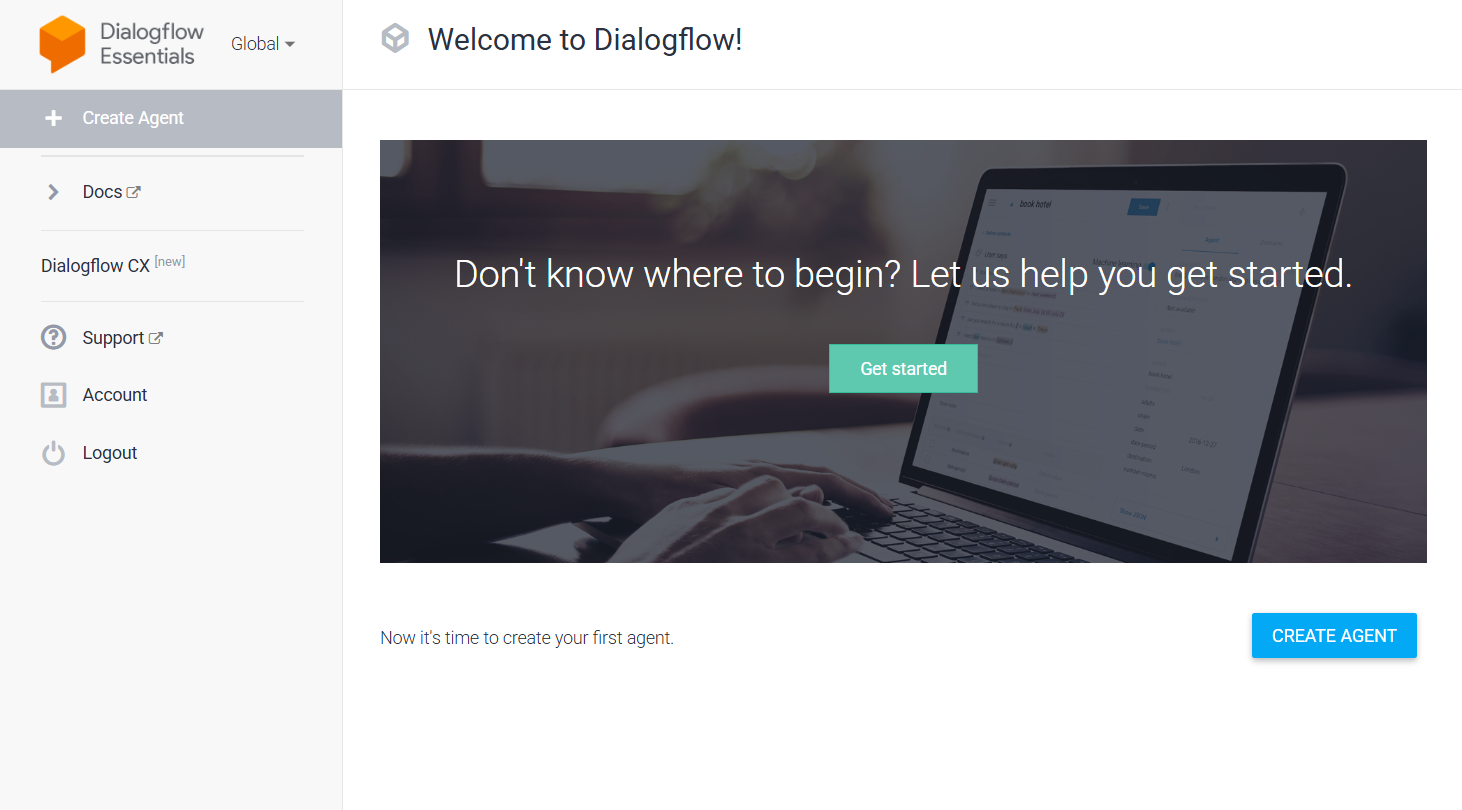
Google Dialogflow is a comprehensive conversational AI platform for building voice and text-based agents. It offers easy-to-use interfaces, strong natural language understanding (NLU), and seamless integration with telephony and messaging channels.
Key features
- Visual conversational flow builder
- Built-in intent detection and entity extraction
- Prebuilt agents and multilingual support
Typical use cases
- Customer support voice bots
- Automated FAQs and IVR replacements
- Appointment scheduling assistants
Pricing: Dialogflow offers a freemium tier; paid plans are usage-based depending on requests and features. Enterprise options include advanced analytics and telephony integration.
2. Amazon Lex
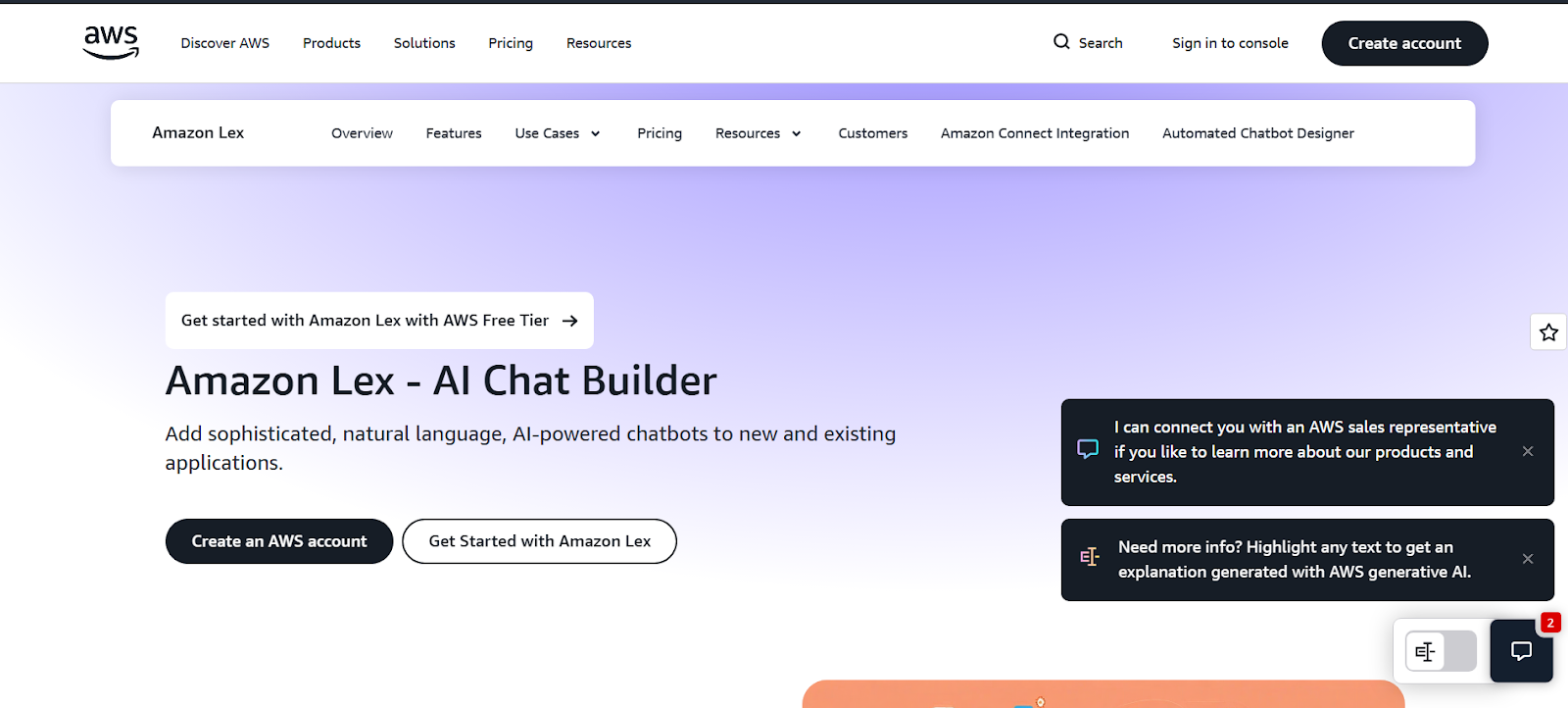
Amazon Lex is a fully managed service from AWS that powers conversational interfaces using automatic speech recognition (ASR) and natural language understanding. It shares the core AI technology behind Amazon Alexa and integrates natively with other AWS services.
Key features:
- Deep integration with the AWS ecosystem
- Intent and slot management
- Built-in support for voice and text channels
Typical use cases
- Contact center automation
- Inbound voice support systems
- Integration with Lambda for custom logic
Pricing: Amazon Lex pricing is pay-as-you-go, billed per text or voice request processed. Additional use of AWS services may incur charges.
3. Rasa
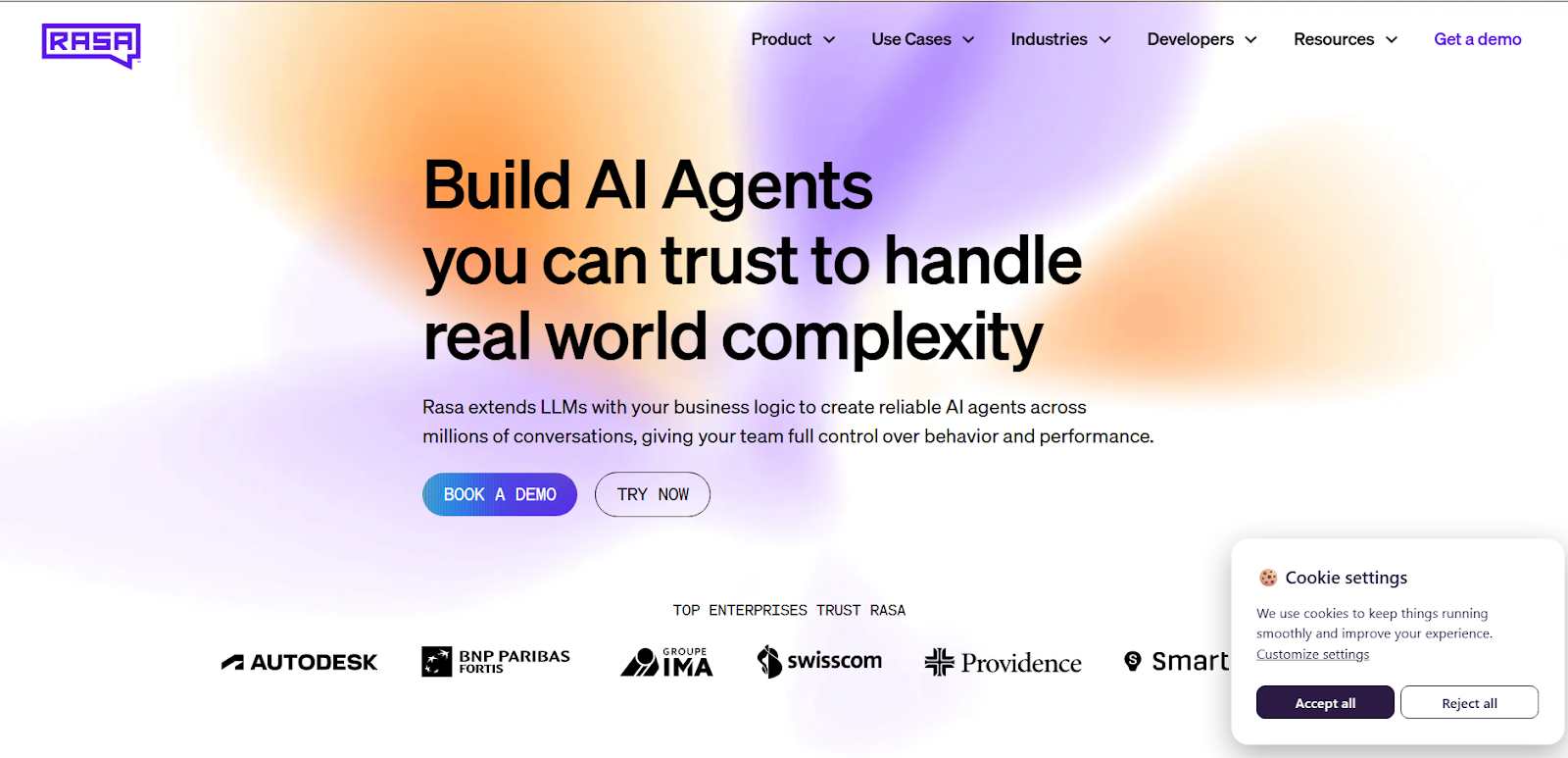
Rasa is an open-source framework for building conversational AI systems with full control over data and models. It is highly customizable, allowing teams to tailor NLU and dialogue logic for specific enterprise requirements.
Key features:
- Open-source NLU and dialogue management
- On-premise deployment and data privacy control
- Custom policies and modular pipelines
Typical use cases
- Enterprise voice and text assistants with strict compliance needs
- Custom NLU models and complex dialogue flows
- Private cloud or on-prem deployments
Pricing: Rasa is free as open-source software. Paid enterprise editions offer support, ecosystem integrations, and collaborative tools.
4. Microsoft Azure Bot Services
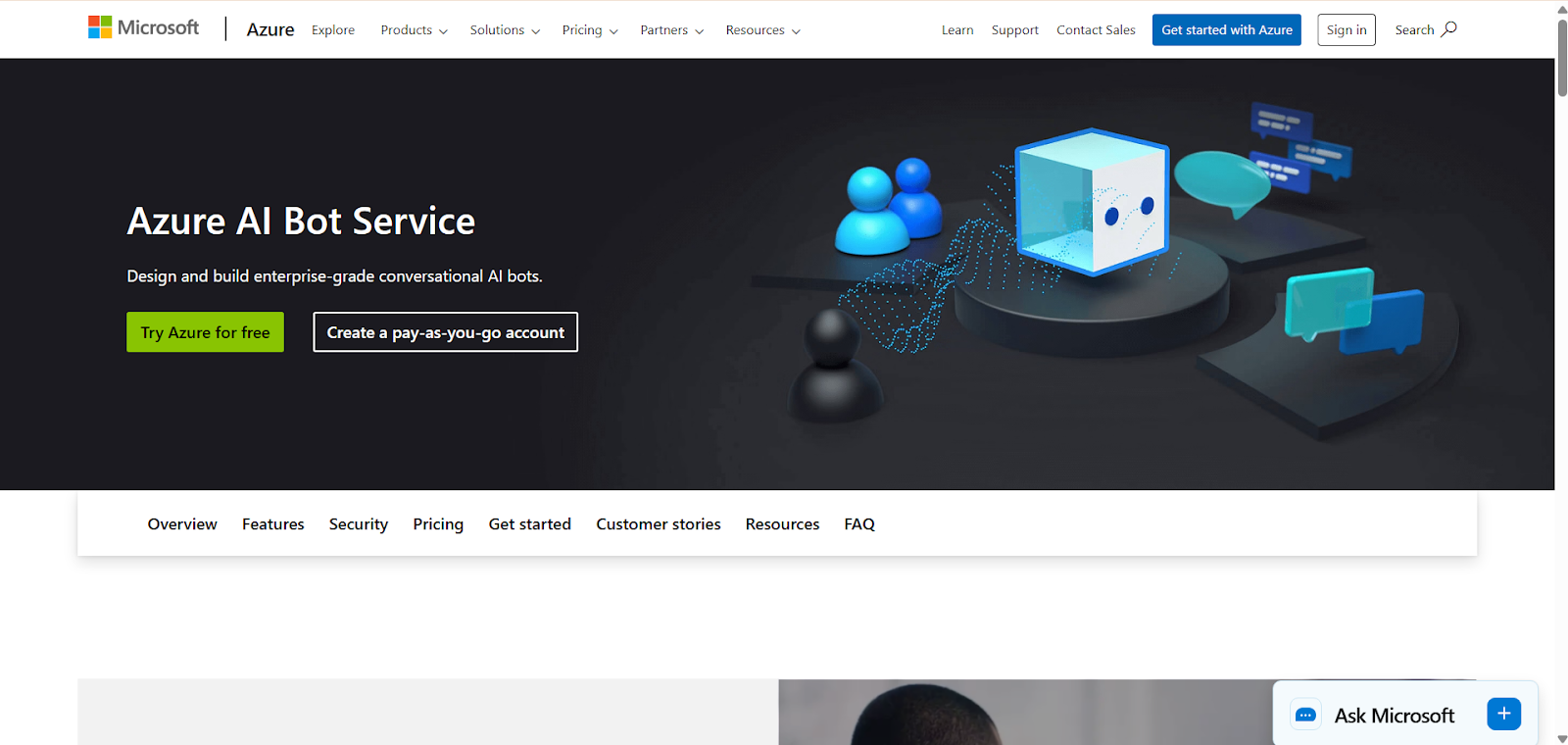
Microsoft Azure Bot Services is an enterprise-grade framework for building, deploying, and managing conversational AI applications across voice and digital channels. It integrates deeply with Azure Cognitive Services, enabling advanced speech recognition and NLP for voice AI capabilities. The platform is widely adopted by organizations building secure, scalable conversational systems within the Microsoft ecosystem.
Key features:
- Azure Speech Services for voice recognition and synthesis
- Bot Framework SDK for custom dialogue orchestration
- Integration with LUIS and Azure OpenAI models
- Omnichannel deployment (voice, web, Teams, telephony)
Typical use cases
- Enterprise customer support automation
- Internal IT and HR voice assistants
- Voice-enabled workflows within Microsoft Teams
- Secure conversational AI voice bot deployments
Pricing: Azure Bot Services follows a consumption-based pricing model. Costs depend on messages processed, speech usage, and cognitive service integrations. Enterprise support plans are available.
5. OpenAI (GPT-4 + Whisper)
OpenAI’s GPT-4, combined with Whisper speech recognition, enables advanced, generative conversational voice experiences. This stack supports dynamic dialogue, contextual reasoning, and human-like responses, making it powerful for organizations exploring how to build an AI voice agent beyond scripted flows.
Key features:
- Large language model for contextual conversations
- Whisper ASR for high-accuracy speech transcription
- Supports real-time voice pipelines with TTS integrations
Typical use cases
- AI customer service voice automation
- Sales and lead qualification voice agents
- Intelligent virtual assistants with memory and reasoning
Pricing: Pricing is usage-based, calculated on audio transcription minutes and language model token consumption. Costs vary by deployment scale and model selection.
Top Voice AI Platforms
Voice AI platforms provide ready-to-deploy infrastructure for building, scaling, and managing production voice agents. Unlike frameworks, they bundle telephony, orchestration, analytics, and compliance into unified environments. Here are the leading platforms used in modern AI voice agent development:
1. ElevenLabs
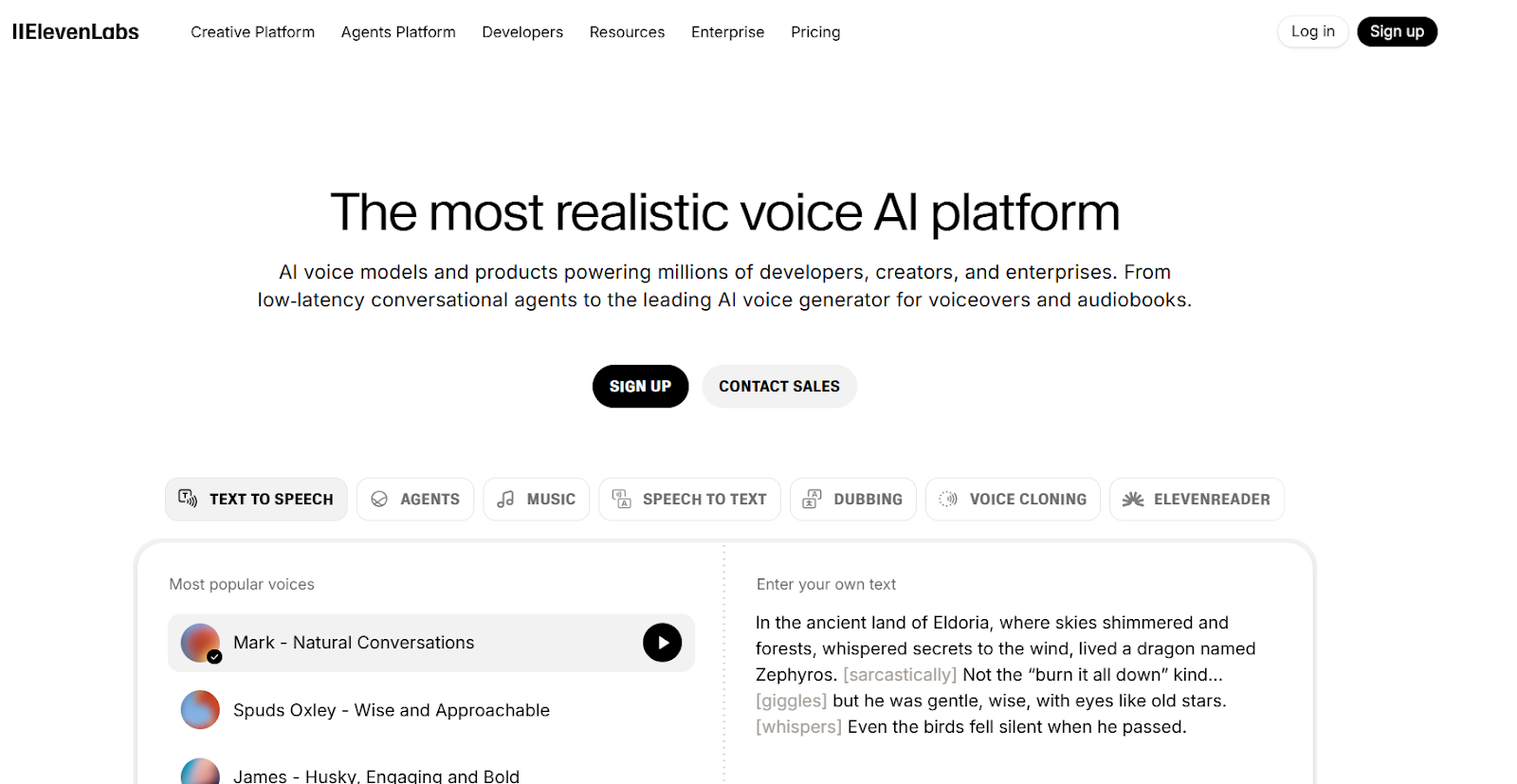
ElevenLabs is a voice AI platform specializing in ultra-realistic speech synthesis and voice cloning. It enables developers to create highly natural conversational experiences powered by advanced text-to-speech models.
Organizations use ElevenLabs to enhance conversational AI voice bot interactions where voice quality directly impacts engagement. It supports multilingual synthesis, custom voice design, and real-time audio generation for enterprise deployments.
2. Goodcall
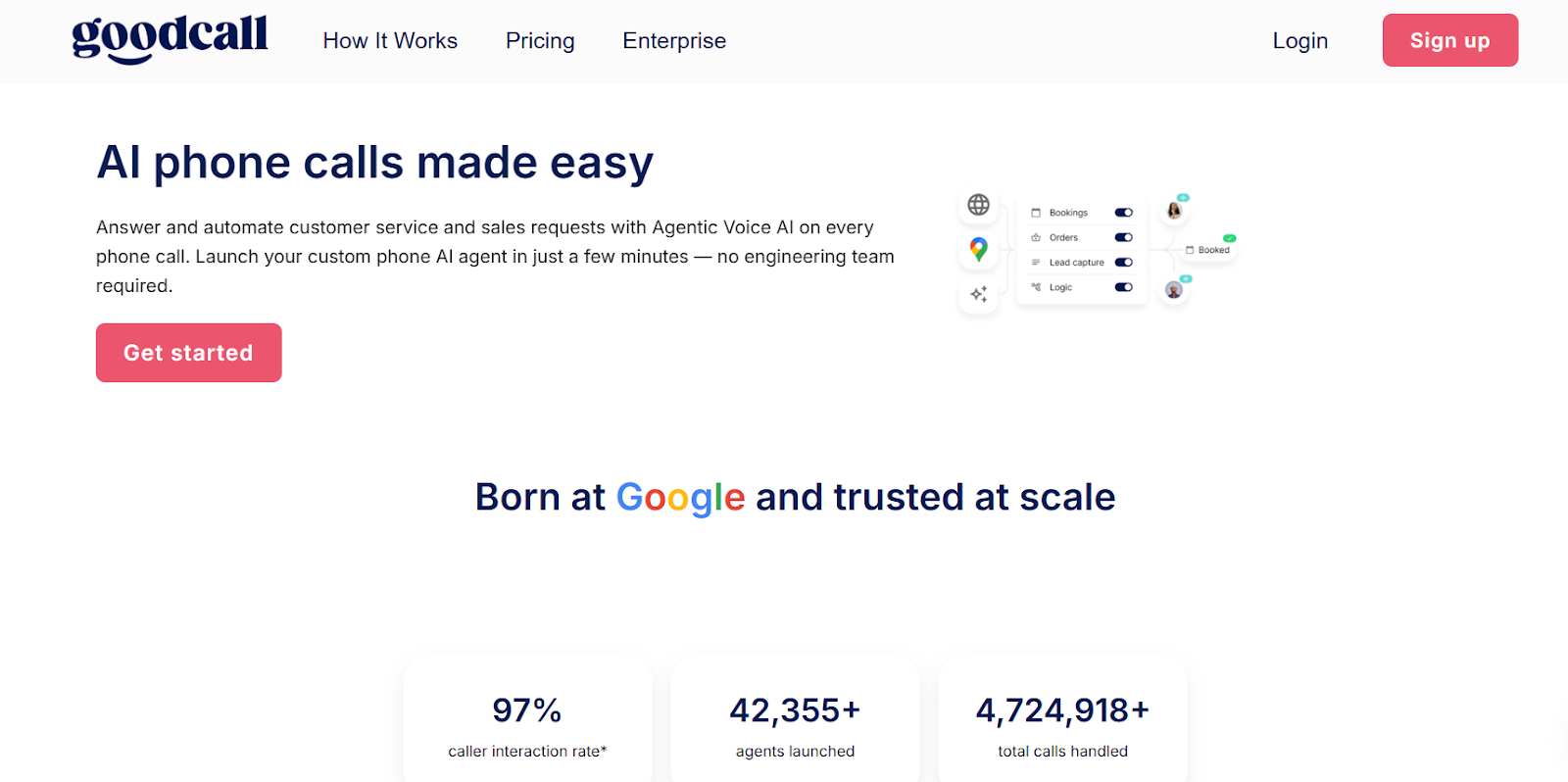
Goodcall is a business-focused voice AI platform designed to automate inbound and outbound customer calls. It combines conversational intelligence with telephony infrastructure for fast deployment.
It is widely used in voice AI use cases in customer support, such as appointment booking, lead qualification, and call routing. The platform emphasizes ease of setup, making it suitable for teams seeking the easiest way to build conversational AI without heavy engineering investment.
3. Retell AI
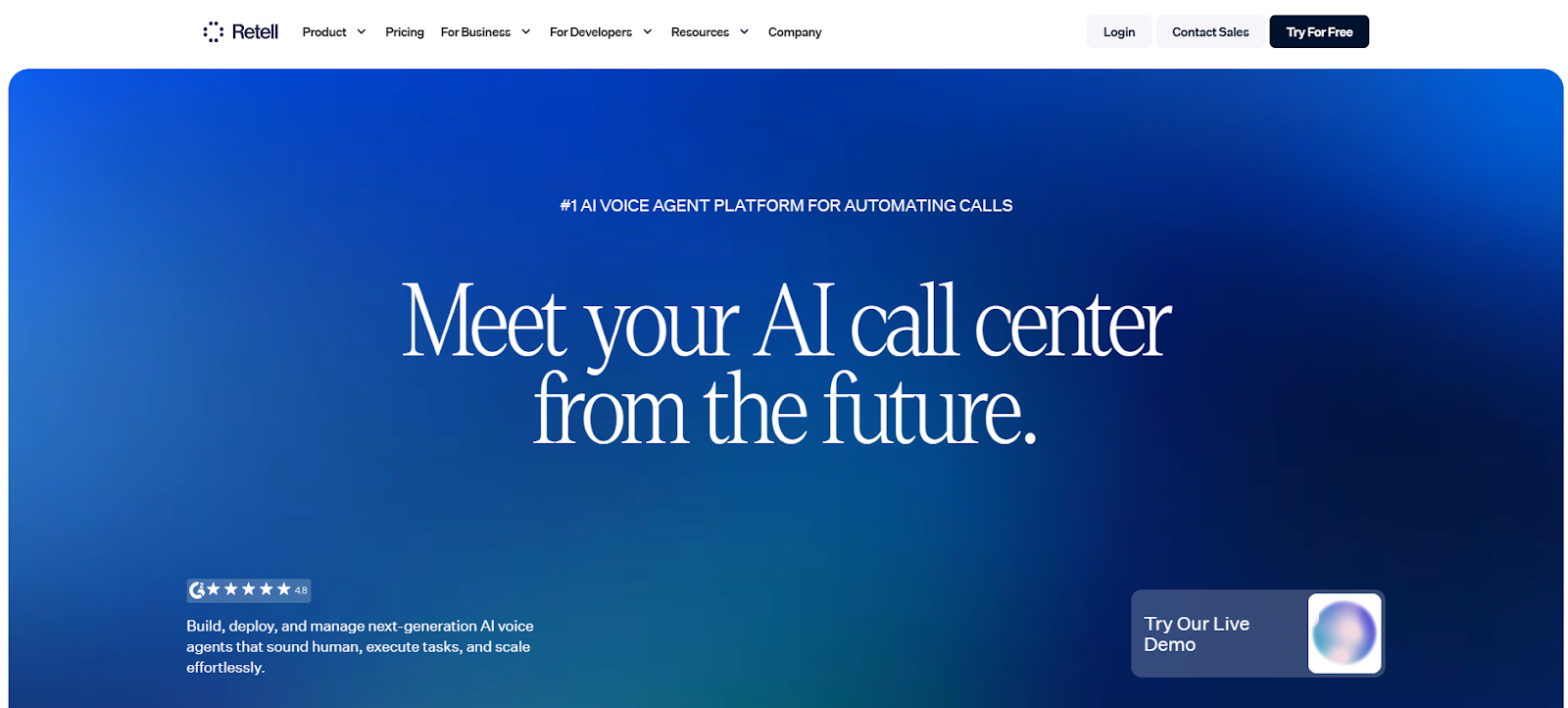
Retell AI focuses on real-time voice automation for customer interactions. Its platform enables developers to build low-latency, human-like voice agents optimized for phone conversations.
It provides APIs for speech recognition, dialogue orchestration, and voice synthesis. Companies exploring how to create an AI voice assistant use Retell AI to deploy scalable agents across sales and support workflows.
4. Lindy
Lindy is an AI assistant platform designed to automate business communications through voice and workflow orchestration. It blends conversational AI with task execution across enterprise tools.
Teams use Lindy to build an AI voice assistant for business operations such as scheduling, CRM updates, and follow-ups. Its automation-first design supports productivity and internal process optimization.
5. Synthflow
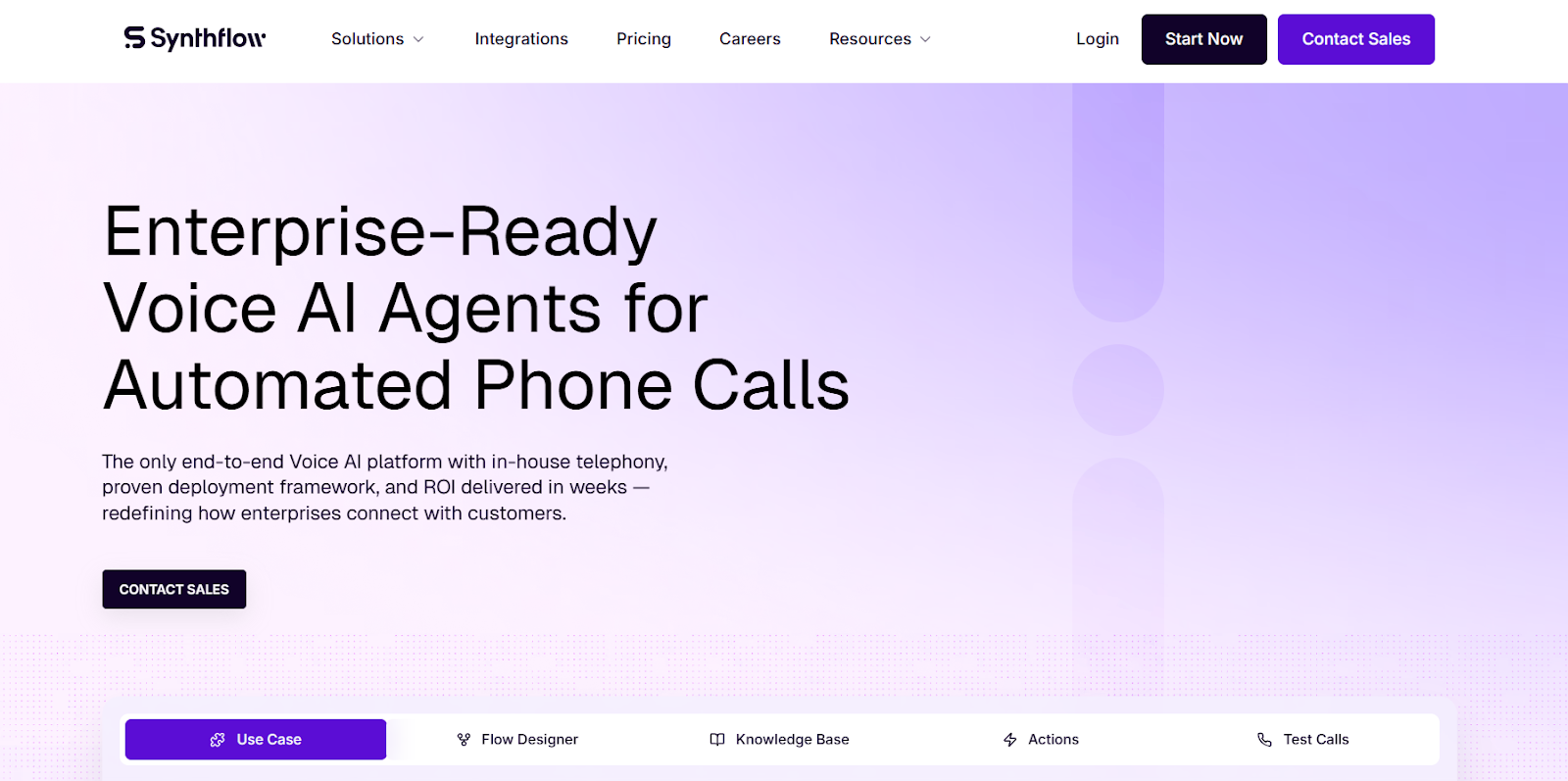
Synthflow is a no-code voice AI platform that enables rapid creation and deployment of conversational voice agents. It is built for businesses seeking fast implementation without deep technical expertise.
The platform supports telephony integration, workflow automation, and conversational design tools. It is commonly adopted in SMB and mid-market environments, scaling natural language voice agents for enterprises transitioning from IVR systems.
Conclusion
Understanding how to build an AI voice agent requires more than selecting tools. It demands clear goals, thoughtful conversational design, reliable infrastructure, and continuous optimization. Organizations that align voice automation with measurable KPIs unlock faster resolutions, lower costs, and stronger customer experiences.
Teams that build AI voice agents strategically can gain a long-term competitive advantage. With the right framework, platform, and governance, voice AI becomes a practical business asset rather than an experimental technology.
Ready to automate customer conversations? Launch your AI voice automation with Goodcall and automatically convert more callers into qualified customers.
FAQs
What is an AI voice agent?
An AI voice agent is a conversational system that uses speech recognition, natural language processing, and text-to-speech to understand spoken input and deliver real-time voice responses, automating customer interactions, support tasks, and business workflows efficiently.
How long does it take to build one?
Building an AI voice agent typically takes 4–12 weeks for basic deployments. Enterprise-grade solutions with integrations, compliance controls, and advanced conversational design can take 3–6 months to fully develop and optimize.
Do I need coding skills to build a voice AI agent?
Coding skills are not always required. No-code and low-code platforms offer the easiest way to build conversational AI, while custom AI voice agent development with integrations and advanced logic requires engineering expertise.
Can voice agents handle multiple languages?
Yes, modern AI voice agents support multilingual conversations using advanced speech recognition and NLP models. They can detect, process, and respond in multiple languages, enabling global customer support and localized user experiences.
How do voice agents differ from chatbots?
Voice agents interact through spoken conversations using ASR and text-to-speech, while chatbots operate via text. Voice adds tone, emotion, and real-time dialogue, making interactions more natural and accessible.
What tools are best for beginners?
Beginner-friendly tools include Dialogflow, Amazon Lex, and no-code voice platforms. These solutions provide visual builders, pre-trained models, and telephony integrations, making it easier to create an AI voice assistant without heavy coding.
Are AI voice agents secure & compliant?
Enterprise AI voice agents support encryption, authentication, and regulatory compliance, such as HIPAA and SOC 2. Secure integrations and data governance frameworks ensure safe handling of sensitive customer conversations.