

Best Voice AI for Enterprise Call Management to Cut Costs & Elevate CX
.jpg)
Enterprises manage thousands of customer interactions daily across voice channels, where every second of delay can impact satisfaction and revenue. As call volumes spike and customer expectations demand instant, personalized responses, traditional systems struggle to keep pace. The result? Overloaded teams, rising costs, and missed growth opportunities.
In this blog, we’ll dive into the best voice AI for enterprise call management, uncovering the top platforms, essential features, and strategic advantages they offer.
What is Enterprise Voice AI for Call Management?
Enterprise voice AI for call management refers to AI-powered systems that automate and optimize high-volume business phone interactions. These systems use speech recognition, natural language processing, and machine learning to understand intent and respond in real time.
Enterprise AI call management platforms support dynamic conversations, contextual memory, and intelligent routing. They integrate with CRMs, ticketing systems, and business tools to execute workflows during live calls.
Enterprise AI call management systems typically include:
- AI call answering software
- Intelligent call routing
- Real-time transcription and analytics
- CRM and helpdesk integration
- Secure data handling and compliance controls
Unlike basic IVR systems, a conversational AI platform understands context, handles multi-turn dialogue, and escalates when needed.
Core capabilities include:
- Automated phone answering system for 24/7 support
- AI voice assistant for business use cases
- Enterprise call automation across departments
- Call center automation software with analytics
These systems reduce average handle time (AHT), improve first-call resolution, and lower labor costs.
Why Enterprises Need Voice AI Now
Enterprises face rising service expectations, increasing call volumes, and growing operational costs. Traditional call center models struggle to scale without impacting customer experience and profitability. Here is why voice AI is essential for enterprises:
1. Elevated Customer Experience (CX)
Customers expect fast, personalized responses across every interaction. Enterprise AI call management delivers consistent, context-aware conversations that reduce wait times and improve first-call resolution, strengthening customer satisfaction and brand trust.
2. Operational Efficiency at Scale
AI call answering software automates repetitive inquiries and routing tasks. This reduces manual workload, shortens average handle time, and allows human agents to focus on complex, high-value customer interactions.
3. Significant Cost Savings
Enterprise call automation lowers staffing costs and minimizes overtime expenses. By handling high-frequency queries automatically, organizations reduce per-call costs while maintaining service quality and compliance standards.
4. Managing High Call Volumes
Seasonal demand spikes and marketing campaigns increase inbound traffic. The best AI phone system for business scales instantly, ensuring service continuity without hiring additional agents or expanding infrastructure.
5. 24/7 Customer Support
An automated phone answering system operates around the clock. Customers receive immediate assistance after hours, improving retention and preventing missed revenue opportunities.
6. Data-Driven Decision Making
Call center automation software generates actionable insights from every interaction. Enterprises analyze call trends, sentiment, and performance metrics to optimize workflows and enhance long-term enterprise AI call management strategies.
Best Voice AI for Enterprise Call Management
Choosing the best voice AI for enterprise call management depends on scalability, conversational accuracy, integration depth, and compliance readiness. Below are leading platforms that deliver enterprise AI call management with advanced automation and conversational capabilities:
1. Poly AI
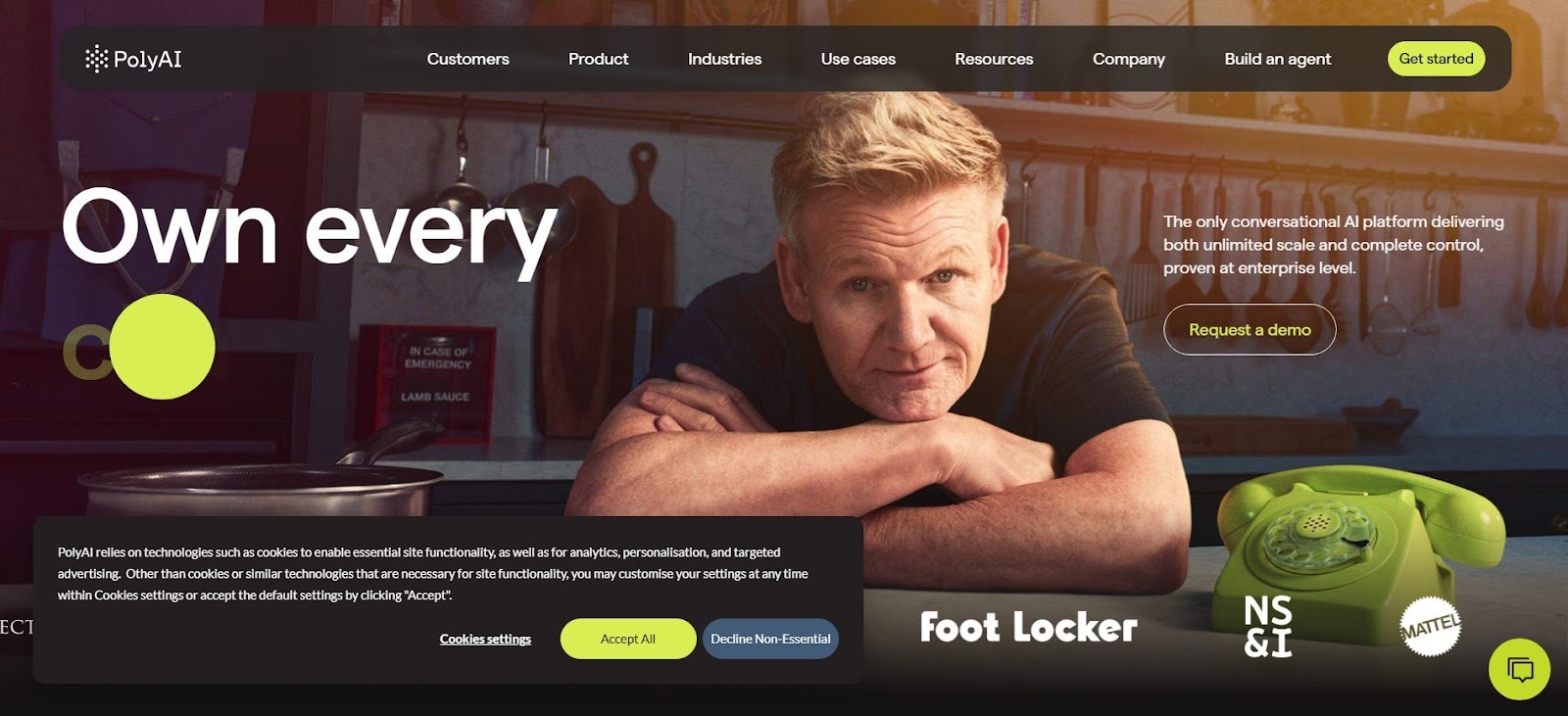
PolyAI is a conversational AI platform built for large enterprises handling high inbound call volumes. It focuses on delivering natural, human-like voice interactions and automating complex customer service workflows across industries like hospitality, retail, and healthcare.
Best for: Enterprises prioritizing highly natural voice conversations and inbound call automation.
Strengths:
- Advanced natural language understanding
- Human-like AI voice assistant for business
- Strong multilingual support
- High containment rates for routine inquiries
- Scalable enterprise call automation
Limitations:
- Premium enterprise pricing
- Primarily focused on inbound automation
- Custom implementation may require onboarding time
Pricing: PolyAI offers custom enterprise pricing based on call volume, automation scope, and integration complexity.
2. Goodcall
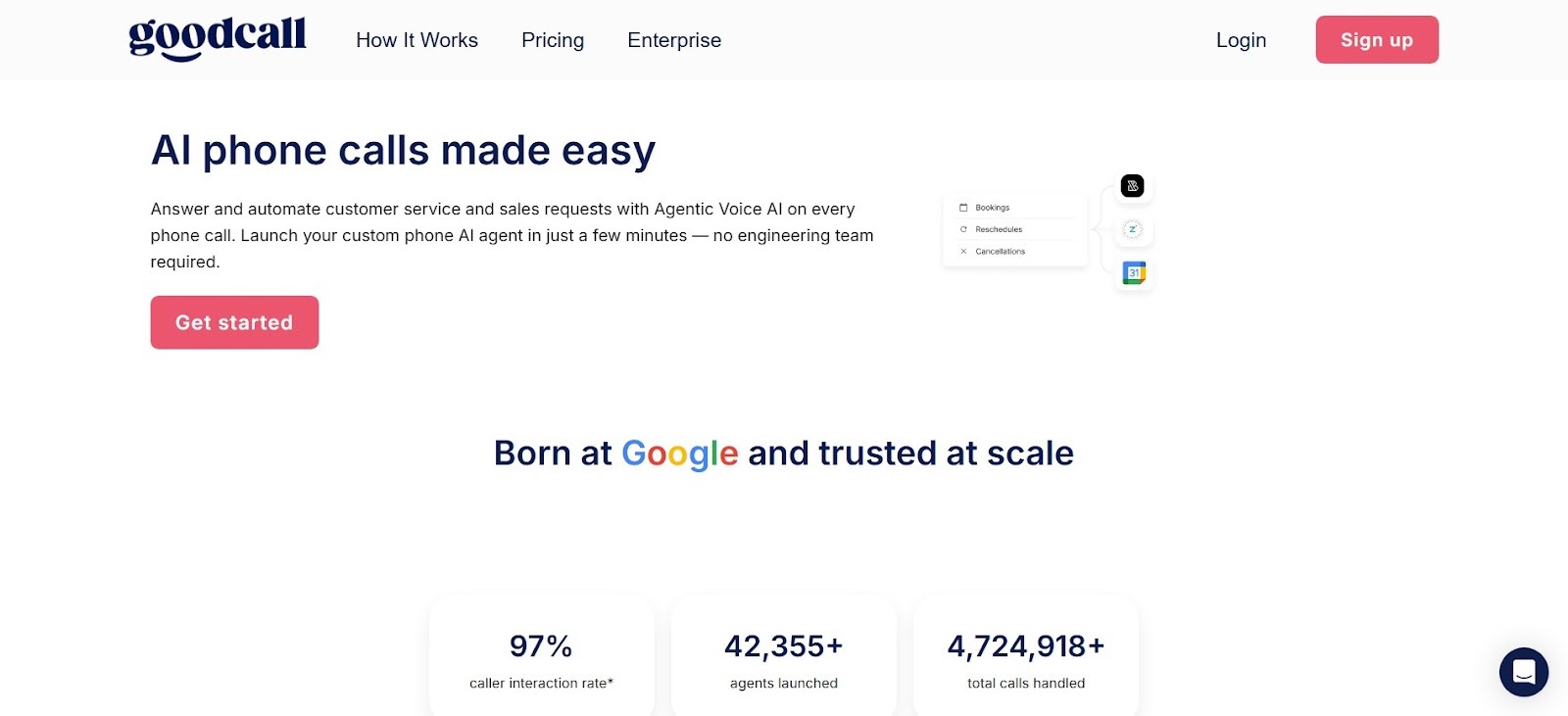
Goodcall is enterprise-grade AI call-answering software designed for end-to-end enterprise AI call management. It combines conversational AI, workflow automation, and analytics to streamline inbound and outbound calls across sales, support, and operations teams.
Best for: Enterprises seeking scalable, customizable enterprise call automation with CRM and telephony integration.
Strengths:
- Robust conversational AI platform
- AI voice assistant for business workflows
- Automated phone answering system with 24/7 availability
- Deep CRM and API integrations
- Advanced call center automation software analytics
Limitations:
- A custom pricing model may not suit small businesses
- Advanced workflow configuration is required for complex use cases
Pricing: Goodcall provides enterprise-based pricing tailored to call volume, integrations, and compliance requirements. Custom deployment options support regulated industries and large-scale operations.
3. Retell AI
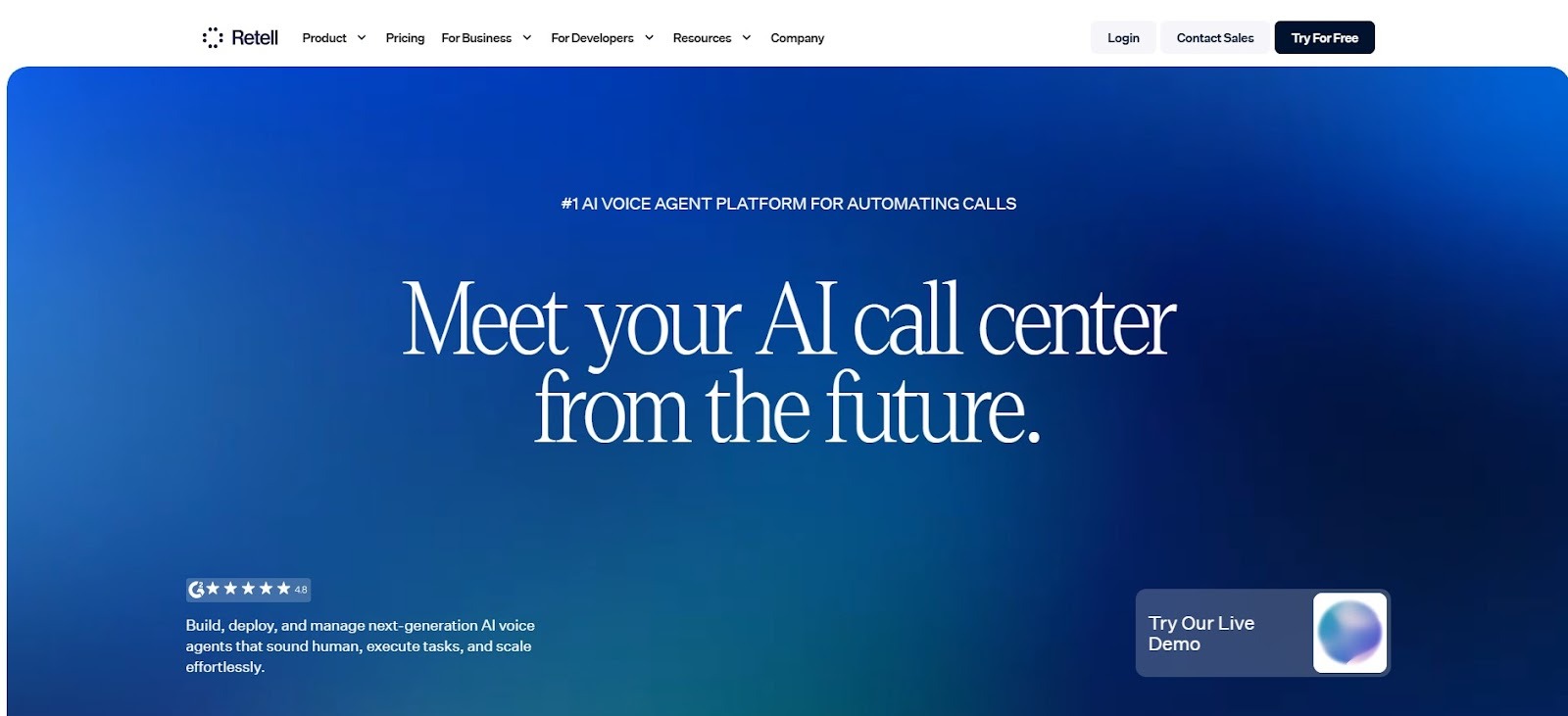
Retell AI is a conversational voice AI platform that emphasizes real-time engagement and speech analytics. It helps enterprises automate inbound and outbound call tasks while capturing insights through advanced transcription and sentiment detection.
Best for: Organizations that value detailed call analytics and conversational insights alongside automation.
Strengths:
- Real-time transcription and sentiment analysis
- Conversational AI platform with dynamic dialogue support
- Useful analytics for CX optimization
- Flexible deployment for mid-sized enterprises
- Integrations with CRM and analytics tools
Limitations:
- Limited native ecosystem compared to hyperscale providers
- May require external telephony providers for full deployment
- Smaller partner network for enterprise support
Pricing: Retell AI typically offers tiered pricing based on usage and analytics features. Enterprise plans vary with call volume and feature requirements.
4. Google Cloud Contact Center AI
Google Cloud Contact Center AI is a scalable AI-powered solution that enhances customer service with automated conversational workflows using Dialogflow and Google’s speech-to-text models. It integrates deeply with cloud telephony and enterprise systems.
Best for: Enterprises already invested in Google Cloud infrastructure seeking deep customization and scalability.
Strengths:
- Industry-leading speech recognition accuracy
- Scalable cloud-native architecture
- Tight integration with Google Cloud services
- Supports omnichannel automation
- Strong developer and API ecosystem
Limitations:
- Requires technical expertise for setup
- Not a turnkey plug-and-play for non-technical teams
- Costs can grow with usage and customization
Pricing: Pricing follows Google Cloud’s usage-based model, billed on speech recognition calls, Dialogflow interactions, and data processing. Enterprises should model costs before deployment.
5. Bland AI
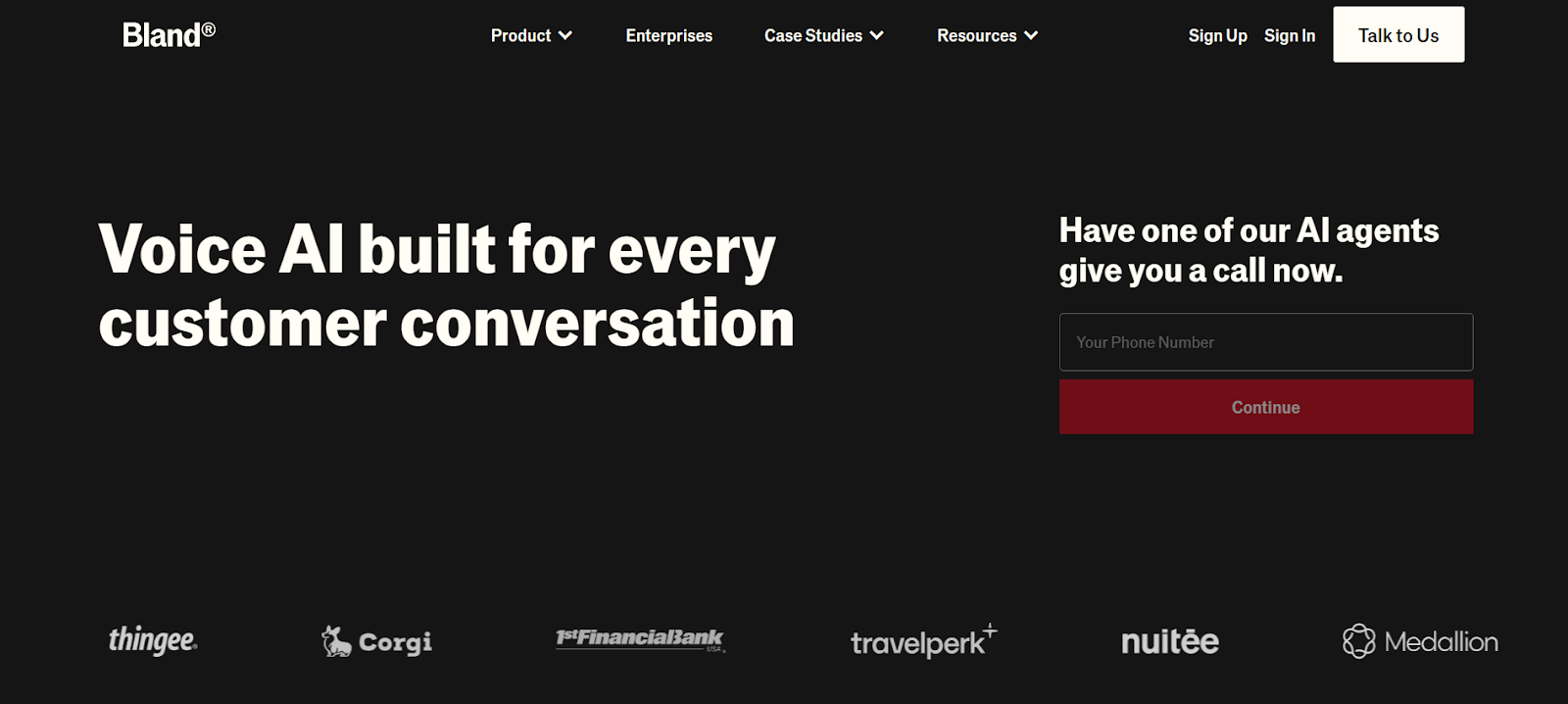
Bland AI is a voice automation platform built to help businesses streamline high-volume call workflows with conversational intelligence. It focuses on simplicity and rapid deployment for routine enterprise use cases.
Best for: Enterprises seeking straightforward enterprise call automation without heavy customization complexity.
Strengths:
- Easy to deploy and configure
- Conversational call flows for routine tasks
- Real-time voice analytics
- 24/7 automated phone answering system
- Cost-efficient for basic enterprise AI call management
Limitations:
- Limited advanced features compared to large enterprise platforms
- Less robust CRM/ERP integrations
- May not scale for complex, multi-department workflows
Pricing: Bland AI typically offers subscription-based pricing with tiers according to call volume and support levels.
6. Replicant
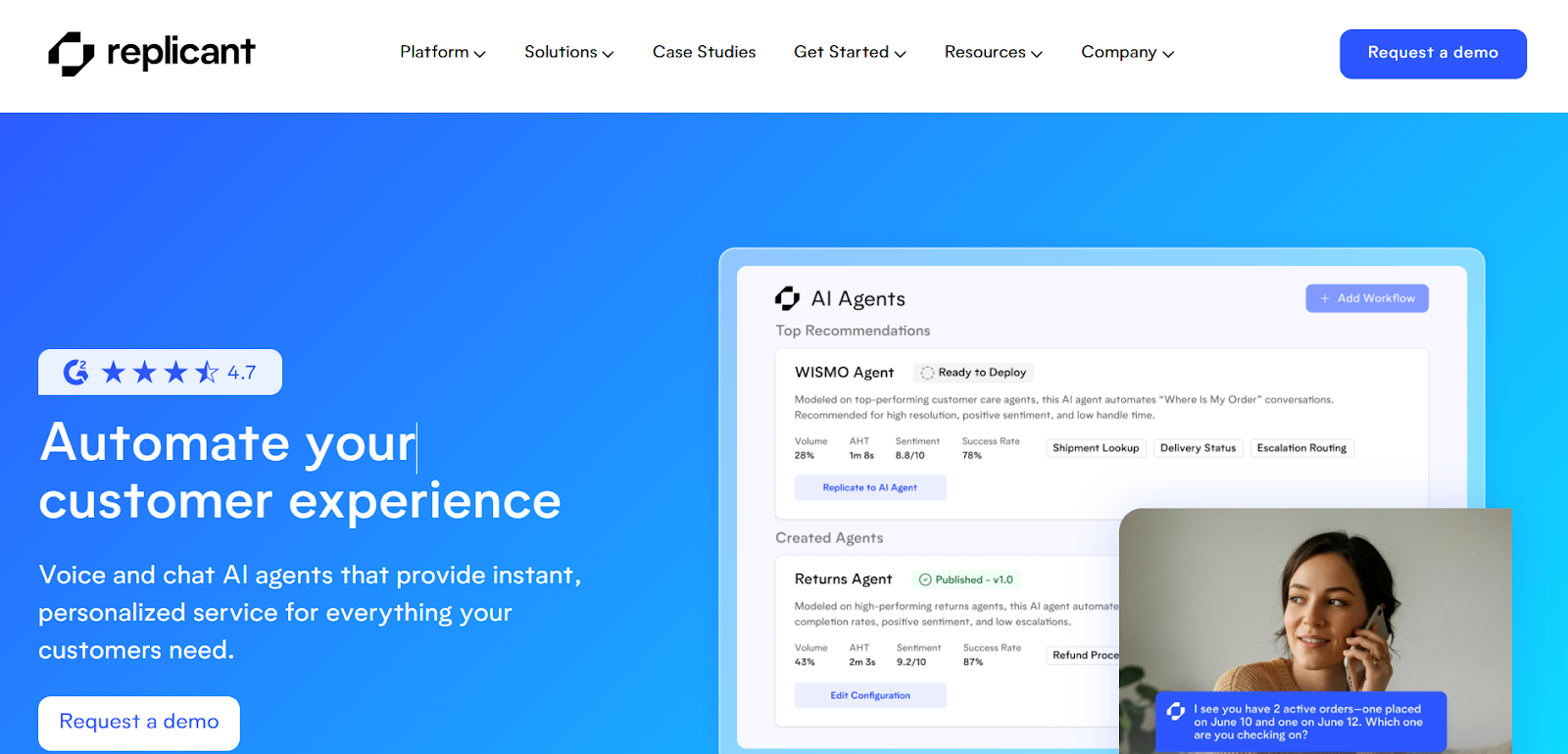
Replicant is an autonomous voice AI agent designed for contact center automation. Its focus is to automate complex customer interactions with minimal human oversight, allowing call centers to handle bursts of high-volume traffic.
Best for: Contact centers seeking high containment rates and deep automation across inbound and outbound calls.
Strengths:
- Autonomous conversational AI handling
- High containment and self-service rates
- Real-time analytics and performance insights
- Rapid deployment workflows
- Integrates with popular CRMs and telephony platforms
Limitations:
- Setup may require professional services
- Customized workflows can extend launch timelines
- Enterprise support levels vary by region
Pricing: Replicant offers flexible pricing based on call volume and automation complexity, typically in tiered enterprise plans.
7. Amazon Connect
Amazon Connect is a cloud-native contact center solution with built-in AI capabilities through Amazon Lex and AWS machine learning. It delivers scalable voice automation and flexible configuration for diverse enterprise needs.
Best for: Enterprises with existing AWS investments seeking scalable, customizable voice AI call management.
Strengths:
- Deep integration with the AWS ecosystem
- Highly scalable and reliable cloud infrastructure
- AI-powered call routing and virtual agents via Amazon Lex
- Omnichannel support and analytics
- Usage-based pricing promotes cost control
Limitations:
- Requires AWS expertise for setup
- Not standalone; depends on AWS services for full capability
- Customization can require engineering resources
Pricing: Amazon Connect uses pay-as-you-go pricing for usage, voice minutes, and optional AI/ML services, offering cost flexibility for enterprise call automation.
How to Choose the Best Voice AI for Enterprise Call Management
Selecting the best voice AI for enterprise call management requires evaluating operational, technical, and compliance needs. Key decision factors include:
- Performance and Accuracy: Evaluate speech-recognition accuracy, intent-detection precision, and response latency. High-performing AI call answering software improves containment rates and reduces customer frustration.
- Integration Capabilities: Ensure the platform integrates seamlessly with CRM, ERP, telephony, and support systems. Strong integration capabilities enable smooth enterprise call automation across departments.
- Scalability: The best AI phone system for business must handle seasonal spikes and rapid growth. Scalable infrastructure prevents downtime during peak enterprise call volumes.
- Reliability and Uptime: Reliable call center automation software ensures consistent uptime and minimal service disruption. Enterprises should review SLA commitments and infrastructure redundancy.
- Language and Accent Support: Global enterprises require multilingual and accent-aware conversational AI platforms. Strong language support ensures an inclusive customer experience across diverse US demographics.
- Security and Compliance: Verify encryption standards, access controls, and regulatory compliance readiness. Enterprise AI call management must align with industry standards such as HIPAA and SOC 2.
How Voice AI Impacts Enterprise Revenue & Customer Retention
Voice AI directly influences profitability by improving service quality while reducing operational friction. Here is how voice AI drives measurable revenue growth and customer retention for enterprises:
1. Faster Response Times
AI call answering software eliminates long wait times and reduces call transfers. Faster resolutions enhance customer satisfaction, strengthen brand perception, and significantly improve long-term retention across competitive enterprise markets.
2. Higher First-Call Resolution
Enterprise AI call management routes inquiries intelligently and resolves routine issues instantly. Fewer repeat calls improve operational efficiency while increasing customer confidence in the organization’s responsiveness and reliability.
3. 24/7 Availability
An automated phone answering system operates continuously, capturing after-hours leads and service requests. This ensures enterprises do not lose potential sales opportunities due to limited business hours or staffing constraints.
4. Intelligent Upselling
An AI voice assistant for business can recommend relevant upgrades or add-ons during conversations. Personalized suggestions increase average transaction value while maintaining a seamless and consultative customer experience.
5. Operational Savings
Enterprise call automation reduces labor dependency and lowers per-call costs. Optimized workflows and shorter handling times directly improve profit margins while sustaining service quality standards.
6. Data-Driven Insights
Call center automation software provides analytics on call trends, sentiment, and churn indicators. Enterprises use these insights to refine service strategies, personalize engagement, and proactively address customer concerns.
Future of Enterprise Voice AI
Enterprise AI call management continues to evolve rapidly. Advancements in generative AI and large language models are reshaping call automation. Here is what the future of enterprise voice AI looks like:
1. Hyper-Personalized Conversations
Future conversational AI platforms will use customer history, behavioral data, and contextual memory to personalize every interaction. This will improve engagement quality and strengthen long-term customer relationships.
2. Autonomous Call Resolution
Enterprise call automation will handle complex workflows independently, including claims processing, account updates, and compliance verification. Reduced human intervention will increase efficiency and operational scalability.
3. Predictive and Proactive Outreach
AI voice assistants for business will identify churn risks and trigger proactive calls. Predictive engagement will help enterprises resolve issues before customers escalate complaints or switch providers.
4. Advanced Emotion and Sentiment Detection
Voice AI systems will better detect tone, urgency, and sentiment in real time. This will allow dynamic conversation adjustments and intelligent escalation when human empathy is required.
5. Stronger Security and Identity Verification
Future AI call answering software will integrate biometric voice authentication and adaptive fraud detection. This will strengthen security while maintaining seamless customer experiences.
Conclusion
The best voice AI for enterprise call management enables enterprises to scale operations, reduce costs, and deliver consistent customer experiences. It transforms enterprise AI call management from a support function into a revenue-driving engine.
Organizations that invest in intelligent AI call answering software gain faster response times, stronger retention, and measurable operational efficiency. In competitive US markets, enterprise call automation is a strategic advantage.
Ready to turn every call into revenue? Discover Goodcall and automate enterprise conversations while reducing costs and boosting customer satisfaction without increasing headcount.
FAQs
What is the best voice AI for enterprise call management?
The best voice AI for enterprise call management depends on integration needs, compliance requirements, and automation goals. Platforms like Goodcall and Google Contact Center AI offer scalable enterprise call automation and advanced conversational capabilities.
How much does enterprise voice AI cost?
Enterprise voice AI pricing varies based on call volume, integrations, and compliance requirements. Most providers use usage-based or custom enterprise pricing models for AI call answering software and call center automation software deployments.
Can voice AI replace call center agents?
Voice AI automates repetitive tasks and routine inquiries. However, complex cases still require human agents. Enterprise AI call management works best as a hybrid model combining automation and human expertise.
Is voice AI secure for healthcare enterprises?
Yes, if the platform supports HIPAA compliance, encryption, and access controls. Healthcare enterprises must verify regulatory alignment under the Health Insurance Portability and Accountability Act before deployment.
How long does it take to implement enterprise voice AI?
Implementation timelines range from a few weeks to several months. Complexity depends on integrations, workflow customization, and compliance validation for enterprise call automation systems.