

Leading Voice AI Platforms for Health Insurance Call Centers
.jpg)
In health insurance, every unanswered call is not just a missed interaction but a lost revenue, rising churn, and mounting operational costs. As call volumes surge and member expectations grow, traditional support models are struggling to keep pace. Forward-thinking insurers are turning to leading voice AI platforms for health insurance call centers to turn their contact centers from cost centers into growth engines.
In this blog, we’ll explore the leading voice AI platforms for health insurance call centers that are reshaping service delivery and driving measurable ROI.
Why Health Insurance Call Centers Are Turning to Voice AI
Health insurers are adopting AI to modernize service operations while maintaining compliance and quality. Voice automation addresses operational strain without compromising member trust. Below are the primary drivers behind AI for health insurance call centers:
- Handling High Call Volumes
Enrollment growth, seasonal surges, and claims inquiries create unpredictable call spikes. Voice AI manages simultaneous conversations 24/7, reducing wait times and call abandonment. It ensures consistent availability during open enrollment and policy renewal periods.
- Efficiency and Workflow Optimization
Manual call handling slows resolution for routine inquiries. Healthcare call center automation software instantly retrieves eligibility, claims status, and benefits information. This reduces average handling time and allows human agents to focus on complex cases.
- Cost Reduction
Operational costs rise with staffing, overtime, and training. Insurance claims automation AI lowers cost per interaction by automating repetitive requests. Higher containment rates directly improve contact center ROI.
- Regulatory and Compliance Requirements
Health insurers must comply with HIPAA and CMS data protection standards. A HIPAA-compliant AI voice assistant uses encrypted systems, access controls, and audit logs. Proper deployment reduces compliance risks while maintaining secure data handling.
- Improved Member Experience
Members expect fast, accurate, and personalized service. Voice AI understands natural language and responds contextually instead of forcing rigid menu navigation. This improves first-call resolution and overall satisfaction.
Leading Voice AI Platforms for Health Insurance Call Centers
| Platform | Features | Best For | Strengths |
|---|---|---|---|
| Goodcall | AI voice agents, claims automation, prior authorization workflows, Medicare support | Insurers wanting full automation | Strong healthcare focus, scalable, high call containment |
| Telnyx | Voice APIs, call routing, telephony control | Teams building custom AI systems | Flexible infrastructure, developer-friendly |
| ElevenLabs | Natural text-to-speech, custom voices | Improving voice quality in AI systems | Very realistic voice output |
| Synthflow | Conversational call automation, CRM integration | Mid-size insurers | Easy workflow setup, improves efficiency |
| Cognigy | Enterprise conversational AI, omnichannel support | Large health plans | Advanced NLP, scalable automation |
| Voiceflow | Visual AI builder, voice and chat design | Teams creating custom workflows | User-friendly, fast prototyping |
| Prosper AI | Voice automation, claims and eligibility support | Regional insurers | Flexible workflows, performance insights |
1. Goodcall
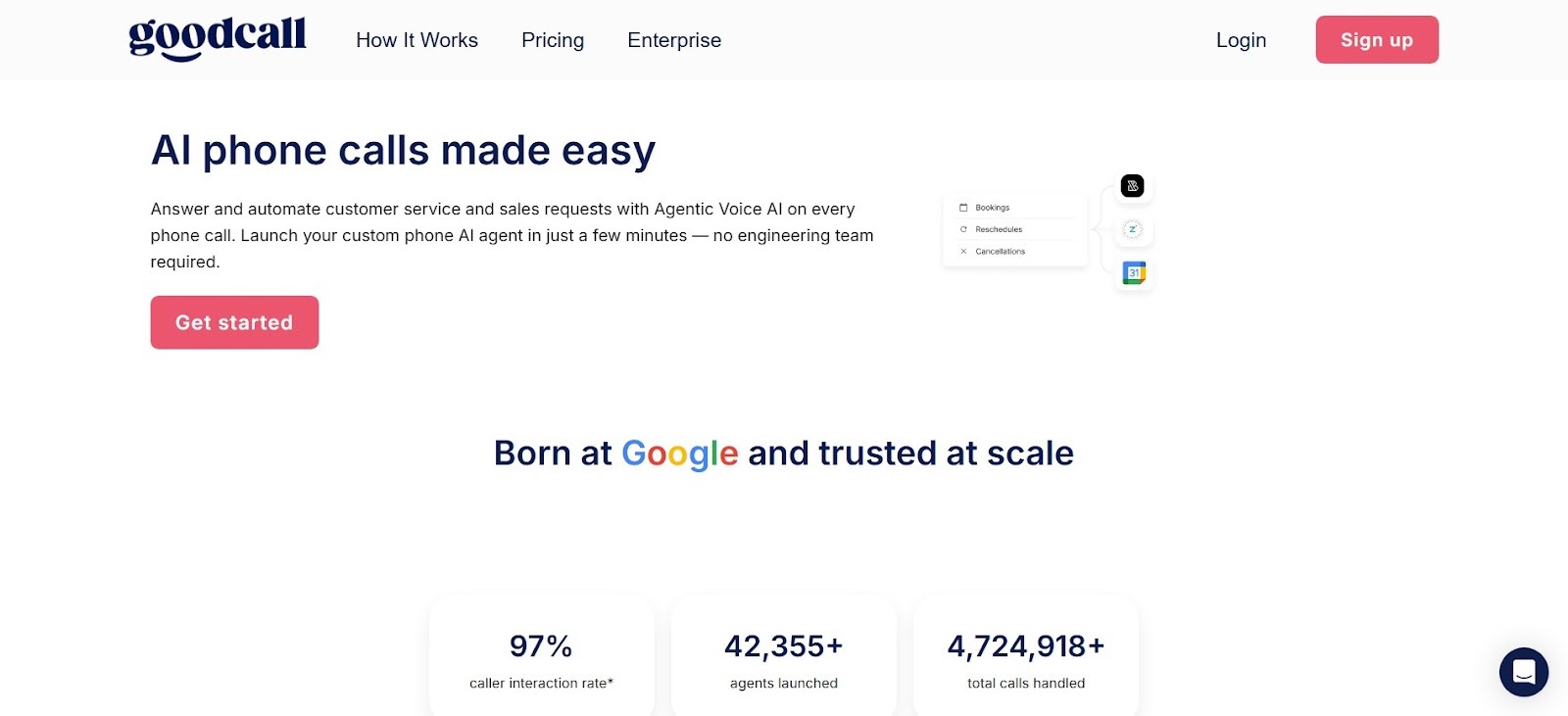
Goodcall is an agentic AI platform designed to automate complex customer conversations. It enables scalable AI for health insurance call centers with workflow-driven automation and secure voice infrastructure.
Best For: Health insurers seeking scalable automation across claims, eligibility, and Medicare member support.
Key Features
- Agentic AI voice agents for insurance workflows
- Insurance claims automation AI for status inquiries
- AI prior authorization assistant capabilities
- Medicare customer support automation
- Secure architecture supporting HIPAA-compliant AI voice assistant deployments
- CRM and claims system integrations
Pros
- Automation-first architecture
- Strong healthcare workflow customization
- Scalable across high call volumes
- Reduces average handling time
- Supports 24/7 member self-service
Cons
- Requires structured workflow design
- Integration planning needed
Pricing: Custom pricing based on call volume, automation scope, and integrations. Enterprise-focused plans tailored to payer needs.
2. Telnyx
Telnyx is a programmable communications platform offering voice APIs and automation tools. It enables healthcare call center automation software through customizable voice infrastructure and secure cloud telephony.
Best For: Insurers with in-house technical teams building custom AI voice solutions.
Key Features
- Programmable voice APIs for automated insurance workflows
- Secure SIP trunking and call control
- Integration with AI models for prior authorization automation
- Real-time call routing and analytics
- Infrastructure support for HIPAA-compliant AI voice assistant setups
Pros
- Flexible developer-first platform
- Strong global voice infrastructure
- Custom workflow control
- Scalable API-based deployment
Cons
- Requires engineering resources
- No out-of-the-box insurance workflows
- Healthcare compliance setup handled by the customer
Pricing: Usage-based pricing for voice, APIs, and infrastructure. Costs vary depending on call minutes, features, and customization requirements.
3. ElevenLabs
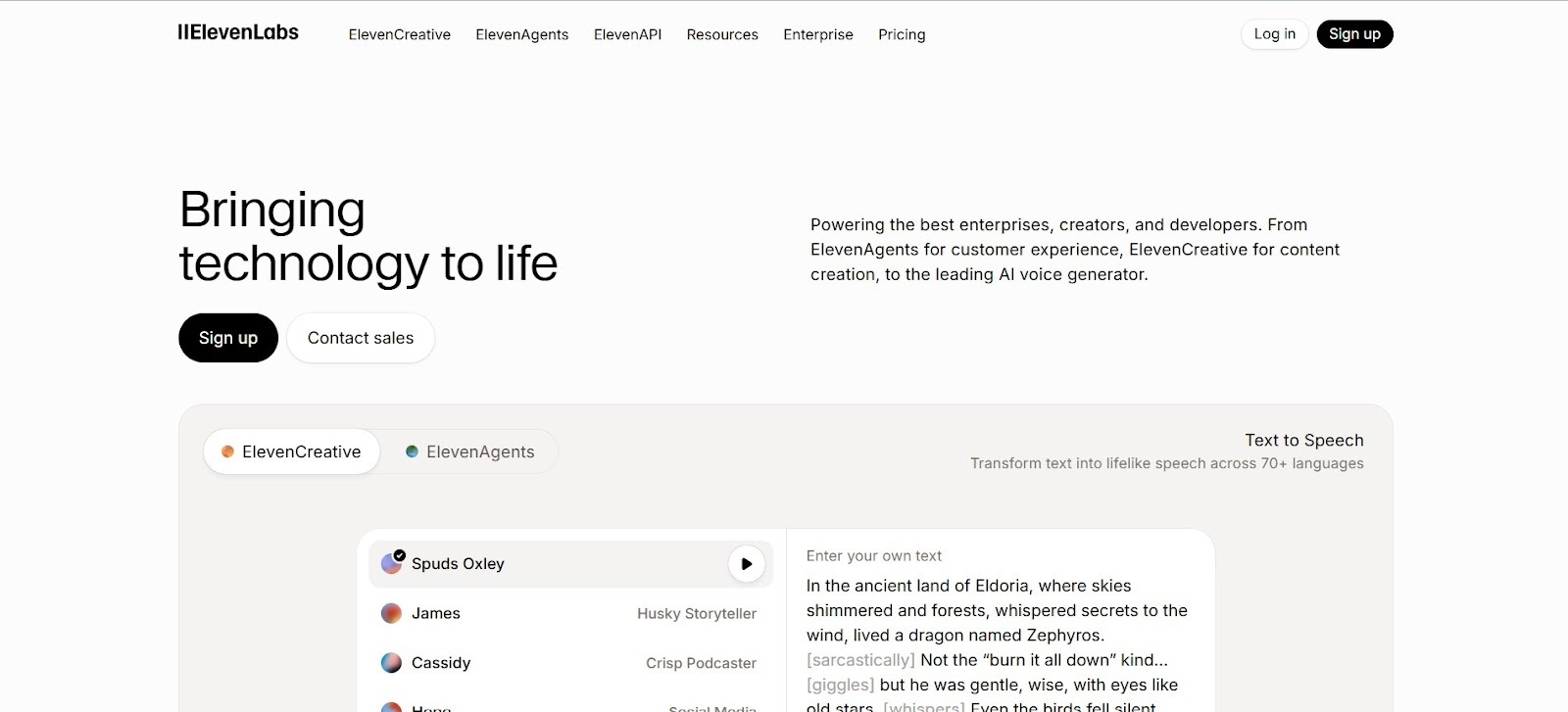
ElevenLabs is an advanced speech synthesis platform that produces natural, human-like voice output. Its technology enhances conversational quality for voice assistants in health insurance call centers.
Best For: Organizations prioritizing premium voice quality and natural-sounding conversational AI.
Key Features
- High-fidelity text-to-speech for healthcare interactions
- Custom voice profiles for brand consistency
- Real-time speech generation integrated with AI logic
- Multilingual support for diverse member populations
- API integration with existing AI and IVR systems
Pros
- Extremely natural and expressive voice output
- Improves member engagement
- Simple API integration
- Supports multiple language accents
- Enhances listener comprehension
Cons
- Requires pairing with an AI conversational engine
- Limited built-in healthcare workflows
- Licensing costs for advanced features
Pricing: Usage-based pricing depending on voice generation minutes and premium voice models chosen.
4. Synthflow
Synthflow is a voice AI platform that automates outbound and inbound call interactions through conversational workflows. It empowers health insurance call centers to handle routine member contacts without manual staffing.
Best For: Insurers focused on improving call containment through automated conversational outreach.
Key Features
- Conversational AI for inbound healthcare inquiries
- Automated appointment reminders and follow-ups
- Integration with CRM and claims systems
- Customizable healthcare workflows
- Real-time analytics and performance tracking
Pros
- Clear focus on conversational automation
- Easy-to-build dialogue flows
- Improves operational efficiency
- Scales across large call volumes
Cons
- May require development support
- Less advanced NLP compared to enterprise AI platforms
- Custom healthcare templates may be limited
- Licensing tied to usage tiers
Pricing: Tiered subscription or usage-based pricing depending on features and call volumes.
5. Cognigy
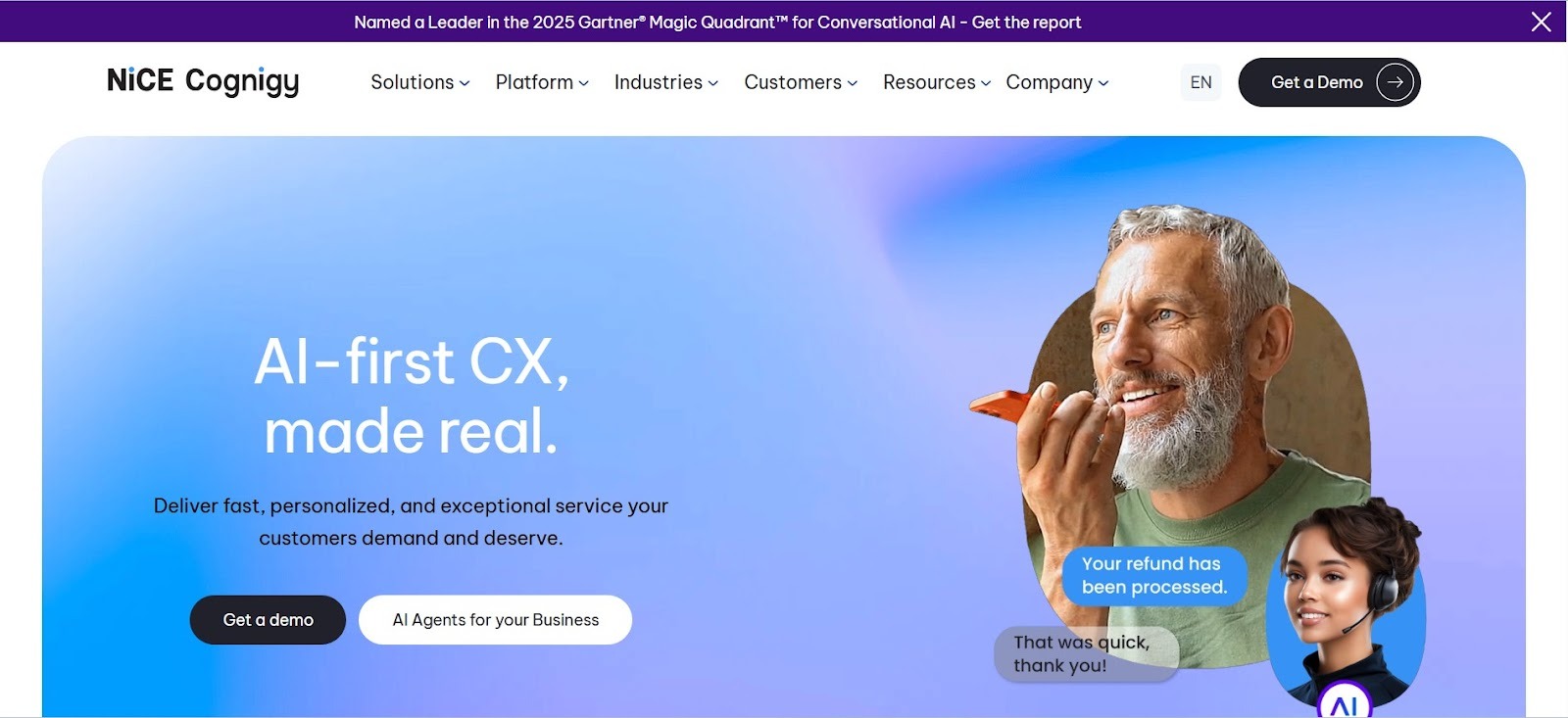
Cognigy is an enterprise conversational AI platform designed to automate complex customer interactions across voice and digital channels. It enables health insurance call centers to deploy intelligent, context-aware voice assistants that improve efficiency and accuracy.
Best For: Large insurers seeking robust AI automation with omnichannel voice and chat capabilities.
Key Features
- End-to-end conversational AI for voice and digital
- Natural language understanding tailored for healthcare terminology
- HIPAA-compliant AI voice assistant deployment support
- Integration with CRM, claims systems, and policy engines
- Real-time analytics and error monitoring
Pros
- Powerful enterprise-grade automation
- Omnichannel capabilities (voice + digital)
- Scalable for high-volume insurance environments
- Comprehensive analytics for performance insight
Cons
- Implementation can be resource-intensive
- Higher price point for enterprise features
- Requires technical configuration for healthcare workflows
Pricing: Custom enterprise pricing based on usage, integrations, and support tiers.
6. Voiceflow
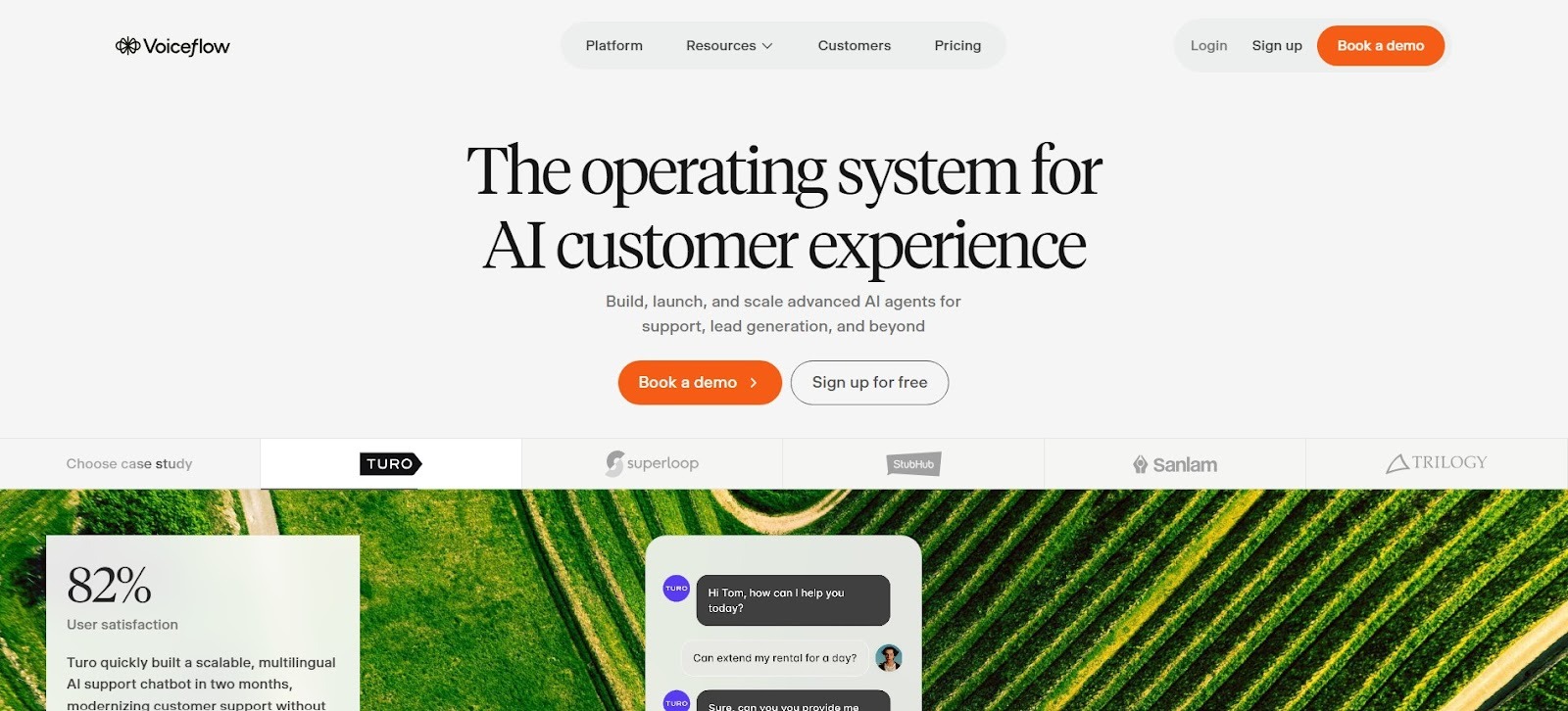
Voiceflow is a conversational design platform that enables teams to build, prototype, and deploy custom voice and chat experiences. It supports health insurance call centers looking to tailor AI conversations without heavy coding.
Best For: Insurers and developers building customized voice AI workflows with visual tools.
Key Features
- Drag-and-drop conversational builder
- Voice and chat integration support
- HIPAA-ready deployment via secure APIs
- Testing and iteration tools for healthcare dialogues
- Integrations with CRMs and telephony systems
Pros
- User-friendly design interface
- Rapid prototyping and testing
- Supports both voice and digital channels
- Enables tailored healthcare workflows
- Reduces development cycle time
Cons
- Not a complete out-of-the-box automation suite
- Requires developer or design expertise
- May need external NLP engines for complex intents
Pricing: Subscription-based pricing with tiers depending on features, team seats, and integration needs.
7. Prosper AI
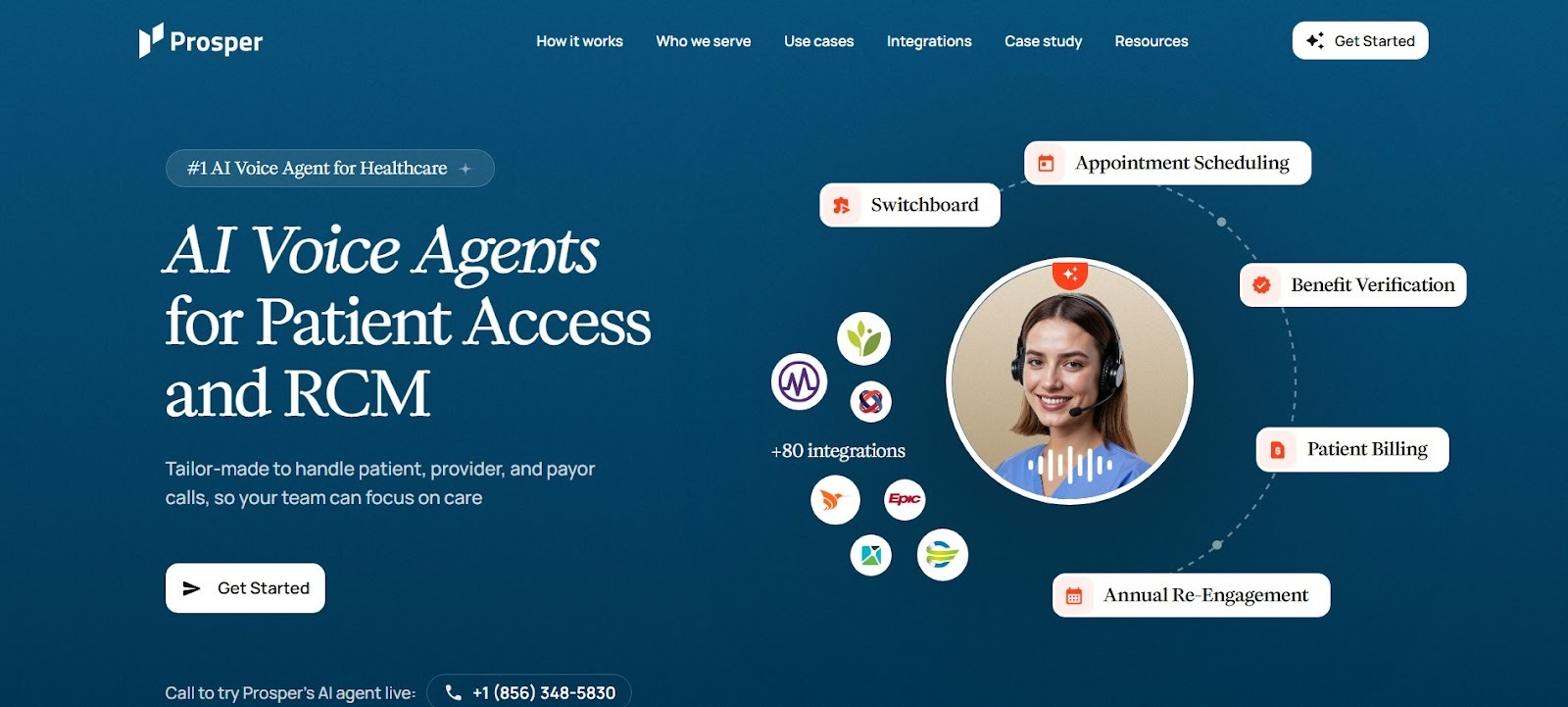
Prosper AI is a voice AI and automation platform that streamlines call handling with conversational workflows and intelligent routing. It empowers health insurance call centers to resolve member inquiries efficiently while maintaining data security.
Best For: Insurers and payers seeking customizable AI voice automation with robust routing and workflow support.
Key Features
- Conversational voice AI for insurance inquiries
- Automated claims status and eligibility calls
- Integration with CRM, policy admin, and telephony systems
- HIPAA-compliant AI voice assistant support
- Analytics for call performance and containment rates
Pros
- Flexible automation tailored to insurance use cases
- Strong integration ecosystem
- Improves first-call containment
- Analytics-driven performance insights
- Secure platform supporting compliance needs
Cons
- May require technical setup
- Limited prebuilt healthcare templates
- Custom pricing complexity
Pricing: Custom pricing based on features, call volume, and integration scope; typically negotiated per deployment.
How to Choose the Right Voice AI Platform for Your Insurance Call Center
Selecting from the leading voice AI platforms for health insurance call centers requires a structured evaluation of operational needs, compliance readiness, and long-term strategy. Below are key factors that decision-makers must consider when choosing a solution.
Assess Healthcare-Focused Capabilities
A solution must support AI for health insurance call centers out of the box or with minimal configuration. Essential capabilities include:
- Claims status automation
- Eligibility and benefits verification
- AI prior authorization assistant workflows
- Medicare customer support automation
Platforms with prebuilt healthcare logic accelerate deployment and reduce customization burden.
Evaluate HIPAA Compliance and Security
Handling protected health information requires strict safeguards. Confirm that the vendor:
- Signs a Business Associate Agreement (BAA)
- Encrypts data in transit and at rest
- Provides audit trails and access controls
Platforms marketed as HIPAA-compliant AI voice assistant solutions reduce legal and operational risk.
Integration with Core Systems
The voice AI platform must integrate smoothly with existing infrastructure, including:
- Claims management systems
- CRM and policy administration platforms
- Telephony systems and contact center tools
Native or API-based integrations improve automation, data accuracy, and workflow efficiency.
Scalability and Performance
Health plans experience cyclical spikes, especially during Open Enrollment. Choose a platform that:
- Handles peak call volumes
- Scales with membership growth
- Offers analytics on call outcomes, containment, and performance
Cloud-native solutions often provide elasticity without additional hardware.
Ease of Use and Customization
Evaluate how the platform supports:
- Workflow design and modification
- Training with industry-specific terminology
- Visual builders or low-code tools for customization
Platforms that reduce development overhead accelerate deployment and iteration.
Cost and Total Value
Compare pricing against expected ROI:
- Reduction in average handling time
- Lower staffing costs
- Improved first call resolution
- Operational efficiency gains
Factor in implementation, support, and ongoing maintenance when reviewing cost.
Future of AI in Health Insurance Customer Support
AI is moving from basic automation to intelligent decision support in payer operations. The next generation of AI for health insurance call centers will combine voice, data, and predictive analytics to deliver proactive service.
The future of AI for health insurance call centers will include:
- Proactive Member Engagement: AI systems initiate outreach for claim updates, benefit reminders, and approvals, reducing inbound calls and improving transparency.
- Advanced Prior Authorization Automation: AI prior authorization assistants collect clinical data, verify documentation, and intelligently route cases for faster approvals.
- Voice Biometrics and Secure Authentication: Voice biometrics securely verify members' identities, reducing fraud risk while simplifying Medicare and Medicaid authentication processes.
- End-to-End Insurance Claims Automation AI: Automation handles claim status, detects documentation gaps, and triggers workflow corrections without manual intervention.
- Hyper-Personalized Member Support: AI analyzes members' history and plan data to deliver contextual, tailored responses rather than scripted ones.
- Omnichannel Integration: Healthcare call center automation software unifies voice, chat, SMS, and email into a seamless, connected support experience.
Final Thoughts
Health insurers can no longer rely on legacy IVR systems to meet rising member expectations and regulatory demands. Voice AI platforms for health insurance call centers are transforming support operations with automation, compliance, and real-time intelligence.
By adopting advanced AI for health insurance call centers, payers reduce costs, streamline prior authorization processes, and enhance support for medicare members. The insurers that invest in secure, scalable voice AI today will define the future of healthcare customer experience tomorrow.
High call volumes straining your health insurance call center? Explore Goodcall’s AI voice agents and transform your health insurance call center into a 24/7 automation engine.
FAQs
What is the best voice AI platform for health insurance call centers?
The best voice AI platform depends on insurer size, compliance needs, and workflow complexity. Enterprise payers often choose scalable platforms with healthcare-specific automation, strong integrations, and HIPAA-ready deployments for claims and Medicare support.
Is voice AI HIPAA-compliant?
Voice AI can be HIPAA-compliant when properly configured. A compliant solution includes encryption, access controls, audit logs, secure data storage, and a signed Business Associate Agreement to protect Protected Health Information.
How much does healthcare voice AI cost?
Healthcare voice AI costs vary by call volume, integrations, and automation scope. Enterprise deployments primarily depend on features, customization, and ongoing support requirements.
Can AI handle prior authorization calls?
Yes. An AI prior authorization assistant can collect patient details, verify eligibility, document clinical information, and route complex cases to human reviewers, reducing administrative delays and improving approval turnaround times.
How long does implementation take?
Implementation usually takes 6 to 16 weeks, depending on system integrations, workflow customization, compliance reviews, and testing requirements. Larger insurers with complex infrastructure may require longer deployment timelines.
Can voice AI integrate with healthcare CRMs?
Most enterprise voice AI platforms integrate with healthcare CRMs, claims management systems, and policy administration software using APIs, enabling real-time data retrieval and seamless workflow automation.
Is AI voice secure for Medicare and Medicaid members?
Yes, when deployed under HIPAA standards and aligned with CMS security guidelines. Secure AI voice systems use encryption, identity verification, and strict access controls to protect Medicare and Medicaid member data.