

Top Voice AI Tools for Multilingual Customer Conversations That Drive Growth
.jpg)
In a world where business success is increasingly defined by the ability to connect with customers across borders, overcoming language barriers is more crucial than ever. Customers expect instant, personalized service in their native languages, making multilingual communication a critical factor in building brand loyalty and trust. Voice AI tools are stepping in to bridge this gap, enabling businesses to offer fluid, real-time conversations that span multiple languages with ease.
This blog will take you through the top voice AI tools for multilingual customer conversations, compare features, and explain how businesses can choose the right solution.
Why Multilingual Voice AI Is Now a Business Necessity
US businesses operate in an increasingly diverse market where language directly impacts customer trust and revenue. Multilingual voice AI enables companies to serve customers in their preferred language without scaling headcount.
The business impact becomes clear when examining measurable outcomes:
- Global Reach: Businesses engage Spanish, Mandarin, and French-speaking customers, unlocking new domestic and international growth opportunities.
- Enhanced Customer Experience: Customers feel understood when spoken to in their preferred language, increasing trust and satisfaction. 76% of consumers are more likely to repurchase from brands that provide information in their own language.
- Higher CSAT Scores: Customers resolve issues faster in familiar languages, improving satisfaction and reducing complaint rates.
- Increased Conversions: An automated voice assistant removes language friction across booking, payment, and inquiry processes, boosting completed transactions.
- Operational Efficiency: AI call automation tools reduce reliance on large bilingual support teams without sacrificing service quality.
- Scalable conversational AI for customer support: A business voice bot handles multilingual conversations 24/7 without performance decline during peak hours.
Which Voice AI Tool Is Right for You?
The following voice AI software comparison highlights key capabilities across the top platforms for multilingual customer conversations:
| Platform | Multilingual Support | Best Use Case | Ease of Deployment | AI Voice Features |
|---|---|---|---|---|
| Poly AI | 30+ languages | Large contact centers | Medium | Natural conversations, contextual understanding |
| Goodcall | 20+ languages | SMB & growing businesses | High | Agentic reasoning, automated receptionist |
| Retell AI | 15+ languages | Mid-size enterprises | High | Custom voice workflows, analytics |
| Sierra AI | 12+ languages | Customer support teams | Medium | Context-aware dialogue, real-time analytics |
| Vapi AI | 15+ languages | Scalable SMB solutions | High | Flexible workflows, CRM integration |
| Cresta | 10+ languages | AI-assisted agent support | Medium | Real-time coaching, sentiment analysis |
Top Voice AI Tools for Multilingual Customer Conversations
1. Poly AI
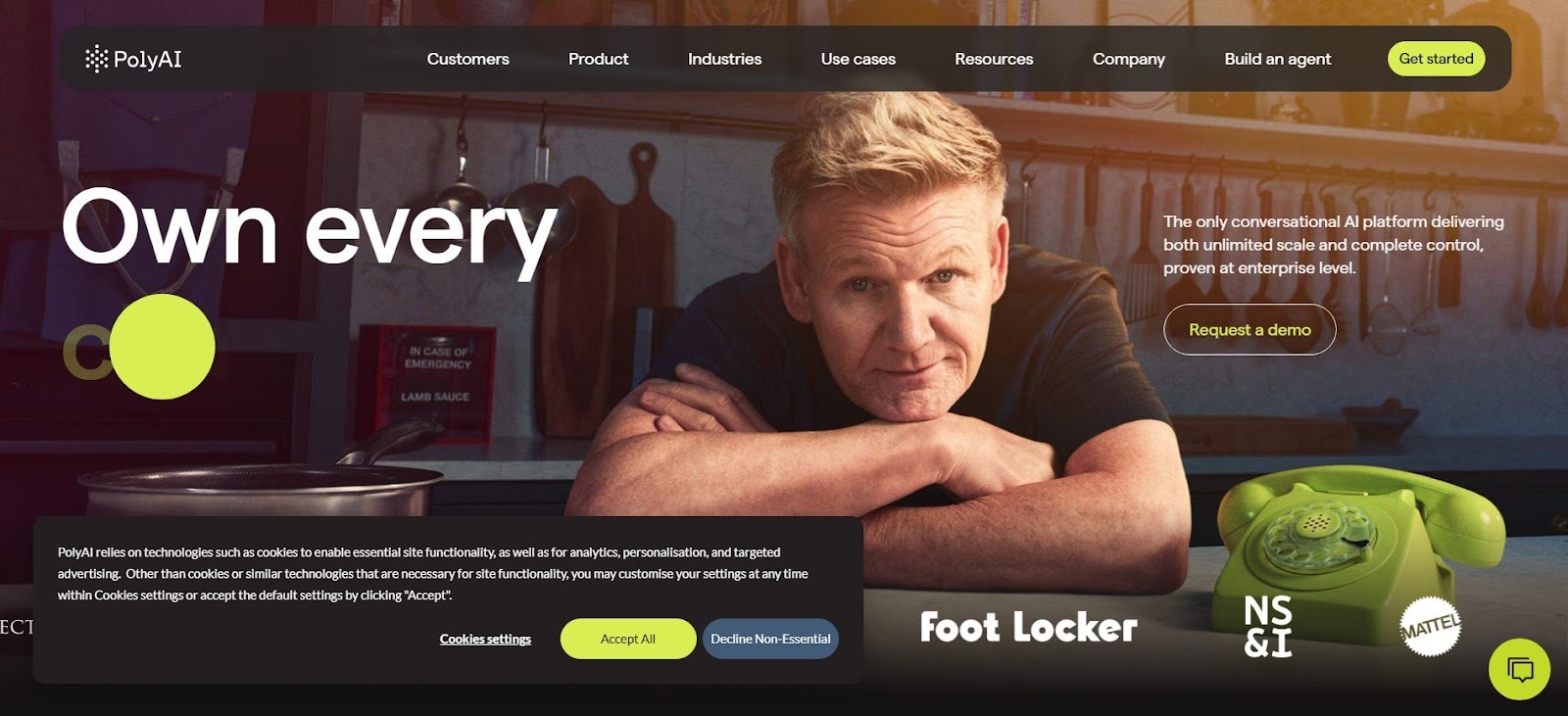
Poly AI offers enterprise-grade conversational AI designed for natural, human-like customer interactions. The platform excels at handling complex voice conversations, integrates easily with existing contact centers, and supports a wide range of industries. Its robust speech recognition enhances call resolution across diverse customer needs.
Key features:
- Multilingual support across 30+ languages with accent and dialect adaptation
- Advanced conversational context tracking
- Seamless contact center integration
- Real-time intent and sentiment analysis
- Scalable analytics dashboard for performance insights
Pricing: Enterprise-level, custom pricing based on volume and deployment. Pricing typically reflects usage scale, making it most suitable for large contact centers requiring high call throughput and deep feature sets.
2. Goodcall
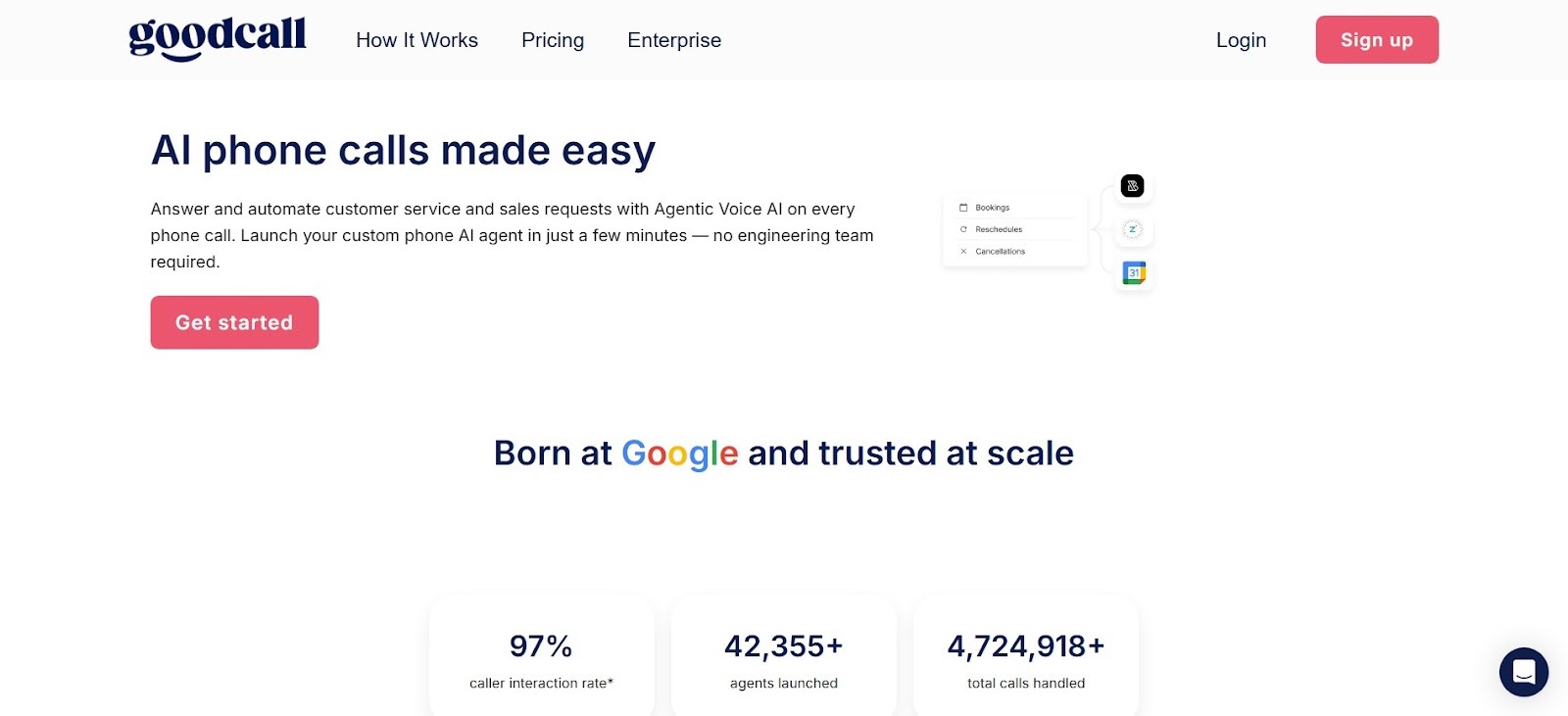
Goodcall is an agentic AI platform that automates voice interactions with real-time reasoning and business logic. It serves small to midsize businesses and integrates scheduling, CRM, and follow-up workflows. Goodcall’s voice agents enable natural, efficient service for multilingual customer bases.
Key features:
- Multilingual voice assistant supporting 20+ languages for diverse customer engagement
- Intelligent appointment scheduling and call routing
- CRM and calendar integrations
- AI receptionist for small business use cases
- Automated follow-ups and dynamic responses
Pricing: Subscription-based plans tailored for small to growing businesses, with transparent tiers and optional enterprise upgrades. Targets cost-effective entry, enabling companies to scale voice automation with predictable monthly costs.
3. Retell AI
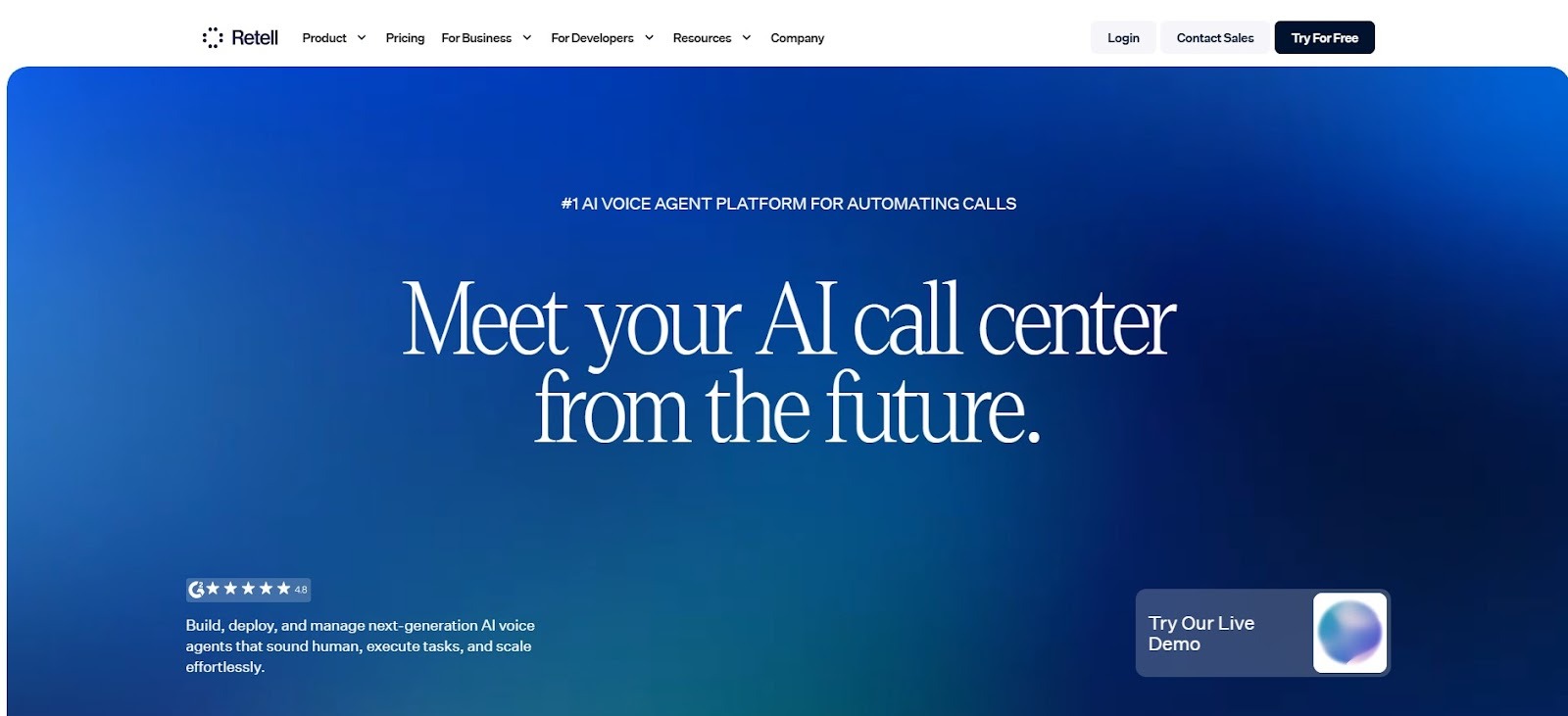
Retell AI specializes in conversational voice AI designed for customer engagement and support automation. The platform emphasizes natural dialogue and real-time understanding, enabling brands to deliver personalized multilingual conversations. It’s effective for businesses looking to automate complex voice interactions with contextual intelligence.
Key features:
- Multilingual support with recognition and response in multiple global languages
- Natural language understanding for nuanced dialogue
- Customizable voice workflows for support tasks
- Analytics for conversation performance and optimization
- Easy integration with CRM and business systems
Pricing: Flexible plans based on usage and features, designed to cater to mid-sized businesses as well as larger enterprises. Pricing is typically tiered by call volume, with options for advanced analytics and premium support packages.
4. Sierra AI
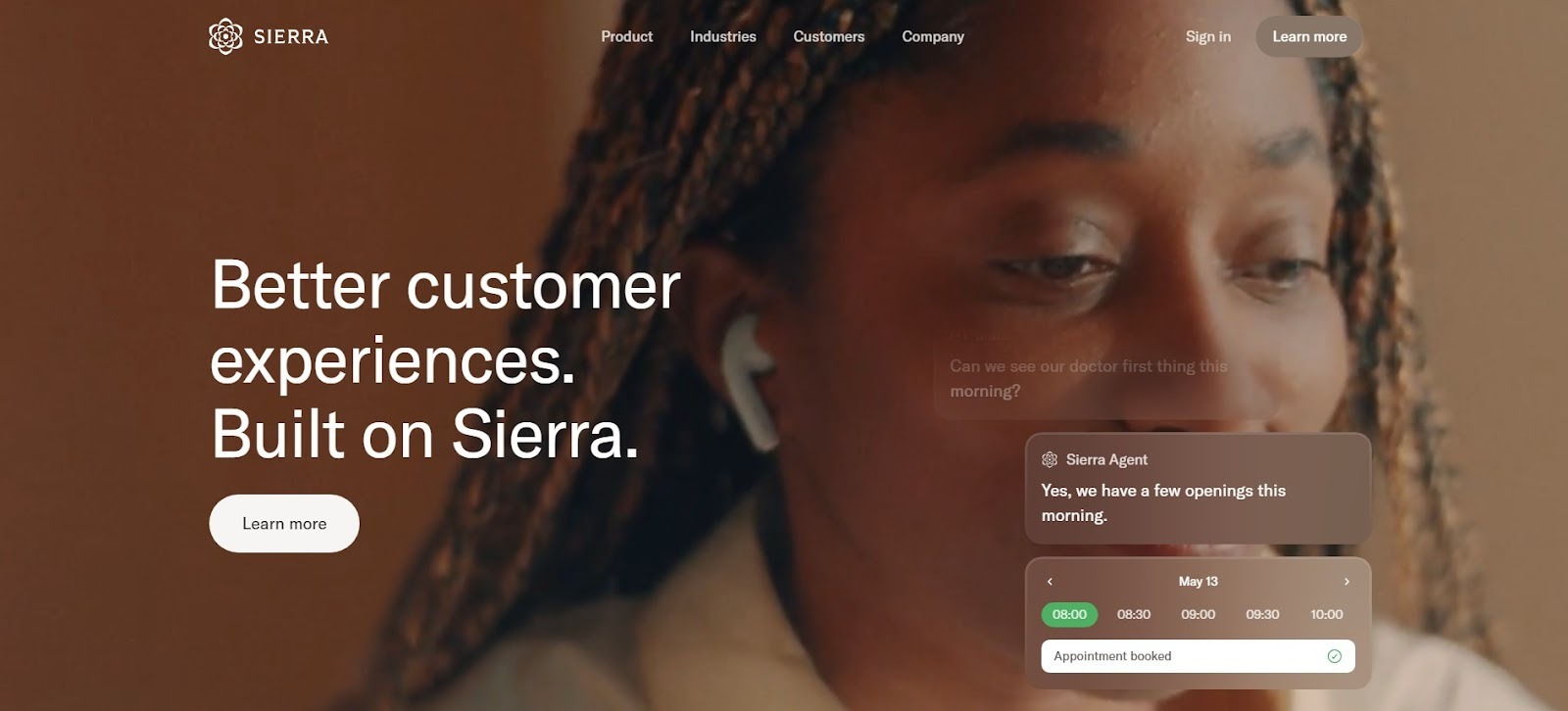
Sierra AI provides an advanced conversational AI platform focused on automated voice engagement and customer support excellence. The system combines powerful speech recognition with context-aware dialogue flows, making it suitable for handling multilingual customer interactions with high accuracy.
Key features:
- Multilingual voice interactions that support a variety of languages for global and domestic markets
- Contextual intent detection for smarter call handling
- Seamless transfer to live agents when needed
- Real-time speech analytics and reporting
- Custom IVR workflows with automated responses
Pricing: Sierra AI offers usage-based pricing with scalable tiers tailored to business size and call volumes. Core features are included at base levels, with enterprise options unlocking deeper customization and analytics.
5. Vapi AI
Vapi AI is a conversational voice automation platform focused on delivering seamless customer interactions with human-like understanding. It emphasizes flexible deployment and real-time voice responses, making it useful for support teams seeking natural, scalable multilingual engagement.
Key features:
- Multilingual conversational support across major languages for diverse customer bases
- Real-time speech recognition with context-aware responses
- Customizable voice workflows and IVR alternatives
- Analytics dashboard for measuring performance
- Easy integration with CRM and ticketing systems
Pricing: Vapi AI offers tiered subscription plans based on usage, call volume, and feature access. This makes it suitable for growing businesses that want predictable costs and scalable voice AI functionality.
6. Cresta
Cresta combines conversational AI with real-time coaching to optimize customer interactions across voice channels. Its AI-driven insights aid live agents and automated assistants alike, improving performance and enabling intelligent multilingual support.
Key features:
- Multilingual support enabling natural voice interactions in multiple languages
- Real-time conversational guidance and recommendations
- Sentiment and intent analysis for better outcomes
- Performance insights to improve agent and bot behavior
- Integration with existing contact center tools
Pricing: Cresta uses custom enterprise pricing tailored to company size and feature usage. Pricing reflects the platform’s advanced analytics and real-time coaching value, typically appealing to mid-size and large enterprises.
Should You Build or Buy a Multilingual Voice AI Solution?
Choosing between building and buying depends on technical resources, compliance needs, scalability goals, and time-to-market expectations.
When to BUILD a Multilingual Voice AI Solution?
Building a multilingual voice AI solution makes sense for organizations with advanced technical resources and unique requirements. Here’s why your business needs to build a voice AI agent:
- Highly specialized industry requirements: Organizations with complex workflows or niche compliance needs may require fully customized conversational logic and infrastructure control.
- Strong in-house AI and NLP expertise: Companies with experienced machine learning teams can design, train, and optimize models for specific accents and language variations.
- Need for proprietary data ownership: Businesses handling sensitive intellectual property may prefer complete control over training data and storage environments.
- Long-term large-scale deployment strategy: Enterprises operating globally may justify upfront development costs to gain greater flexibility and customization.
- Deep system-level integration requirements: Companies needing extensive backend integrations beyond standard APIs may benefit from building tailored infrastructure internally.
When to BUY a Multilingual Voice AI Solution?
Buying a multilingual voice AI platform is ideal for businesses seeking faster deployment and lower technical risk. Most US organizations benefit from proven solutions that already function as a multilingual IVR alternative and scalable conversational AI for customer support:
- Need for rapid deployment: Prebuilt AI call automation tools launch in weeks, not months, reducing time-to-value and operational disruption.
- Limited internal AI expertise: Businesses without NLP or speech recognition teams avoid costly hiring and long development cycles.
- Budget predictability and lower upfront costs: Subscription pricing reduces capital expenditure while delivering enterprise-grade automated voice assistant capabilities.
- Compliance and security requirements: Established vendors meet HIPAA, SOC 2, and data encryption standards, minimizing exposure to regulatory risk.
- Ongoing maintenance and performance optimization: Vendors continuously improve models, accent recognition, and multilingual support without placing additional strain on internal resources.
Goodcall Voice AI Solutions Are Built for Modern Multilingual Businesses
Goodcall offers a purpose-built conversational platform designed to handle real-world multilingual customer interactions with intelligence and flexibility. Its automated voice agents adapt to context, seamlessly guiding customers through common tasks such as scheduling, inquiries, and support requests without frustration.
By combining agentic reasoning with robust language support, Goodcall elevates voice interactions far beyond scripted systems. Businesses gain a solution that mitigates staffing challenges while delivering consistent, conversational AI for customer support across languages and use cases.
Why Goodcall?
- Comprehensive multilingual support: Designed to understand and respond in 20+ languages, enhancing customer experience across diverse communities.
- AI receptionist for small business: Handles calls, schedules appointments, and routes inquiries without human intervention, ideal for SMBs.
- Seamless CRM & workflow integration: Connects to calendars, CRM systems, and ticketing tools for unified customer engagement.
- Dynamic call routing and context understanding: Recognizes intent early and routes appropriately, reducing hold times and transfers.
- Scalable business voice bot: Supports growth without adding proportional support staff or infrastructure costs.
- Real-time conversational reasoning: Learns and adjusts responses based on context, making interactions feel natural and efficient.
Future of Multilingual Conversational AI
Multilingual conversational AI is evolving rapidly as speech recognition and large language models improve. Businesses adopting top voice AI tools will gain long-term advantages in personalization, automation, and global scalability.
Future systems will:
- Detect emotional tone across languages
- Switch languages mid-conversation
- Provide real-time translation
- Support deeper CRM personalization
Final Thoughts
Businesses investing in top voice AI tools for multilingual customer conversations position themselves for stronger customer loyalty, higher conversions, and scalable support operations. Language is no longer a barrier but a growth lever that directly impacts revenue and brand trust.
As conversational AI for customer support continues to evolve, companies must move beyond traditional IVR systems toward intelligent, multilingual voice automation. The right platform transforms every customer interaction into an opportunity to connect, convert, and build lasting relationships.
Stop losing customers to language barriers. Deploy Goodcall’s automated voice assistant to handle multilingual calls 24/7 and scale support without scaling costs.
FAQs
What is a multilingual voice AI tool?
A multilingual voice AI tool is an automated voice assistant that understands and responds in multiple languages. It uses natural language processing and speech recognition to deliver conversational AI for customer support across diverse customer populations.
Is multilingual voice AI expensive?
Costs vary by provider, call volume, and deployment model. Many AI call automation tools use subscription pricing, which reduces upfront investment. Over time, businesses often lower staffing and operational costs, improving overall return on investment.
Can voice AI replace live agents?
Voice AI can automate repetitive tasks such as FAQs, appointment booking, and call routing. However, complex or emotionally sensitive issues may still require human agents. Most businesses use voice AI to augment, not fully replace, support teams.
How accurate is AI in understanding different accents?
Modern systems use advanced speech recognition models trained on diverse datasets. Accuracy continues to improve with machine learning advancements. Performance depends on language coverage, training data quality, and continuous system optimization.
Is multilingual voice AI HIPAA compliant?
Some providers offer HIPAA-compliant deployments with encryption, secure data storage, and access controls. Businesses must verify vendor certifications and ensure proper configuration to meet healthcare regulatory requirements in the United States.